

Chronic Pain & Musculoskeletal Conditions
Explore This Section:
Listen to This Page
The written text on this page serves as the full and official version of this content

While each condition affects the body differently, many share overlapping patterns involving inflammation, fatigue, digestion, nervous system regulation, pain, recovery capacity, environmental sensitivity, and overall biological stress load. SoilToSelfLiving explores these conditions through the broader lens of supportive daily living, nourishment, sleep, recovery, environmental conditions, and the interconnected systems that influence long-term health and resilience. Explore the most common conditions.

Listen to This Page
The written text on this page serves as the full and official version of this content
Arthritis, Bone, Joint & Chronic Pain Conditions Overview
The musculoskeletal system includes the bones, muscles, joints, cartilage, tendons, ligaments and other connective tissues that support the body and make movement possible. Conditions affecting these structures may influence strength, stability, flexibility, balance, comfort and the ability to participate in everyday activities.
These concerns include osteoarthritis, rheumatoid and other inflammatory forms of arthritis, osteoporosis, back and neck conditions, joint injuries, muscle and connective-tissue conditions, fibromyalgia, mobility limitations and persistent pain. Some begin with an injury or repeated physical demand. Others may involve immune activity, inflammation, nerve signaling, genetics, illness, age-related changes or a combination of factors. Chronic pain may continue even after tissues have healed because pain is also shaped by communication among the body, nerves, spinal cord and brain.
Musculoskeletal health and pain are connected with movement, nervous system regulation, immune and inflammatory function, metabolism, circulation, sleep, stress, nourishment and the physical environment. This page explores these relationships and the daily foundations, environmental conditions and supportive approaches that may help protect movement, improve function and support comfort alongside appropriate medical care.
Overview

Listen to This Page
The written text on this page serves as the full and official version of this content
Chronic pain and musculoskeletal conditions affect the bones, joints, muscles, connective tissues, tendons, ligaments, fascia, nerves, and movement-supporting structures of the body. These conditions may involve pain, stiffness, weakness, inflammation, instability, fatigue, reduced mobility, nerve irritation, balance changes, or difficulty performing everyday activities. This cluster includes conditions such as osteoarthritis, rheumatoid arthritis, osteoporosis, fibromyalgia, chronic back or neck pain, sciatica, joint degeneration, tendon and ligament strain, muscle tension, repetitive strain injuries, mobility limitations, postural strain, inflammatory pain conditions, and recovery after injury or surgery. Musculoskeletal conditions are among the leading contributors to pain, disability, reduced independence, and lowered quality of life worldwide. The World Health Organization describes these conditions as commonly involving persistent pain and limits in mobility, dexterity, work, and participation in society. SoilToSelfLiving approaches this topic through education, practical daily support, and the many living conditions that influence comfort, movement, inflammation, recovery, strength, balance, and resilience. This section does not suggest one simple cause or one universal solution. Instead, it helps readers understand how the body’s movement system is influenced by sleep, nourishment, inflammation, stress load, nervous system regulation, movement patterns, recovery capacity, environmental conditions, age, injury history, and daily life.
Why This Matters
Pain and mobility limitations can affect far more than the painful area itself. They may influence sleep, mood, circulation, blood sugar regulation, muscle strength, bone density, balance, confidence, social participation, and independence. Reduced movement can sometimes lead to further weakness, stiffness, metabolic changes, and loss of physical confidence. At the same time, trying to push through pain without enough recovery may worsen symptoms for some people. A supportive approach often focuses on steadier regulation: gentle movement, pacing, sleep support, nourishing food, hydration, stress reduction, safe strengthening, environmental awareness, and practical adaptation.
Supportive Foundations Connected to This Cluster
Musculoskeletal health connects with many SoilToSelfLiving foundation pages, including:
Movement & Structural Function
Sleep & Circadian Rhythm
Stress & Regulation
Nervous System Regulation & Recovery
Nutrition & Metabolic Regulation
Immune & Inflammatory Regulation
Cardiovascular & Circulatory Regulation
Gut Function & Microbial Balance
Brain Function
Recovery & Physical Resilience
Social Connection
It also connects with environmental pages such as:
Built Environment
Toxic Load & Chemical Exposure
Air Quality
Noise & Sensory Environment
Light & Circadian Rhythm
Food Quality & Nutrient Density
These connections matter because pain and movement are not isolated from the rest of the body. Sleep, inflammation, circulation, stress chemistry, environmental load, food quality, recovery time, and safe spaces for movement can all influence how the body feels and functions.
When to Seek Additional Support
Medical evaluation is important for sudden or severe pain, loss of function, significant swelling, deformity, numbness, weakness, falls, fractures, unexplained weight loss, fever, persistent worsening symptoms, difficulty walking, or trouble performing daily activities. Support may involve physicians, physical therapists, occupational therapists, rehabilitation specialists, nutrition professionals, pain specialists, mental health professionals, or other qualified practitioners depending on the situation.
Scientific & Research References
General Chronic Pain & Musculoskeletal Health Resources
These resources provide foundational information about chronic pain, musculoskeletal health, joint function, connective tissues, mobility, aging, rehabilitation, and quality of life.
-
National Institute of Arthritis and Musculoskeletal and Skin Diseases (NIAMS). Musculoskeletal Health Resources.
-
National Institutes of Health (NIH). Chronic Pain Resources.
-
Centers for Disease Control and Prevention (CDC). Chronic Pain Information.
-
World Health Organization (WHO). Musculoskeletal Health and Rehabilitation Resources.
-
International Association for the Study of Pain (IASP). Pain Education and Research Resources.
-
American Academy of Orthopaedic Surgeons (AAOS). Musculoskeletal Health Resources.
Environmental & Lifestyle Research
Research increasingly demonstrates that chronic pain and musculoskeletal health are influenced by many factors beyond injury or aging alone.
Physical Activity, Movement & Function
-
World Health Organization (WHO). Physical Activity Guidelines.
-
American College of Sports Medicine (ACSM). Exercise and Health Guidelines.
-
Booth FW, Roberts CK, Laye MJ. Lack of Exercise and Chronic Disease Research.
-
Warburton DER, Bredin SSD. Health Benefits of Physical Activity Research.
These studies explore how movement supports mobility, strength, circulation, joint health, balance, function, and long-term independence.
Sleep, Recovery & Pain Regulation
-
Finan PH, Goodin BR, Smith MT. The Association of Sleep and Pain.
-
National Institutes of Health (NIH). Sleep and Chronic Pain Resources.
-
Haack M, Simpson N, Sethna N, et al. Sleep Loss and Pain Sensitivity Research.
These resources examine the relationship between sleep quality, recovery, inflammation, nervous system function, and pain perception.
Nutrition, Inflammation & Musculoskeletal Health
-
Calder PC. Nutrition, Inflammation, and Chronic Disease.
-
National Institutes of Health (NIH). Nutrition and Healthy Aging Resources.
-
World Health Organization (WHO). Healthy Diet Resources.
These studies explore how nutrition may influence inflammation, tissue repair, metabolic health, and overall resilience.
Nature, Environment & Well-Being
-
Frumkin H, Bratman GN, Breslow SJ, et al. Nature Contact and Human Health.
-
Twohig-Bennett C, Jones A. The Health Benefits of the Great Outdoors.
-
World Health Organization (WHO). Healthy Environments Resources.
These references explore how environmental conditions may influence stress levels, movement habits, recovery, and overall well-being.
Condition-Specific Research & Further Reading
Osteoarthritis
-
Hunter DJ, Bierma-Zeinstra S. Osteoarthritis. The Lancet.
-
Osteoarthritis Research Society International (OARSI). Clinical Guidelines.
-
National Institute of Arthritis and Musculoskeletal and Skin Diseases (NIAMS). Osteoarthritis Resources.
-
Centers for Disease Control and Prevention (CDC). Osteoarthritis Information.
These resources examine joint degeneration, risk factors, movement strategies, symptom management, and quality-of-life outcomes.
Rheumatoid Arthritis
-
Smolen JS, Aletaha D, McInnes IB. Rheumatoid Arthritis. The Lancet.
-
American College of Rheumatology (ACR). Rheumatoid Arthritis Guidelines.
-
Arthritis Foundation. Rheumatoid Arthritis Resources.
-
National Institute of Arthritis and Musculoskeletal and Skin Diseases (NIAMS). Rheumatoid Arthritis Resources.
These studies explore autoimmune inflammation, joint damage, treatment approaches, and long-term management.
Fibromyalgia
-
Clauw DJ. Fibromyalgia: A Clinical Review.
-
Häuser W, Ablin J, Fitzcharles MA, et al. Fibromyalgia Research Reviews.
-
National Institute of Arthritis and Musculoskeletal and Skin Diseases (NIAMS). Fibromyalgia Resources.
-
American College of Rheumatology (ACR). Fibromyalgia Information.
These resources examine nervous system sensitivity, pain processing, fatigue, sleep disruption, and symptom management.
Chronic Back and Neck Pain
-
Hartvigsen J, Hancock MJ, Kongsted A, et al. What Low Back Pain Is and Why We Need to Pay Attention.
-
World Health Organization (WHO). Low Back Pain Resources.
-
National Institutes of Health (NIH). Back Pain Information.
-
American Physical Therapy Association (APTA). Back and Neck Pain Resources.
These studies examine posture, movement, conditioning, rehabilitation, workplace influences, and recovery strategies.
Osteoporosis & Bone Health
-
Compston J, McClung M, Leslie W. Osteoporosis.
-
National Osteoporosis Foundation (NOF) Resources.
-
International Osteoporosis Foundation (IOF) Resources.
-
National Institute of Arthritis and Musculoskeletal and Skin Diseases (NIAMS). Osteoporosis Resources.
These references explore bone density, fracture prevention, aging, nutrition, movement, and long-term skeletal health.
Aging, Function & Quality of Life Research
Chronic pain and musculoskeletal conditions often influence far more than physical comfort alone. They may affect mobility, confidence, independence, social participation, sleep quality, emotional well-being, and overall quality of life.
-
World Health Organization (WHO). Healthy Ageing Framework.
-
National Institute on Aging (NIA). Mobility and Healthy Aging Resources.
-
Veronese N, Stubbs B, Solmi M, et al. Musculoskeletal Health and Aging Research.
-
Rowe JW, Kahn RL. Successful Aging Research.
-
National Institute on Aging (NIA). Maintaining Mobility and Independence Resources.
-
World Health Organization (WHO). Rehabilitation 2030 Initiative.
These studies explore maintaining movement, strength, balance, independence, resilience, recovery capacity, and meaningful participation throughout life despite physical limitations.
Living with Chronic Pain &Musculoskeletal Conditions

Listen to This Page
The written text on this page serves as the full and official version of this content
Living with chronic pain or musculoskeletal conditions often involves much more than physical discomfort alone. Pain, stiffness, inflammation, weakness, fatigue, reduced mobility, or instability may influence sleep, movement, work, concentration, emotional well-being, relationships, and participation in everyday life. Some days may feel manageable, while others may bring increased discomfort, exhaustion, reduced flexibility, or difficulty performing ordinary tasks. Symptoms commonly fluctuate over time and may be influenced by sleep quality, stress load, inflammation, weather changes, physical overexertion, prolonged inactivity, hydration, nervous system overload, recovery capacity, and environmental conditions. Many people living with chronic musculoskeletal conditions gradually discover that supportive living is often less about “pushing through” pain and more about creating steadier daily conditions that help the body recover, adapt, regulate, and function more sustainably over time.
Supportive Living Approaches
Supportive care often focuses on protecting mobility, recovery capacity, emotional well-being, circulation, strength, flexibility, and daily function while reducing unnecessary physical strain and overload.
Helpful approaches may include:
• Gentle and consistent movement
• Stretching and mobility support
• Pacing activity and recovery time
• Avoiding the “push-crash” cycle
• Supportive sleep routines
• Whole-food nourishment and hydration
• Reducing prolonged inactivity
• Stress and nervous system support
• Ergonomic and environmental adjustments
• Maintaining meaningful social connection
• Preserving participation in enjoyable activities
Many individuals find that consistency and sustainable routines often support the body more effectively than occasional intense effort or complete inactivity.
Movement, Recovery & Daily Function
Appropriate movement often remains one of the most supportive tools for maintaining circulation, flexibility, coordination, joint function, muscle strength, balance, and movement confidence. Depending on individual needs and medical guidance, supportive movement may include walking, gentle stretching, water exercise, tai chi, yoga adapted for physical limitations, balance work, light strengthening, or physical therapy-guided movement. At the same time, overexertion without adequate recovery may worsen symptoms for some individuals. Learning to recognize signs of physical overload and balancing activity with recovery periods may help support steadier long-term function.
Sleep, Stress & Emotional Well-Being
Poor sleep and chronic pain often reinforce one another. Sleep disruption may increase inflammation, fatigue, muscle tension, stress chemistry, and pain sensitivity, while pain itself may interfere with restful sleep. Living with ongoing discomfort may also create emotional strain, frustration, isolation, grief, anxiety, or reduced confidence over time. Protecting emotional well-being is an important part of supporting physical health.
Supportive practices may include:
• Consistent sleep and wake times
• Gentle evening routines
• Stress reduction and nervous system calming
• Time outdoors and natural light exposure
• Meaningful social connection
• Counseling or support groups when needed
• Allowing recovery without guilt
• Maintaining hobbies and enjoyable activities
This connects closely with:
• Sleep & Circadian Rhythm
• Stress & Regulation
• Nervous System Regulation & Recovery
• Brain Function
• Social Connection
Food, Hydration & Inflammatory Balance
Food patterns may influence inflammation, muscle maintenance, bone health, tissue repair, hydration, blood sugar regulation, and overall recovery capacity.
Many individuals benefit from focusing on:
• Whole, minimally processed foods
• Adequate protein intake
• Plant diversity and fiber
• Healthy fats
• Stable hydration
• Reducing highly processed foods
• Supporting healthy body weight without extreme dieting
Some individuals may also need to consider food sensitivities, digestive health, inflammatory conditions, or medication interactions that may influence symptoms.
Learn More
Additional scientific research, biological explanations, related support areas, and broader educational information can be found in the main Immune and Respiratory Overview page within SoilToSelfLiving.
When to Seek Additional Support
Medical evaluation is important for sudden worsening pain, falls, fractures, numbness, weakness, severe swelling, significant loss of mobility, fever with joint pain, or persistent worsening symptoms. Support may involve physicians, physical therapists, occupational therapists, rehabilitation specialists, pain specialists, nutrition professionals, mental health support, or community support services depending on individual needs
A Supportive Day for Musculoskeletal Health

Listen to This Page
The written text on this page serves as the full and official version of this content
Living with chronic pain, stiffness, inflammation, joint discomfort, muscle tension, or mobility changes often involves balancing movement, recovery, nourishment, pacing, and rest throughout the day. Small supportive routines may help the body function more comfortably and consistently over time. This example is not a rigid schedule or medical prescription. Every body, condition, age, and recovery capacity is different. The goal is not perfection. The goal is creating steadier daily conditions that support movement, circulation, flexibility, nervous system regulation, and overall musculoskeletal health.
Morning: Waking the Body Gently
Many musculoskeletal conditions involve morning stiffness or reduced mobility after rest. Supportive mornings may include gentle stretching, hydration, natural light exposure, short walks, range-of-motion movements, warm showers, or supportive footwear. Even small amounts of movement may help improve circulation and reduce stiffness over time.
Learn more:
-
Movement & Structural Function
-
Sleep & Circadian Rhythm
-
Cardiovascular & Circulatory Regulation
Nourishment & Hydration
Balanced meals may help support energy stability, inflammation regulation, muscle maintenance, hydration, and recovery capacity. Supportive eating patterns often include protein, fiber-rich foods, healthy fats, vegetables, fruits, and adequate hydration while reducing heavy reliance on highly processed foods and excess added sugars.
Learn more:
-
Nutrition & Metabolic Regulation
-
Immune & Inflammatory Regulation
-
Gut Function & Microbial Balance
Movement, Posture & Pacing
Long periods of sitting or repetitive strain may worsen stiffness and discomfort. Gentle walking, stretching, posture awareness, ergonomic support, mobility exercises, and regular movement breaks may help reduce accumulated tension. Many individuals also benefit from pacing activity to avoid the “push-crash” cycle of overexertion followed by pain or exhaustion.
Learn more:
-
Recovery & Physical Resilience
-
Stress & Regulation
-
Nervous System Regulation & Recovery
Midday & Afternoon Support
Supportive afternoons often focus on maintaining movement without overload. Light strengthening exercises, tai chi, stretching, swimming, balance work, or physical therapy-guided movement may help support flexibility, coordination, circulation, and muscle maintenance. Sustainable movement is often more supportive than occasional intense effort.
Emotional & Nervous System Support
Chronic discomfort may increase stress, tension, frustration, fatigue, and nervous system overload. Supportive practices such as spending time outdoors, social connection, calming music, hobbies, breathing practices, gardening, and allowing recovery without guilt may help support emotional resilience and physical recovery.
Learn more:
-
Brain Function
-
Stress & Regulation
-
Social Connection
Evening & Sleep Recovery
Evening routines may help calm the body and prepare for overnight recovery. Gentle stretching, warm baths, reduced screen exposure, soft lighting, supportive pillows, relaxation practices, and consistent sleep routines may help support sleep quality, pain tolerance, recovery, and nervous system regulation. Poor sleep may increase inflammation, muscle tension, pain sensitivity, and fatigue.
Learn more:
-
Sleep & Circadian Rhythm
-
Recovery & Physical Resilience
-
Nervous System Regulation & Recovery
A Supportive Day Looks Different for Everyone
Some days may involve more movement while others require greater recovery and rest. Supportive musculoskeletal living often involves learning how to work with the body rather than continually forcing beyond its limits. Small, sustainable habits repeated consistently over time may help support mobility, flexibility, circulation, strength, recovery capacity, emotional resilience, and participation in everyday life.
Learn More
For deeper understanding of how these systems connect together, including scientific and research references for this entire cluster, please visit the main Chronic Pain & Musculoskeletal Conditions Overview page.
Food, Inflammation & Musculoskeletal Support

Listen to This Page
The written text on this page serves as the full and official version of this content
Food alone does not determine musculoskeletal health, but daily nourishment may influence inflammation, muscle maintenance, bone strength, connective tissue support, recovery capacity, circulation, and overall physical resilience. Muscles, joints, bones, fascia, and connective tissues continuously respond to movement, sleep, stress, aging, hormones, hydration, activity level, environmental conditions, and nutrition.
Whole Food Nourishment
Supportive musculoskeletal nutrition often focuses less on strict diets and more on consistent whole-food eating patterns. Vegetables, fruits, beans, legumes, nuts, seeds, healthy fats, adequate protein, herbs, spices, and proper hydration may help support energy stability, recovery, and inflammatory balance. Many individuals notice improved resilience when meals are more balanced and less highly processed.
Learn more:
-
Nutrition & Metabolic Regulation
-
Gut Function & Microbial Balance
-
Immune & Inflammatory Regulation
Protein & Muscle Support
Muscle loss may increase with aging, inactivity, illness, stress overload, and reduced movement. Maintaining muscle mass helps support mobility, stability, balance, recovery, and long-term independence. Supportive protein sources may include beans, lentils, tofu, eggs, yogurt, nuts, seeds, dairy products when tolerated, and fish or lean meats for those who consume them. Older adults often require greater attention to consistent protein intake.
Learn more:
-
Movement & Structural Function
-
Recovery & Physical Resilience
-
Aging & Physical Function
Bone-Supportive Nutrition
Bone health involves more than calcium alone. Bone strength is influenced by vitamin D, magnesium, vitamin K, protein, trace minerals, movement, hormones, and sunlight exposure. Supportive foods may include leafy greens, legumes, fortified plant milks, nuts, seeds, tofu, dairy products when tolerated, and mineral-rich whole foods. Weight-bearing movement and resistance training also play an important role in maintaining bone strength over time.
Learn more:
-
Osteoporosis & Bone Health
-
Movement & Structural Function
-
Light & Circadian Rhythm
Inflammation & Food Patterns
Long-term inflammation may contribute to joint discomfort, stiffness, pain sensitivity, fatigue, and slower recovery. Supportive food patterns often emphasize plant diversity, fiber-rich foods, healthy fats, omega-3-rich foods, stable blood sugar support, and reducing heavy reliance on ultra-processed foods. Mediterranean-style and plant-forward eating patterns are frequently associated with supportive inflammatory balance and long-term health outcomes.
Learn more:
-
Immune & Inflammatory Regulation
-
Cardiovascular & Circulatory Regulation
-
Brain Function
Hydration & Connective Tissue Support
Hydration helps support circulation, muscle function, joint lubrication, temperature regulation, and connective tissue resilience. Dehydration may contribute to fatigue, cramping, headaches, joint discomfort, and reduced physical endurance. Consistent hydration, especially during heat or physical activity, may help support recovery and overall musculoskeletal function.
Ultra-Processed Foods & Recovery
Highly processed foods may contribute to blood sugar instability, inflammation, lower nutrient density, reduced energy stability, and poorer recovery capacity for some individuals. Supportive living generally focuses on gradual improvement and overall patterns rather than perfection or extreme restriction. Small shifts toward more whole foods may support long-term resilience more sustainably over time.
Weight Stability & Joint Stress
Excess mechanical strain may increase stress on weight-bearing joints such as the knees, hips, feet, and lower back. At the same time, restrictive dieting or undernourishment may weaken muscles, reduce bone density, worsen fatigue, and reduce recovery capacity. Supportive approaches often focus on nourishing the body adequately while supporting movement, muscle maintenance, and steady energy.
Blood Sugar & Musculoskeletal Health
Blood sugar instability may influence inflammation, circulation, nerve health, fatigue, tissue repair, and recovery capacity. Balanced meals containing protein, fiber, whole-food carbohydrates, and stable meal timing may help support steadier energy and inflammatory regulation over time.
Learn more:
-
Diabetes & Blood Sugar Regulation
-
Cardiovascular & Circulatory Regulation
-
Brain Function
Food Is One Piece of a Larger Picture
Musculoskeletal health is influenced by many interconnected systems involving movement, sleep, recovery, stress load, environmental conditions, hormones, aging, social support, and physical activity patterns. Food alone cannot eliminate chronic pain or fully reverse structural conditions, but supportive nourishment may help create steadier conditions that support mobility, recovery, resilience, and quality of life over time.
Learn More
For deeper understanding of how these systems connect together, including scientific and research references for this entire cluster, please visit the main Chronic Pain & Musculoskeletal Conditions Overview page.
Flare-Ups, Recovery & Living Well with Chronic Pain

Listen to This Page
The written text on this page serves as the full and official version of this content
Many chronic pain and musculoskeletal conditions do not follow a straight line. Symptoms often improve, stabilize, worsen, and improve again over time. People living with arthritis, osteoporosis, chronic back pain, fibromyalgia, tendon disorders, joint conditions, and other musculoskeletal challenges frequently experience periods when symptoms become more noticeable. These periods are often called flare-ups. A flare-up does not necessarily mean permanent damage is occurring or that progress has been lost. In many cases, symptoms increase temporarily in response to physical strain, illness, poor sleep, stress, changes in routine, or other factors. Learning how to recognize flare patterns, support recovery, and adapt daily activities can help people maintain mobility, confidence, and quality of life.
Why This Matters
Many people living with chronic pain become trapped in a cycle of doing too much on good days and then needing extended recovery after symptoms worsen. This "push-crash" pattern can make flare-ups feel more frequent and more disruptive. Recovery is not simply about resting. Recovery also involves maintaining appropriate movement, protecting sleep, supporting nutrition, managing stress, and allowing the body time to adapt and recover. Understanding personal patterns can help reduce frustration and support a more balanced approach to daily living.
Practical Guidelines
Learn to Recognize Your Triggers
Flare-ups may be influenced by:
-
Overexertion or repetitive activity
-
Poor sleep
-
Emotional stress
-
Illness or infection
-
Sudden increases in exercise
-
Long periods of inactivity
-
Weather or seasonal changes
-
Changes in routine
Keeping a simple journal may help identify patterns over time.
Avoid the Push-Crash Cycle
Good days often create the temptation to catch up on everything at once.
Instead:
-
Pace activities throughout the day.
-
Break larger tasks into smaller steps.
-
Schedule rest before exhaustion develops.
-
Alternate activity with recovery periods.
-
Build consistency rather than intensity.
Steady progress is often more sustainable than occasional bursts of activity.
Keep Moving During Flare-Ups
While severe symptoms may require temporary adjustments, complete inactivity can sometimes increase stiffness, weakness, and discomfort. Depending on individual circumstances, supportive movement may include:
-
Gentle walking
-
Stretching
-
Mobility exercises
-
Light household activities
-
Water-based movement
The goal is often to maintain function without overwhelming recovery capacity.
Protect Sleep
Sleep and pain are closely connected.
During flare-ups:
-
Maintain a consistent bedtime.
-
Create a comfortable sleep environment.
-
Limit stimulating activities before bed.
-
Allow time for relaxation and recovery.
-
Discuss persistent sleep difficulties with a healthcare professional.
Support Recovery Through Nutrition and Hydration
Recovery places additional demands on the body.
Helpful habits may include:
-
Eating regular nutrient-dense meals.
-
Consuming adequate protein.
-
Staying hydrated.
-
Including a variety of fruits and vegetables.
-
Limiting heavily processed foods.
Be Patient with Recovery
Recovery timelines vary greatly between individuals and conditions.
Some flare-ups may last a few hours or days, while others may take longer to settle. Recovery is rarely perfect or predictable. Focusing on gradual improvement rather than immediate symptom elimination can help maintain motivation and reduce frustration.
When to Seek Additional Support
Consult a qualified healthcare professional if you experience severe pain, sudden weakness, loss of function, unexplained swelling, new fractures, worsening mobility, repeated falls, or symptoms that significantly interfere with daily activities.
Educational Information Only
The information provided by SoilToSelfLiving is intended for educational and informational purposes only. It is not medical advice and is not intended to diagnose, treat, cure, or prevent any disease. Always consult with qualified healthcare professionals regarding medical concerns, symptoms, diagnoses, or treatment decisions.
Environmental Factors That Influence Movement, Comfort & Recovery

Listen to This Page
The written text on this page serves as the full and official version of this content
The spaces where we live, work, move, and rest can have a significant impact on musculoskeletal health. While environmental factors do not usually cause chronic pain or musculoskeletal conditions by themselves, they can influence mobility, comfort, recovery, safety, and overall quality of life. For individuals living with arthritis, osteoporosis, chronic back pain, joint disorders, muscle conditions, or age-related mobility changes, supportive surroundings can help make daily activities easier, safer, and more comfortable. Creating environments that encourage movement, support recovery, reduce fall risk, and promote restful sleep may help people maintain independence and remain active throughout life.
Why This Matters
The musculoskeletal system is designed for movement. Bones, muscles, joints, tendons, ligaments, and connective tissues respond to how we use them every day. Modern lifestyles often involve long periods of sitting, repetitive movements, limited outdoor activity, and environments that discourage regular movement. Over time, these patterns may contribute to stiffness, reduced strength, loss of flexibility, decreased balance, and declining mobility. The physical environment also plays an important role in safety. Poor lighting, cluttered walkways, uneven surfaces, and fall hazards can increase the risk of injury, particularly for older adults and those living with osteoporosis or balance challenges. Supportive environments help create opportunities for movement, recovery, confidence, and long-term function.
Practical Guidelines
Create a Movement-Friendly Environment
Small changes can encourage more natural movement throughout the day.
Helpful strategies may include:
-
Taking regular breaks from sitting.
-
Creating safe walking routes indoors and outdoors.
-
Keeping commonly used items within easy reach.
-
Using supportive chairs and workspaces.
-
Choosing activities that encourage daily movement.
Even short periods of gentle movement throughout the day can help support flexibility, circulation, and joint comfort.
Reduce Fall Risks
Fall prevention becomes increasingly important with age and for individuals living with osteoporosis, balance concerns, or reduced mobility.
Consider:
-
Improving lighting throughout the home.
-
Removing loose rugs and tripping hazards.
-
Securing electrical cords.
-
Using handrails when needed.
-
Wearing supportive footwear.
-
Keeping walkways clear and uncluttered.
Small safety improvements can help reduce injury risk and support confidence during daily activities.
Support Healthy Body Mechanics
The way we sit, stand, lift, and perform repetitive tasks can influence muscle and joint stress over time.
Helpful habits include:
-
Adjusting workstations for comfort.
-
Changing positions regularly.
-
Avoiding prolonged sitting when possible.
-
Using proper lifting techniques.
-
Taking breaks during repetitive activities.
Create a Recovery-Supportive Sleep Environment
Sleep plays an important role in tissue repair, recovery, and pain management.
Supportive sleep habits may include:
-
Maintaining a consistent sleep schedule.
-
Creating a quiet, comfortable sleeping environment.
-
Choosing pillows and mattresses that support comfort.
-
Keeping bedrooms cool and relaxing.
-
Limiting evening stimulation before bed.
Adapt to Weather and Temperature Changes
Many people notice that symptoms fluctuate with changing weather conditions. While individual experiences vary, some people report increased stiffness during colder weather or reduced activity during periods of extreme heat.
Helpful strategies may include:
-
Dressing appropriately for conditions.
-
Staying hydrated during hot weather.
-
Modifying activity levels when needed.
-
Using gentle movement to reduce stiffness.
-
Planning outdoor activities during comfortable temperatures.
Spend Time Outdoors
Outdoor environments often encourage movement, social connection, and engagement with daily life.
Activities such as:
-
Walking
-
Gardening
-
Light recreation
-
Community events
Time spent in nature may help support mobility, balance, mood, and overall well-being.
When to Seek Additional Support
Consult a qualified healthcare professional if you experience worsening pain, repeated falls, unexplained weakness, significant mobility changes, fractures, persistent swelling, or symptoms that interfere with daily activities.
Educational Information Only
The information provided by SoilToSelfLiving is intended for educational and informational purposes only. It is not medical advice and is not intended to diagnose, treat, cure, or prevent any disease. Always consult with qualified healthcare professionals regarding medical concerns, symptoms, diagnoses, or treatment decisions.
Supporting Musculoskeletal Health Through the Seasons of Life

Listen to This Page
The written text on this page serves as the full and official version of this content
Musculoskeletal health changes throughout life. Bones, muscles, joints, posture, balance, flexibility, and recovery capacity are influenced not only by genetics, but also by movement, nourishment, sleep, stress, injury history, environmental conditions, and daily living patterns. This page explores how supportive musculoskeletal needs may shift across different stages of life and how simple daily habits may help support long-term mobility, resilience, and quality of life.
The Beginning & Growing Years
During childhood, bones strengthen, muscles develop, and movement patterns form through play, exploration, climbing, running, and outdoor activity. Adequate sleep, nourishing food, safe movement opportunities, and reduced sedentary screen time may help support healthy development, coordination, posture, and bone density.
Learn more:
-
Movement & Structural Function
-
Sleep & Circadian Rhythm
-
Brain Function
The Teenage Years
Adolescence involves rapid growth, hormonal changes, muscle development, and increasing physical demands. Supportive habits may include adequate protein, calcium, vitamin D, healthy sleep, flexibility, recovery after sports, and avoiding repetitive overtraining. Teenagers may also experience posture strain, sports injuries, stress-related tension, and reduced recovery from poor sleep habits.
Learn more:
-
Nutrition & Metabolic Regulation
-
Stress & Regulation
-
Sleep & Circadian Rhythm
Young Adult Years
During early adulthood, long-term musculoskeletal patterns often begin developing through work posture, physical activity habits, stress load, repetitive strain, sleep quality, injury history, and sedentary living. Strength training, mobility work, hydration, recovery, and consistent movement may help support long-term resilience.
The Grounded Years (30s–40s)
Many people begin noticing chronic tension, reduced flexibility, back and neck discomfort, joint stress, and slower recovery during these decades. Work demands, caregiving responsibilities, prolonged sitting, stress accumulation, and reduced movement may gradually impact musculoskeletal health. Consistent movement, stretching, recovery awareness, and strength maintenance often become increasingly important.
Learn more:
-
Recovery & Physical Resilience
-
Cardiovascular & Circulatory Regulation
-
Stress & Regulation
The Flourishing Years (50s–60s)
Changes involving muscle mass, connective tissue elasticity, balance, inflammation, and bone density may become more noticeable during these years. Weight-bearing movement, resistance training, protein support, balance exercises, mobility work, and recovery pacing may help support long-term independence and physical function. Hormonal changes such as menopause and andropause may also influence bone and joint health.
Learn more:
-
Osteoporosis & Bone Health
-
Movement & Structural Function
-
Healthy Aging Support
The Legacy Years (70+)
Later adulthood often places greater importance on balance, fall prevention, mobility preservation, muscle maintenance, and recovery support. While aging may increase vulnerability to muscle loss, bone fragility, slower healing, and joint degeneration, many older adults remain active and physically capable when supportive conditions are maintained. Even modest daily movement may help support circulation, flexibility, confidence, emotional well-being, and quality of life.
Learn more:
-
Social Connection
-
Recovery & Physical Resilience
-
Built Environment
Supporting Movement Across the Lifespan
Movement needs change throughout life, but movement itself remains important at every age. Walking, strength training, stretching, balance practice, outdoor activity, recovery, and daily functional movement may all help support long-term mobility, resilience, and participation in everyday life.
Food, Recovery & Musculoskeletal Resilience
Supportive nourishment may help support muscle maintenance, bone density, connective tissue repair, hydration, inflammation regulation, and recovery after activity. Nutritional needs often shift with aging, hormonal changes, illness, medications, and activity levels.
Learn more:
-
Nutrition & Metabolic Regulation
-
Food, Inflammation & Musculoskeletal Support
-
Gut Function & Microbial Balance
Learn More
For deeper understanding of how these systems connect together, including scientific and research references for this entire cluster, please visit the main Chronic Pain & Musculoskeletal Conditions Overview page.
Deeper Understanding: Chronic Pain & Musculoskeletal Conditions
Listen to This Page
The written text on this page serves as the full and official version of this content
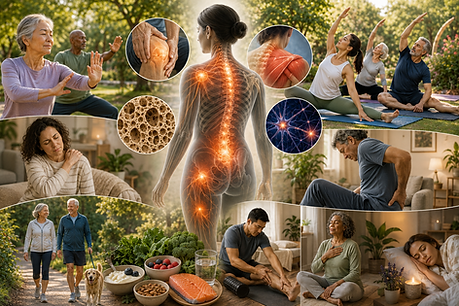
Chronic pain and musculoskeletal conditions affect millions of people and are among the leading causes of reduced mobility, disability, fatigue, and loss of quality of life worldwide. These conditions often involve far more than isolated joint pain or aging alone. Muscles, bones, connective tissues, nerves, circulation, inflammation, stress systems, sleep quality, and recovery capacity all work together to influence how the body feels and functions each day.
Musculoskeletal conditions may include:
-
Osteoarthritis
-
Osteoporosis
-
Rheumatoid arthritis
-
Fibromyalgia
-
Chronic back and neck pain
-
Degenerative disc disease
-
Sciatica and nerve pain
-
Joint disorders
-
Muscle weakness and mobility decline
-
Autoimmune inflammatory conditions
-
Connective tissue disorders
-
Age-related mobility and balance changes
While each condition is different, many share overlapping influences involving inflammation, nervous system sensitivity, injury history, repetitive strain, sedentary living, stress overload, sleep disruption, environmental conditions, and reduced recovery capacity.
Osteoarthritis & Joint Degeneration
Osteoarthritis is one of the most common musculoskeletal conditions, particularly with aging. It involves gradual joint degeneration, cartilage wear, inflammation, stiffness, swelling, and reduced mobility. Hips, knees, hands, shoulders, and the spine are commonly affected. Symptoms may fluctuate depending on activity levels, inflammation, sleep quality, stress, and overall physical conditioning.
Learn more:
-
Movement & Structural Function
-
Food, Inflammation & Musculoskeletal Support
-
Recovery & Physical Resilience
Osteoporosis & Bone Health
Osteoporosis involves reduced bone density and increased fracture risk. Bone health is influenced by aging, hormones, movement, nutrition, sunlight exposure, medications, inflammation, and muscle strength. Fractures, spinal compression, balance changes, and reduced confidence in movement may significantly impact independence and daily life.
Learn more:
-
Osteoporosis & Bone Health
-
Nutrition & Metabolic Regulation
-
Movement & Structural Function
Rheumatoid Arthritis & Autoimmune Conditions
Unlike osteoarthritis, rheumatoid arthritis and related autoimmune conditions involve immune system dysregulation that may affect joints, connective tissues, energy regulation, and inflammatory pathways throughout the body. Symptoms may include joint swelling, pain, fatigue, stiffness, flares, and reduced mobility. Stress, infections, poor sleep, and recovery overload may sometimes worsen symptoms.
Learn more:
-
Autoimmune & Inflammatory Conditions
-
Immune & Inflammatory Regulation
-
Gut Function & Microbial Balance
Fibromyalgia & Nervous System Sensitivity
Fibromyalgia is often associated with heightened nervous system sensitivity rather than a single structural injury alone. Individuals may experience widespread pain, fatigue, sleep disruption, sensory sensitivity, brain fog, and nervous system overload. Stress, poor sleep, illness, emotional strain, and overexertion may increase symptom intensity.
Learn more:
-
Stress & Regulation
-
Sleep & Circadian Rhythm
-
Brain Function
Chronic Back, Neck & Spine Conditions
Back and spine conditions may involve muscle strain, degenerative disc disease, spinal arthritis, nerve compression, sciatica, postural strain, injury history, or connective tissue changes. Modern sedentary lifestyles, repetitive movement patterns, poor ergonomics, and reduced physical conditioning may all contribute to chronic discomfort and reduced mobility.
Learn more:
-
Built Environment
-
Movement & Structural Function
-
Cardiovascular & Circulatory Regulation
Muscle Weakness, Balance & Mobility Changes
Pain often reduces normal movement, which may gradually contribute to muscle weakness, joint instability, stiffness, poor balance, reduced circulation, and increased fall risk. This cycle of pain and deconditioning may become more pronounced with aging or long-term illness. Gentle supportive movement and gradual conditioning may help support strength, coordination, flexibility, and daily function over time.
Learn more:
-
Recovery & Physical Resilience
-
A Supportive Day for Musculoskeletal Health
-
Supporting Musculoskeletal Health Through the Seasons of Life
Connective Tissue & Fascia Involvement
Connective tissues and fascia help support posture, movement, flexibility, and force transfer throughout the body. Injury, immobility, inflammation, dehydration, repetitive strain, surgery, and chronic tension may contribute to stiffness, restricted movement, shifting pain patterns, and muscular guarding.
Stress, Sleep & Pain Amplification
Sleep disruption and chronic stress may strongly influence pain sensitivity, inflammation, muscle tension, fatigue, and recovery capacity. Many individuals notice worsening symptoms during periods of emotional strain, illness, poor sleep, caregiver overload, or environmental stress. Supporting nervous system regulation and restorative sleep often becomes an important part of long-term musculoskeletal support.
Learn more:
-
Sleep & Circadian Rhythm
-
Stress & Regulation
-
Brain Function
Why Symptoms Often Fluctuate
Many musculoskeletal conditions involve fluctuating symptoms rather than steady progression alone. Pain, stiffness, fatigue, mobility, and nervous system sensitivity may change depending on sleep quality, stress load, activity levels, inflammation, illness, hydration, weather, hormones, nutrition, and recovery time. Learning to recognize patterns may help individuals better protect recovery capacity and reduce cycles of overexertion and symptom crashes.
Chronic Pain Is Multifactorial
Chronic musculoskeletal conditions rarely involve a single isolated cause. Most reflect overlapping influences involving structure, inflammation, nervous system processing, sleep quality, movement patterns, stress load, aging, nutrition, environment, and social conditions. Understanding these connections may help support more realistic, compassionate, and supportive approaches to long-term health and daily living.
Learn More
For deeper understanding of how these systems connect together, including scientific and research references for this entire cluster, please visit the main Chronic Pain & Musculoskeletal Conditions Overview page.
Osteoporosis & Bone Health

Listen to This Page
The written text on this page serves as the full and official version of this content
Bones are living tissues that constantly rebuild and adapt throughout life. Bone strength is influenced by movement, nourishment, hormones, sunlight exposure, muscle strength, sleep quality, inflammation, medications, and overall health. As people age, bone density may gradually decline, increasing the risk of fractures, posture changes, pain, balance difficulties, and reduced mobility. Osteoporosis often develops slowly over many years without obvious symptoms until a fracture occurs. Because of this, supportive daily habits that help maintain bone strength and physical stability may become important long before significant bone loss develops. While aging plays a role, bone health is also closely connected to the broader conditions of everyday living.
Supporting Bone Health Before Problems Develop
Bone-supportive living often begins with consistent daily habits rather than extreme interventions.
Important supportive foundations may include:
-
Regular weight-bearing movement such as walking, gardening, resistance training, or gentle strength work
-
Maintaining muscle strength and balance to help reduce fall risk
-
Adequate protein intake to support both muscle and bone tissue
-
Nutrient-rich foods containing calcium, magnesium, potassium, vitamin K, and trace minerals
-
Healthy vitamin D levels supported through safe sunlight exposure and nutrition
-
Reducing smoking and excessive alcohol use
-
Supporting sleep quality and recovery
-
Avoiding long-term sedentary living where possible
Movement is particularly important because bones respond to physical load and muscular activity. Even gentle regular movement may help support balance, coordination, circulation, posture, and physical resilience over time.
This connects with:
-
Movement & Structural Function
-
Nutrition & Metabolic Regulation
-
Sleep & Circadian Rhythm
-
Recovery & Physical Resilience
Living with Osteoporosis & Bone Loss
Living with osteoporosis may involve concerns about fractures, falling, pain, posture changes, reduced confidence in movement, and loss of independence. Some individuals experience spinal compression fractures, height loss, chronic discomfort, or increasing difficulty with mobility and daily activities. At the same time, many people continue to live active and meaningful lives while supporting bone health through practical daily adjustments.
Supportive approaches may include:
-
Safe strength and balance training
-
Fall prevention strategies
-
Improving home safety and lighting
-
Supportive footwear and posture awareness
-
Protecting sleep and recovery capacity
-
Maintaining regular movement without excessive strain
-
Supporting muscle strength to help stabilize joints and reduce fall risk
-
Managing inflammation, stress overload, and fatigue
Many individuals become fearful of movement after diagnosis. However, complete inactivity may contribute to further muscle weakness, instability, reduced balance, and declining mobility. Supportive movement often focuses on gradual, realistic activity that helps maintain confidence and physical function safely over time.
Bone Health, Aging & Recovery
Bone density naturally changes with aging, hormonal shifts, menopause, reduced activity, chronic illness, inflammation, medication use, and nutritional status. Recovery after fractures or injuries may also become slower with age.
Bone health is closely connected to:
-
Muscle strength
-
Nervous system balance
-
Circulation
-
Physical conditioning
-
Nutrition
-
Inflammation levels
-
Recovery capacity
Because these systems are interconnected, supportive bone health often involves caring for the whole body rather than focusing on bones alone.
Environmental & Lifestyle Influences
Modern living conditions may also influence bone and musculoskeletal health over time. Sedentary lifestyles, long periods indoors, reduced sunlight exposure, highly processed food patterns, chronic stress, poor sleep, smoking, excessive alcohol use, and limited physical activity may all contribute to declining resilience. Creating supportive daily conditions may help strengthen not only bones, but also balance, mobility, confidence, and overall quality of life.
A Supportive Perspective
Osteoporosis and bone loss do not define a person’s future. While bone changes may increase vulnerability, supportive daily living may still help many individuals maintain strength, movement, participation, and independence for years to come. Small consistent habits involving movement, nourishment, recovery, sleep, sunlight exposure, balance support, and physical conditioning often matter more than perfection.
Learn More
Additional scientific research, biological explanations, related support areas, and broader educational information can be found in the main Chronic Pain and Musculoskeletal Conditions Overview page within SoilToSelfLiving.