
Mobility, Balance & Recovery


Supporting joint function, coordination, and long-term movement capacity

Listen to This Page
The written text on this page serves as the full and official version of this content
Mobility, balance, and recovery help maintain comfortable movement throughout life.
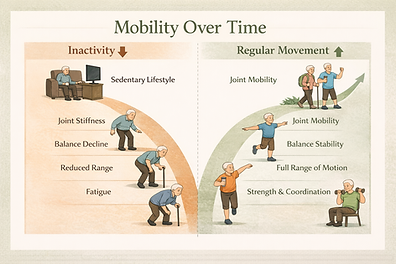
Mobility, balance, and recovery work together to keep the body moving safely and confidently. Mobility supports joint movement, balance maintains stability, and recovery allows the body to adapt. These become increasingly important with age, when coordination and stability can gradually decline.
Why This Matters (Especially With Aging)
-
Joint stiffness can change movement patterns and increase strain
-
Balance naturally declines over time, raising fall risk
-
Reduced coordination can limit confidence and independence
The key: these abilities are trainable and maintainable with regular practice.
What to Do: Daily Mobility
Keep joints moving through comfortable ranges:
-
shoulder, hip, and ankle circles
-
gentle spinal twists
-
reaching overhead and side-to-side
How:
-
5–10 minutes most days
-
slow, controlled movement
-
never force into pain
This helps maintain joint comfort and reduces stiffness from sitting or repetitive patterns.
What to Do: Balance Training
Balance must be practiced directly—especially with age.
Simple options:
-
stand on one foot (10–20 seconds each side)
-
heel-to-toe walking
-
slow step-ups
-
gentle weight shifts
How:
-
practice several times per week
-
use a wall, chair, or counter for safety
-
focus on control, not speed
Even brief, consistent practice helps maintain coordination and reduces fall risk.
What to Do: Maintain Coordination
The body responds best to varied movement patterns:
-
walk on different terrain
-
climb stairs
-
garden or perform outdoor tasks
-
include structured movement like yoga or tai chi
Changing movement patterns helps maintain full-body coordination and responsiveness.
Recovery: What to Know
Recovery allows the body to adapt and maintain function.
Support it with:
-
light movement on rest days
-
gentle stretching
-
adequate sleep
-
spacing more demanding activity
Recovery becomes more important with age, as the body adapts more slowly.
Practical Weekly Rhythm
-
Daily: 5–10 minutes joint mobility
-
3x per week: balance practice
-
Weekly: include varied movement (terrain, activities, or classes)
Small, consistent inputs are more effective than occasional long sessions.
Across the Lifespan
-
Younger years: mobility and balance often maintained naturally through varied movement
-
Midlife: intentional practice becomes important as daily movement patterns narrow
-
Later years: regular balance and mobility work become essential for independence and fall prevention
Key Principle
Mobility and balance are not automatic; they are maintained through use. A few minutes of consistent practice can preserve stability, confidence, and independence over time.
Safety & When to Seek Support
-
Keep all movement controlled and within a comfortable range
-
Use support for balance exercises when needed
-
Stop if pain or instability increases
Seek evaluation if you experience:
-
frequent falls or worsening balance
-
persistent joint restriction
-
movement limited by pain

• shoulder circles
• neck rotations
• hip circles
• ankle rotations
• gentle spinal twists
• reaching overhead and side-to-side

