
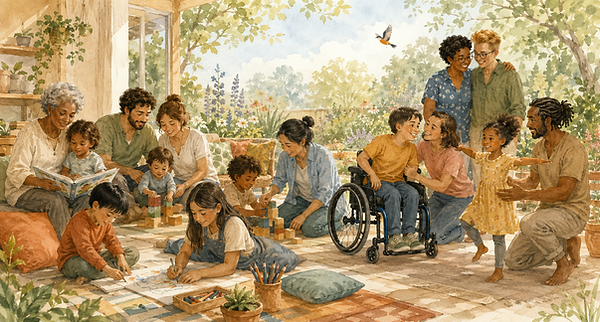
Different Ways Children Learn, Focus, Communicate,
Move & Respond
Listen to This Page
The written text on this page serves as the full and official version of this content
Understanding Neurodevelopmental, Learning, Sensory and Behavioral Differences
Every child’s brain and nervous system develop differently. Children vary in how they concentrate, communicate, learn, move, manage emotions, understand social situations, and respond to sound, light, touch, activity, and change.
Some children are diagnosed with a neurodevelopmental, learning, communication, sensory, emotional, or behavioral condition. Others may need additional support without meeting the criteria for a particular diagnosis. A child may also have several overlapping conditions.
These differences may include:
-
Attention-deficit/hyperactivity disorder, or ADHD
-
Autism spectrum disorder
-
Dyslexia, dyscalculia, dysgraphia, and other learning disabilities
-
Speech, language, and social-communication disorders
-
Developmental coordination disorder or dyspraxia
-
Tic disorders and Tourette syndrome
-
Intellectual disability or developmental delay
-
Fetal alcohol spectrum disorders
-
Anxiety, obsessive-compulsive disorder, depression, or trauma-related conditions
-
Disruptive mood dysregulation, oppositional, or other behavioral diagnoses
-
Sensory, auditory, or visual-processing difficulties
-
Twice-exceptionality, in which giftedness occurs together with a disability or developmental condition
A Brief Note About Asperger’s
Asperger’s syndrome was previously diagnosed as a separate condition. It generally described people with average-to-exceptional intellectual or language abilities who experienced differences in social communication, sensory processing, flexibility, focused interests, or emotional regulation.
Asperger’s is no longer a separate diagnosis under current U.S. guidelines. It is now included within autism spectrum disorder. Some people and professionals continue using the older name because it is familiar or was the person’s original diagnosis.
Looking Beyond the Behavior
Behavior is often one way a child communicates a need that cannot yet be explained in words. Difficulty concentrating, sitting still, following directions, changing activities, joining groups, or managing strong emotions may indicate a need for movement, rest, reassurance, clearer communication, additional processing time, or a different learning environment.
Similar behavior can have different explanations. Attention, activity, learning, and emotional regulation may be affected by:
-
Sleep disruption
-
Hunger, dehydration, or digestive discomfort
-
Anxiety, grief, chronic stress, or trauma
-
Hearing or vision difficulties
-
Pain, illness, or medication effects
-
Speech, language, or learning differences
-
Sensory overload
-
Environmental exposures
-
Classroom demands that do not fit the child’s needs
-
Too little movement, outdoor time, creative play, or restorative quiet
A diagnosis can help families understand a child and obtain useful services, but it should never become the child’s entire identity.
Supportive Daily Conditions
Everyday support cannot cure autism, ADHD, or another developmental condition. It can, however, reduce unnecessary strain and help a child participate, communicate, learn, and feel more comfortable.
Helpful daily conditions may include:
-
Predictable routines and advance notice of changes
-
Regular sleep and wake times
-
Morning daylight and a calming evening routine
-
Balanced meals, appropriate snacks, and regular access to water
-
Frequent movement and outdoor activity
-
Quiet places for learning or recovery
-
Reduced sensory overload when possible
-
Clear instructions divided into manageable steps
-
Pictures, schedules, demonstrations, or written reminders
-
Time to process questions and directions
-
A balance of digital media, hands-on activities, relationships, and play
-
Calm adult support during emotional overload
-
Learning activities built around the child’s interests and strengths
The goal is not to force every child to behave, communicate, or learn in the same way. It is to create conditions in which the individual child can function more successfully.
Evaluation and Professional Support
There is no single test that explains every developmental or behavioral concern. A thorough evaluation may consider the child’s development, learning, communication, sleep, nutrition, physical health, sensory needs, emotional experiences, home environment, and school setting.
Depending on the concern, families may consult:
-
A pediatrician or primary healthcare professional
-
A developmental-behavioral pediatrician
-
A child psychologist or psychiatrist
-
A neurologist
-
A speech-language pathologist
-
An occupational or physical therapist
-
An audiologist or vision specialist
-
An educational psychologist or learning specialist
-
A registered dietitian when nutrition or restricted eating is a concern
Evaluation may include hearing and vision testing, developmental and learning assessments, sleep and health reviews, speech-language evaluation, and screening for anxiety, trauma, ADHD, autism, or other conditions.
Support may include changes at home or school, speech or occupational therapy, counseling, parent education, learning assistance, behavioral support, medication, or a combination of approaches. Medication may help some children, but it should be individualized and monitored. It should not replace efforts to understand the child’s health, learning environment, communication, and daily needs.
Families should be cautious about programs claiming that a restrictive diet, supplement, detoxification program, device, or other treatment can cure a developmental condition. Discuss possible benefits, risks, interactions, and costs with a qualified professional.
Learning at School, at Home, or Through a Combination
Children may learn in public or private schools, charter schools, specialized programs, online schools, homeschool settings, learning cooperatives, or hybrid programs that combine home and classroom learning. Each setting can offer meaningful benefits, and each may present challenges. A child’s needs, temperament, health, abilities, family circumstances, and access to community resources can help determine which arrangement works best.
Possible benefits of homeschooling or home-based learning include:
-
Learning that can move at the child’s pace
-
More flexibility for medical needs, disabilities, sensory differences, family travel, or changing energy levels
-
Opportunities to follow the child’s interests and use hands-on learning
-
A quieter or more predictable environment for children who become overwhelmed in large classrooms
-
More time for family connection, outdoor learning, creative activities, and community experiences
-
Greater flexibility in choosing teaching methods and materials
-
Protection from persistent bullying or an unsafe school environment
Possible challenges include:
-
The time, energy, organization, and financial demands placed on parents or caregivers
-
Fewer naturally occurring opportunities for daily interaction with a broad group of children and adults
-
The need to intentionally provide friendships, teamwork, physical activity, and community participation
-
Difficulty teaching certain subjects or recognizing when a child needs specialized evaluation or support
-
Limited access to equipment, laboratories, arts programs, sports, counselors, therapists, or special education services
-
Increased family stress when the caregiver must be parent, teacher, organizer, and support person at the same time
-
The possibility that online learning may involve too much screen time or too little movement and direct interaction
Homeschooling does not automatically mean social isolation, just as attending school does not automatically guarantee healthy relationships. Homeschooled children may build strong connections through neighborhood friendships, libraries, sports, faith communities, arts programs, volunteer activities, homeschool groups, and learning cooperatives. These opportunities usually need to be planned intentionally.
Whatever learning setting is chosen, children benefit from caring relationships, appropriate academic challenge, movement, play, time outdoors, creative expression, friendships, predictable routines, and access to professional support when concerns arise. Families may also change learning arrangements as a child’s needs and circumstances change. State requirements and access to evaluations or educational services differ, so families should review the rules and resources available where they live.
Working Together
Parents, caregivers, teachers, and healthcare professionals may see different parts of the child’s experience. Sharing observations can help identify when difficulties occur, what may be contributing, and what helps. School-age children may qualify for an evaluation and support through an Individualized Education Program, commonly called an IEP, or a Section 504 plan. Support should be based on the child’s individual needs rather than the diagnostic name alone.
Every child deserves to be understood before being judged. Looking at the whole child including the developing brain, body, health, surroundings, experiences, relationships, abilities, and needs creates a stronger foundation for meaningful support.
Scientific Reference Summary
-
American Psychiatric Association: Neurodevelopmental Disorders
Summarizes recognized neurodevelopmental categories, including ADHD, autism, communication disorders, intellectual disability, motor and tic disorders, and specific learning disorder. -
American Psychiatric Association: Autism Spectrum Disorder
Explains current autism classification, social-communication characteristics, repetitive or focused patterns, and the wide variation in individual support needs. -
CDC: Diagnosing ADHD
Explains that ADHD has no single diagnostic test and that sleep disorders, anxiety, depression, learning disabilities, hearing difficulties, and vision problems may produce similar symptoms or occur alongside ADHD. -
CDC: Autism Screening and Diagnosis
States that no single assessment tool should be used by itself to diagnose autism. Evaluation combines developmental history, caregiver information, and professional observation. -
American Academy of Pediatrics: ADHD Clinical Practice Guideline
Recommends screening for co-occurring emotional, developmental, learning, language, autism, tic, and sleep conditions during an ADHD evaluation. -
National Institute of Environmental Health Sciences: Neurodevelopmental Research
Describes continuing research into how lead, mercury, pesticides, air pollution, and other environmental exposures may affect brain development, learning, and behavior. These factors may influence risk but should not automatically be assumed to have caused an individual child’s diagnosis.
Parent, Caregiver and Teacher Resource Summary
-
CDC: Learn the Signs. Act Early.
Provides developmental milestones, observation tools, activity ideas, and guidance for discussing concerns with a healthcare professional. -
HealthyChildren.org
Offers family-friendly guidance from the American Academy of Pediatrics about development, ADHD, autism, sleep, nutrition, emotional health, media use, and school concerns. -
CDC: Accessing Autism and Developmental Services
Explains early-intervention services and where families can begin when they have concerns about a child’s development. -
U.S. Department of Education: IDEA
Provides information about early intervention, special education, IEPs, related services, and the educational rights of eligible children and families. -
U.S. Department of Education: Section 504
Explains school evaluations, accommodations, educational access, and parent safeguards under Section 504. -
National Association for Gifted Children
Provides information about gifted and twice-exceptional children whose advanced abilities may occur alongside ADHD, autism, learning disabilities, or other support needs.

Understanding the Conditions
Listen to This Page
The written text on this page serves as the full and official version of this content
Neurodevelopmental, learning, communication, sensory, emotional, and behavioral conditions can influence how a child receives information, communicates, moves, learns, forms relationships, manages daily tasks, and responds to the surrounding world.
Some conditions begin as the brain and nervous system develop. Others may be connected with emotional experiences, physical health, prenatal conditions, injury, environmental exposures, or several interacting factors. A child may have more than one diagnosis, and similar outward behaviors can have very different explanations.
Attention-Deficit/Hyperactivity Disorder
ADHD affects the regulation of attention, activity, impulses, organization, time, and sometimes emotions. It may appear primarily as inattention, primarily as hyperactivity and impulsivity, or as a combination. A child may concentrate deeply on something interesting while struggling to direct attention toward a repetitive, lengthy, or unclear task. ADHD is not caused by laziness, inadequate discipline, or low intelligence.
Autism Spectrum Disorder
Autism affects social communication, sensory processing, flexibility, interests, routines, and the way information is understood and organized. Autistic children have widely different intellectual, language, physical, and daily support needs. Some communicate through speech, while others use gestures, pictures, sign language, communication devices, or several methods. Autism does not automatically indicate either intellectual disability or exceptional intelligence.
Asperger’s syndrome was previously diagnosed separately and generally described people with average-to-exceptional intellectual and language abilities who experienced social-communication, sensory, flexibility, focused-interest, or emotional-regulation differences. It is now included within autism spectrum disorder, although some people and professionals continue using the older name.
Learning Disabilities
Learning disabilities affect how a child receives, organizes, remembers, or uses particular kinds of information. They do not indicate low intelligence.
These may include:
-
Dyslexia: Differences involving reading, spelling, and written language
-
Dysgraphia: Difficulties with handwriting, written expression, or organizing thoughts on paper
-
Dyscalculia: Difficulties understanding numbers, quantities, calculations, or mathematical relationships
-
Other learning differences: Difficulties involving comprehension, memory, processing speed, visual-spatial information, or executive functioning
A child may be highly capable in some subjects while requiring substantial support in another.
Speech, Language & Social-Communication Disorders
Communication conditions may affect speech sounds, fluency, understanding language, expressing thoughts, finding words, organizing sentences, or using language in social situations. Diagnoses may include language disorder, speech-sound disorder, childhood apraxia of speech, stuttering, and social or pragmatic communication disorder. Some children may use augmentative or alternative communication. Communication ability should never be judged only by the amount of spoken language a child uses.
Developmental Coordination Disorder or Dyspraxia
Developmental coordination disorder affects movement, motor planning, balance, posture, and the ability to learn or complete physical tasks. A child may struggle with handwriting, dressing, utensils, sports, navigating spaces, or completing a sequence of movements. These difficulties should not be mistaken for laziness, carelessness, or refusal. Appropriate instruction, additional time, occupational or physical therapy, and adapted tools may help.
Tic Disorders & Tourette Syndrome
Tics are repeated movements or sounds that are not voluntarily chosen in the usual sense. They may include blinking, facial movements, head movements, throat clearing, sniffing, or vocal sounds. Tourette syndrome involves both motor and vocal tics over time. Tics may become more noticeable during excitement, fatigue, illness, or stress. Calling attention to them or repeatedly telling the child to stop may increase discomfort.
Intellectual Disability & Developmental Delay
Developmental delay may be identified when a young child develops movement, communication, learning, social, or daily-living abilities more slowly than expected. Global developmental delay involves significant differences in several developmental areas. Intellectual disability affects intellectual functioning and everyday adaptive abilities. Children with these diagnoses continue learning and developing throughout life. They deserve meaningful communication, choices, relationships, education, and opportunities to participate.
Fetal Alcohol Spectrum Disorders
Fetal alcohol spectrum disorders, or FASDs, describe lifelong developmental effects associated with alcohol exposure before birth. They may affect attention, memory, impulse control, learning, communication, judgment, emotional regulation, and the ability to apply information in a new situation. A child may understand a direction one day but be unable to remember or use it consistently another day. This can be mistaken for deliberate disobedience when the child needs repetition, structure, supervision, and concrete guidance.
Anxiety, OCD, Depression & Trauma-Related Conditions
Emotional and trauma-related conditions can strongly influence attention, learning, sleep, communication, relationships, and behavior.
-
Anxiety may appear as worry, avoidance, restlessness, irritability, repeated questions, perfectionism, or physical discomfort.
-
Obsessive-compulsive disorder involves unwanted recurring thoughts, compulsive actions, or both.
-
Depression may involve sadness, withdrawal, irritability, loss of interest, sleep changes, hopelessness, or reduced functioning.
-
Trauma-related conditions may involve hypervigilance, avoidance, emotional distress, physical responses to reminders, or difficulty feeling safe.
These conditions can occur independently or alongside neurodevelopmental and learning differences.
Mood, Oppositional & Behavioral Diagnoses
Disruptive mood dysregulation disorder involves persistent irritability and frequent, intense emotional outbursts. Oppositional defiant disorder and other behavioral diagnoses describe continuing patterns of conflict, defiance, aggression, or difficulty controlling behavior. A behavioral diagnosis describes what has been observed, but it may not fully explain why it is happening. Evaluation should also consider communication, learning, sleep, pain, anxiety, trauma, sensory overload, neurodevelopment, relationships, and whether expectations fit the child’s abilities.
Sensory, Auditory & Visual-Processing Difficulties
Some children experience sound, light, touch, movement, smell, taste, temperature, pain, or internal body sensations more or less intensely than others. A child may avoid particular sensations, seek additional input, or have difficulty recognizing hunger, thirst, discomfort, or the need to use the bathroom.
Auditory- and visual-processing difficulties can affect the way the brain organizes information that has been heard or seen, even when basic hearing or eyesight appears typical. Specialized evaluation may be needed.
Sensory-processing difficulties are recognized support needs, although sensory processing disorder is not currently a stand-alone diagnosis in major U.S. psychiatric diagnostic guidelines.
Twice-Exceptionality
Twice-exceptionality, commonly called 2e, describes a child who is intellectually gifted while also having ADHD, autism, a learning disability, anxiety, or another condition affecting learning or participation. It is an educational description rather than a medical diagnosis. The child’s abilities may hide the disability, while the disability may prevent adults from recognizing the child’s giftedness. Evaluation and education should address both the advanced abilities and the areas requiring support.
Understanding Overlap
These conditions do not always fit into separate boxes. A child may have ADHD and dyslexia, autism and anxiety, giftedness and a learning disability, or several overlapping needs. Sleep disruption, hearing or vision difficulties, pain, chronic illness, medication effects, environmental exposures, and stressful experiences may also influence how the child functions.
The purpose of evaluation should not be simply to assign a label. It should help adults understand:
-
How the child learns and communicates
-
What contributes to difficulty or overload
-
Which strengths can support development
-
Whether health or environmental conditions need attention
-
What adjustments are needed at home and school
-
Which educational, therapeutic, or medical services may help
A diagnosis can provide understanding and access to support, but it should never become the child’s entire identity.
Living With Neurodevelopmental, Learning, Sensory & Behavioral Differences

Listen to This Page
The written text on this page serves as the full and official version of this content
A diagnosis describes part of a child’s development, but it cannot fully describe the child. Two children with the same diagnosis may communicate, learn, move, form relationships, and manage daily life very differently. To understand the child’s experience, adults must look beyond what is visible. A child who appears inattentive, oppositional, overly active, withdrawn, disorganized, or emotionally overwhelmed may be working much harder than others realize.
Daily Life From the Child’s Perspective
Differences in brain and nervous-system development may affect several parts of daily life at once.
Communication
A child may know what they want to say but need more time to find the words. Spoken instructions may be difficult to remember, especially when several steps are given together. Tone of voice, humor, facial expressions, figurative language, and unspoken social expectations may also be hard to interpret. Some children communicate more successfully through pictures, gestures, writing, sign language, demonstrations, or communication devices. Limited speech does not necessarily mean limited understanding.
Attention & Planning
A child may have difficulty beginning a task, deciding what to do first, organizing materials, estimating time, remembering instructions, or moving from one activity to another. The child may focus deeply on a preferred activity but struggle with a task that feels repetitive, confusing, overwhelming, or disconnected from their interests. This inconsistency may be mistaken for a choice not to cooperate.
Movement & Coordination
Some children need frequent movement to remain comfortable and attentive. Others may have difficulty with balance, handwriting, dressing, eating utensils, sports, or sequences of movement. A child who avoids a physical task may be protecting themselves from embarrassment, fatigue, discomfort, or repeated failure rather than refusing to participate.
Learning
A child may understand complex ideas but struggle to read, write, calculate, remember instructions, or show what they know within a time limit. Another child may need information repeated, demonstrated, or presented in smaller steps. Uneven ability is common. Advanced vocabulary or intelligence does not guarantee that organization, emotional regulation, handwriting, communication, or independent living skills are equally developed.
Sensory Processing
Ordinary sounds, lights, textures, smells, crowds, temperatures, or physical contact may feel unusually intense. Other children may seek movement, pressure, sound, or touch to help their bodies feel organized. Sensory discomfort is real even when other people are not bothered by the same environment. A child may be unable to concentrate, communicate, or remain composed until the sensory demand is reduced.
Emotions
Some children experience emotions quickly and intensely or need additional time to regain balance. Anxiety, frustration, disappointment, excitement, unexpected change, or social confusion may temporarily reduce the ability to speak, listen, reason, or complete a task. Emotional regulation develops through supportive relationships, practice, and appropriate expectations. It is not taught effectively through humiliation, fear, or punishment during overload.
Relationships
A child may want friendship but not know how to begin or maintain it. Interrupting, missing social cues, speaking extensively about an interest, needing to control play, withdrawing from groups, or interpreting language literally may create misunderstandings. Children may also face teasing, exclusion, or bullying because they communicate, move, learn, or respond differently. Social support should help all children understand one another rather than placing the entire responsibility for fitting in on the diagnosed child.
Why Abilities Can Appear Inconsistent
A child may complete a task successfully one day and struggle with it the next. This does not necessarily mean the child is being manipulative or has decided not to try. Available ability may change with:
-
Sleep and physical health
-
Hunger, thirst, pain, or digestive discomfort
-
Noise, light, crowds, and other sensory conditions
-
Anxiety, grief, stress, or trauma reminders
-
The number and complexity of instructions
-
Familiarity with the setting or people
-
Interest and personal meaning
-
Unexpected changes
-
Social and academic demands
-
The amount of support available
-
The effort already spent adapting earlier in the day
Being able to perform a task occasionally is not the same as being able to do it consistently, independently, and under every condition.
Successful at School but Struggling at Home
Some children use most of their available energy to follow rules, manage sensory discomfort, remember instructions, and appear composed at school. When they reach a familiar and safer environment, the accumulated strain may appear as tears, irritability, withdrawal, increased movement, refusal, or exhaustion. This does not automatically mean that home is causing the problem or that school reports are inaccurate. The two environments may be seeing different parts of the same child’s experience. The reverse may also occur. A child may function comfortably at home but struggle at school because of noise, social demands, transitions, complex instructions, limited movement, or fear of making mistakes. Information from both settings is necessary to understand the pattern.
Masking & Continual Adaptation
Masking occurs when a child hides differences or copies expected behavior to avoid embarrassment, punishment, exclusion, or unwanted attention. A child may force eye contact, suppress movement, imitate classmates, rehearse conversations, remain silent rather than ask for help, or hide confusion and distress. Masking can make a child appear to be managing successfully while requiring considerable mental and physical effort. It may contribute to exhaustion, anxiety, reduced confidence, emotional overload after school, or delayed recognition of support needs. Children should be taught useful skills, but they should not have to continually hide harmless aspects of themselves to earn acceptance. Support should emphasize communication, comfort, participation, safety, and genuine development not appearance alone.
Difficulty Is Not the Same as Unwillingness
A child may understand what is expected yet be temporarily unable to begin, organize, remember, communicate, or complete it. Before concluding that the child “will not,” adults should consider whether the child:
-
Understands the instruction
-
Remembers all the steps
-
Has the required language, motor, or learning ability
-
Is experiencing sensory or emotional overload
-
Needs movement, food, water, rest, or medical attention
-
Is afraid of failure, correction, or embarrassment
-
Needs the task divided into smaller parts
-
Can complete the task with support but not yet independently
This does not mean children should have no boundaries or responsibilities. It means expectations should be clearly taught, developmentally appropriate, and supported in ways the child can use.
Dignity, Choice & Being Understood
Children need opportunities to make meaningful choices about clothing, food, activities, communication, personal space, sensory supports, and how they demonstrate learning. Choice builds participation, self-awareness, and independence. Adults should speak to the child directly, allow processing time, and avoid discussing personal difficulties publicly when the child can hear. A diagnosis should never be used as an insult, threat, or explanation for everything the child does. Support should protect:
-
Physical and emotional safety
-
Privacy and personal boundaries
-
Access to communication
-
Participation in family and community life
-
Opportunities to develop interests and friendships
-
Freedom from humiliation and unnecessary isolation
-
The right to be included in decisions when developmentally possible
Effects on Other Children in the Family
Siblings and other children in the household are also affected by family routines, appointments, emotional intensity, and differences in adult attention. They may feel protective and loving while also feeling worried, embarrassed, resentful, confused, overlooked, or responsible.
Children in the family may:
-
Copy behaviors they observe
-
Become unusually quiet or independent
-
Compete for adult attention
-
Try to parent or protect the diagnosed child
-
Avoid bringing friends home
-
Feel that household rules are unfair
-
Worry about upsetting the child or adults
-
Experience anger and then feel guilty about it
These feelings do not mean the sibling is unkind. They indicate a need for information, reassurance, individual attention, and permission to express mixed emotions safely.
Adults can help by:
-
Explaining the condition in age-appropriate language
-
Protecting regular individual time with each child
-
Avoiding expectations that siblings become caregivers
-
Maintaining fair boundaries while recognizing that fair does not always mean identical
-
Including siblings in family planning without making them responsible for the solution
-
Providing a private place for belongings, rest, and friendships
-
Seeking additional support when sibling distress continues
Adult Responses Within the Family
Parents, grandparents, and other caregivers may experience love, hope, worry, fatigue, grief, frustration, financial strain, and uncertainty at the same time. Adults may disagree about whether a behavior reflects disability, distress, temperament, parenting, or deliberate choice. Under continuing stress, adults may become overly protective, impatient, inconsistent, withdrawn, or focused almost entirely on preventing the next difficulty. One adult may enforce more rules while another relaxes expectations to avoid conflict. These patterns are understandable, but they can create additional uncertainty for everyone. Supportive family practices include:
-
Agreeing on a few essential expectations
-
Responding as calmly and consistently as possible
-
Separating immediate safety needs from minor differences
-
Discussing disagreements away from the children
-
Sharing caregiving responsibilities
-
Asking relatives to follow established support plans
-
Protecting adult rest, relationships, and health
-
Seeking family counseling, caregiver training, respite, or community assistance when needed
Adults do not need to respond perfectly. Repairing a difficult interaction—acknowledging it, listening, apologizing when appropriate, and trying a different approach—also teaches children important relationship skills.
Helping Families & Schools Work Together
Parents and teachers may see different behaviors because the environments place different demands on the child. Neither perspective should automatically be dismissed. Helpful communication includes:
-
Describing what occurred without labels such as lazy, manipulative, or bad
-
Recording what happened before and after a difficulty
-
Identifying conditions in which the child participates successfully
-
Sharing changes involving sleep, health, medication, family circumstances, or school demands
-
Agreeing on a small number of meaningful goals
-
Asking the child what helps
-
Reviewing whether support is teaching a skill or simply demanding compliance
-
Recognizing progress without expecting complete consistency
A child should not have to fail repeatedly before adults adjust the environment or request an evaluation.
References for Parents, Caregivers & Families
-
HealthyChildren.org — Family guidance from the American Academy of Pediatrics covering child development, behavior, communication, sleep, emotional health, ADHD, autism, learning, and family relationships.
-
CDC: Learn the Signs. Act Early. — Developmental milestones, family tools, and guidance for discussing concerns with healthcare professionals.
-
CDC: Developmental Disability Basics — An introduction to developmental conditions and the importance of early identification and support.
-
Center for Parent Information and Resources — Information for families about disabilities, evaluations, educational services, IEPs, and state Parent Training and Information Centers.
-
National Association for Gifted Children — Guidance concerning gifted and twice-exceptional children.
-
HealthyChildren.org: Supporting Children Through Stress — Explains how safe, stable, nurturing relationships support regulation and resilience.
References for Teachers & School Staff
-
U.S. Department of Education: Positive, Proactive Support for Children With Disabilities — Guidance for replacing exclusionary or punitive responses with positive, individualized support.
-
U.S. Department of Education: IDEA — Information about evaluations, special education, related services, IEPs, and family rights.
-
U.S. Department of Education: Section 504 — Guidance on disability evaluation, accommodations, educational access, and safeguards.
-
CDC: ADHD in the Classroom — Classroom strategies and guidance for cooperation among teachers, families, and healthcare professionals.
-
IRIS Center — Free, research-informed training resources for educators working with students who have learning, behavioral, and developmental support needs.
Scientific & Professional References
-
American Psychiatric Association: Neurodevelopmental Disorders — Clinical overview of ADHD, autism, communication, learning, intellectual, motor, and tic disorders.
-
American Academy of Pediatrics: ADHD Clinical Practice Guideline — Emphasizes evaluation across settings and screening for developmental, emotional, learning, and physical conditions.
-
Research on Camouflaging in Autistic Adolescents — Examines how some students hide developmental differences and support needs, particularly in mainstream classrooms.
-
CDC: Health Needs of Children With Developmental Disabilities — Summarizes the health, therapy, educational, and support needs experienced by children with developmental disabilities.
Strengths, Interests & Abilities
Listen to This Page
The written text on this page serves as the full and official version of this content
Children with neurodevelopmental, learning, sensory, emotional, or behavioral conditions should not be defined only by what is difficult for them. Every child has abilities, interests, preferences, and qualities that can support learning, relationships, confidence, and future independence. Recognizing strengths does not minimize genuine difficulties or remove the need for support. It provides a more complete understanding of the child and helps adults build from what is already working.
Strengths Are Individual
A diagnosis does not give every child the same abilities. Autism does not automatically create exceptional memory or mathematical talent. ADHD does not guarantee creativity, and dyslexia does not always produce strong visual reasoning. Depending on the individual child, strengths may include:
-
Creativity and imagination
-
Strong memory
-
Pattern recognition
-
Honesty and directness
-
Persistence and determination
-
Intense curiosity
-
Advanced knowledge about particular subjects
-
Careful attention to meaningful details
-
Visual, musical, mathematical, verbal, mechanical, physical, or artistic ability
-
Strong observation skills
-
Original problem-solving
-
Humor and enthusiasm
-
Loyalty and concern for others
-
Empathy expressed in less familiar ways
-
Comfort with routines, systems, or classification
-
Willingness to question accepted ideas
-
Deep concentration when genuinely interested
Strengths may be quiet or easy to overlook. A child does not need an extraordinary talent to have valuable abilities.
Interests Can Open Pathways
A strong interest can help a child connect with learning that might otherwise feel confusing or inaccessible. An interest in animals, weather, music, machines, space, plants, stories, numbers, maps, or another subject can be used to support reading, mathematics, communication, writing, movement, and friendship. For example:
-
A child interested in trains might practice reading schedules, measuring distances, drawing routes, or learning history.
-
A child who loves animals might build vocabulary, practice observation, care for a pet, or connect with other children through a shared interest.
-
A child drawn to music might use rhythm to remember information or support movement and emotional regulation.
-
A child interested in building might develop planning, coordination, mathematics, and collaborative problem-solving.
Interests should be supported without turning every enjoyable activity into a lesson. Children also need time to explore something simply because it brings pleasure, comfort, or meaning.
Abilities May Be Hidden
A child’s strengths may not appear through ordinary classroom work, conversation, timed testing, or group activities. Abilities can be hidden by:
-
Anxiety or fear of making mistakes
-
Difficulty understanding instructions
-
Limited spoken language
-
Handwriting or motor difficulties
-
Dyslexia or another learning disability
-
Slow processing speed
-
Attention or executive-function difficulties
-
Sensory overload
-
Depression, trauma, or emotional distress
-
Fatigue from masking or continual adaptation
-
Lack of access to appropriate materials or experiences
-
Testing methods that do not fit the child’s communication or movement needs
-
Expectations based only on the child’s diagnosis
A child who cannot write an answer may be able to explain it verbally, demonstrate it with objects, draw it, type it, or select it using a communication device. Changing how knowledge is expressed may reveal understanding that was previously overlooked.
Uneven Development
A child may be highly advanced in one area while needing considerable assistance in another. A child with sophisticated vocabulary may still struggle with emotional regulation, self-care, handwriting, friendship, or organization. A child who performs advanced calculations may need help managing transitions or communicating discomfort. High ability in one area should not be used to deny support in another. Likewise, a disability should not be used to limit access to advanced or challenging learning. This is especially important for twice-exceptional children, who are intellectually gifted and also have ADHD, autism, a learning disability, anxiety, or another condition. Their abilities and difficulties may mask one another, leaving both needs insufficiently recognized.
More Than Academic Ability
Strengths are not limited to grades or test results. A child may demonstrate ability through:
-
Caring for animals or plants
-
Repairing, sorting, building, or organizing
-
Remembering people, places, or events
-
Helping younger children
-
Understanding another person’s distress
-
Creating stories, art, music, games, or movement
-
Observing nature
-
Using technology
-
Recognizing fairness or inconsistency
-
Persisting with a meaningful task
-
Bringing humor or energy to a group
-
Developing practical solutions
Social contribution may also look different from conventional friendliness. A child may express empathy by sharing information, solving a problem, bringing a needed object, sitting quietly nearby, or protecting someone from unfair treatment.
Helping Children Recognize Their Abilities
Children who receive frequent correction may begin to believe that they are difficult, incapable, or disappointing. Adults can help create a more balanced understanding by noticing effort, progress, interests, and successful strategies. Helpful language includes:
-
“You noticed something important.”
-
“You stayed with that even when it was difficult.”
-
“You found another way to solve the problem.”
-
“You remembered a lot about that subject.”
-
“Your idea helped us see this differently.”
-
“You knew you needed a break.”
-
“You showed that you cared.”
-
“What helped you do that successfully?”
Praise should be specific and sincere. Constant or exaggerated praise can feel uncomfortable and may create pressure to perform. The goal is to help the child understand their own abilities rather than become dependent on adult approval.
Supporting Interests Without Creating Pressure
A strong ability can be encouraged through materials, mentors, clubs, lessons, community activities, library resources, outdoor experiences, and time for independent exploration. Adults should also watch for signs that an interest has become a source of pressure. A child who is talented in music, art, athletics, mathematics, or another area may still need rest, unstructured play, friendships, and permission to change interests. A gift belongs to the child. It should not become a family obligation, the child’s only identity, or a requirement to continually perform.
Family Support
Parents and caregivers may naturally spend considerable time addressing appointments, school concerns, difficult behavior, or daily tasks. Creating space for strengths can help family relationships include enjoyment and connection not only correction and management. Families can:
-
Give each child opportunities to share interests
-
Notice the strengths of siblings as well as the diagnosed child
-
Avoid comparing children’s grades, talents, behavior, or development
-
Provide individual time that is not centered on a problem
-
Let children teach family members about something they enjoy
-
Share responsibilities that match each person’s abilities
-
Celebrate progress without creating competition
-
Avoid making one child’s gift the center of family identity
-
Support siblings in developing interests of their own
Siblings should not be expected to surrender their activities continually or become an audience, assistant, protector, or caregiver. Every child in the family needs recognition, privacy, encouragement, and opportunities to develop.
Educational Support
Teachers can help uncover strengths by observing how a child approaches open-ended activities, hands-on tasks, discussion, play, independent interests, and problem-solving—not only worksheets and timed tests. Helpful educational practices include:
-
Offering several ways to learn and demonstrate knowledge
-
Connecting new material with meaningful interests
-
Providing appropriately challenging work
-
Allowing assistive technology and communication supports
-
Separating subject knowledge from handwriting, speed, or organizational difficulty
-
Including strengths and interests in an IEP or educational plan
-
Avoiding removal from advanced learning solely because the child needs disability support
-
Providing access to gifted evaluation when advanced ability is suspected
-
Asking families what the child does well outside school
-
Asking the child what they want to learn or improve
Strength-based teaching does not mean ignoring areas of difficulty. It uses competence, interest, and motivation to help the child develop skills and participate more fully.
Strengths Can Change
Children’s abilities and interests develop over time. A strong childhood interest may become a hobby, career, source of friendship, or simply a meaningful part of childhood. Other interests may fade as new ones appear. The goal is not to predict a child’s future too early. It is to provide enough opportunity, support, and flexibility for the child to discover what feels meaningful and what they may be capable of becoming.
References for Parents & Caregivers
-
HealthyChildren.org: Learning Disabilities and Differences — Encourages families to identify strengths, support social and emotional development, and help children connect their interests with future possibilities.
-
National Association for Gifted Children: Resources — Information about giftedness, advanced learning, identification, and twice-exceptional children.
-
CDC: Learn the Signs. Act Early. — Developmental information and tools that help families observe how children play, learn, communicate, act, and move.
-
Center for Parent Information and Resources — Family guidance about disabilities, evaluations, educational planning, and local parent-support organizations.
References for Teachers & School Staff
-
National Association for Gifted Children: Twice-Exceptional Students — Explains why gifted abilities and disabilities can mask one another and why both require appropriate educational support.
-
National Association for Gifted Children: Assessment and Twice-Exceptionality — Discusses strength-based assessment and identification of abilities that may be overshadowed by classroom difficulties.
-
IRIS Center — Free instructional resources for supporting varied learning, behavioral, and developmental needs.
-
U.S. Department of Education: IDEA — Information about individualized evaluation, educational planning, related services, and family participation.
Scientific & Professional Reference Summary
-
American Psychiatric Association: Neurodevelopmental Disorders — Describes neurodevelopmental conditions and their effects on learning, communication, attention, movement, and daily functioning.
-
CDC: Developmental Disability Basics — Explains that developmental conditions can affect physical, learning, language, and behavioral development in different ways.
-
National Association for Gifted Children: Glossary — Defines twice-exceptionality as giftedness occurring together with a disability and emphasizes the need to recognize both
Communication & Relationships
Listen to This Page
The written text on this page serves as the full and official version of this content
Communication is more than spoken words. Children communicate through speech, facial expression, movement, behavior, gestures, pictures, writing, sign language, communication devices, silence, and physical distance or closeness. A child’s communication may be affected by language development, attention, sensory processing, motor planning, anxiety, trauma, intellectual development, learning differences, or the effort required to organize thoughts. Communication may also change with the setting, the people present, and how comfortable or overwhelmed the child feels. Successful communication is a shared responsibility. The goal is not to require the child alone to adapt, but to help children and adults understand one another.
Spoken Communication.
Some children speak easily but have difficulty organizing thoughts, staying with a conversation, finding the right words, interpreting meaning, or knowing when to speak. Others may speak very little, repeat familiar language, stutter, pronounce words differently, or communicate more successfully about familiar interests. A child may:
-
Speak fluently while having difficulty understanding spoken instructions.
-
Know an answer but be unable to organize it quickly.
-
Interrupt because the thought may be lost while waiting.
-
Repeat words or phrases as part of processing or communication.
-
Speak extensively about a strong interest.
-
Use language that sounds unusually formal or advanced.
-
Have difficulty asking for help.
-
Understand more language than they can express.
-
Use speech in comfortable settings but struggle in unfamiliar or stressful situations.
The amount of speech a child uses does not always show how much the child understands.
Nonspoken Communication.
Nonspoken communication may include:
-
Facial expressions.
-
Eye gaze.
-
Body position and movement.
-
Pointing and gestures.
-
Drawing or selecting pictures.
-
Writing or typing.
-
Sign language.
-
Objects that represent activities or choices.
-
Communication boards or books.
-
Speech-generating devices.
-
Moving toward or away from something.
-
Behavior indicating comfort, distress, interest, or refusal.
Adults should learn the child’s existing communication signals while also providing reliable ways to express choices, questions, discomfort, consent, and ideas. A child should not have to prove readiness for communication support. Access to a communication system should not depend on first demonstrating a particular level of intelligence, behavior, or spoken language.
Augmentative & Alternative Communication.
Augmentative and alternative communication, commonly called AAC, includes methods that add to or provide an alternative to speech. AAC may be as simple as gestures or picture cards or may involve a tablet or dedicated speech-generating device. Some children use AAC all the time. Others use it when speech is difficult, such as during fatigue, illness, anxiety, sensory overload, or unfamiliar situations. Using AAC does not prevent speech development. Research indicates that it may support language and, for some children, spoken communication. A communication device should remain available throughout the day not removed as punishment or limited only to therapy. Family members, teachers, and peers may need instruction so they can communicate with the child effectively rather than expecting the child to do all the work.
Processing Time.
A child may hear a question immediately but need additional time to understand it, organize a response, select words, control movement, or use a communication system. During this time, adults may mistakenly assume the child did not hear, does not know, or is refusing to answer. Repeating or rewording the question too quickly can restart the child’s processing. Helpful practices include:
-
Use clear and direct language.
-
Give one idea or instruction at a time.
-
Pause without immediately repeating the question.
-
Allow the child to answer through their preferred method.
-
Show the instruction with pictures, objects, writing, or demonstration.
-
Confirm understanding without turning every conversation into a test.
-
Avoid finishing the child’s sentences unless help is requested.
A slower response is still a meaningful response.
Literal Interpretation.
Some children understand language literally and may have difficulty with sarcasm, teasing, figures of speech, implied meaning, or vague instructions. “Hold your horses,” “keep your eyes on your paper,” or “we’ll leave in a minute” may be confusing when the adult intends a meaning different from the words themselves. Adults can help by:
-
Saying clearly what they mean.
-
Explaining unfamiliar expressions.
-
Providing specific time or sequence information.
-
Avoiding sarcasm during correction or distress.
-
Checking understanding respectfully.
-
Recognizing that asking detailed questions may be an attempt to create clarity.
Literal interpretation should not be treated as a lack of humor or intelligence.
Facial Expressions, Tone & Body Language.
Some children have difficulty interpreting facial expressions, voice tone, gestures, personal space, or changes in another person’s mood. Others recognize that something has changed but misunderstand why. Adults and peers also misread children. Limited eye contact may be interpreted as dishonesty or disrespect. A neutral facial expression may be mistaken for indifference. Repetitive movement may be misunderstood as inattention. A direct speaking style may sound rude even when no harm is intended. Mutual understanding improves when people:
-
Use words instead of expecting others to read their expressions.
-
Avoid requiring eye contact as proof of attention.
-
Explain emotions and intentions directly.
-
Ask what the child meant before assuming.
-
Recognize different ways of showing interest and empathy.
-
Teach social expectations without humiliation.
-
Accept that listening may occur while the child looks away or moves.
Communication During Stress.
During stress, sensory overload, fear, anger, pain, or exhaustion, a child may temporarily lose access to language that is available at other times. Speech may become slower, repetitive, unusually loud, very quiet, or unavailable. The child may communicate through crying, movement, withdrawal, covering the ears, repeating a phrase, leaving the area, or refusing a demand. These behaviors may be attempts to reduce overload or communicate a need. During these periods:
-
Use fewer words.
-
Lower the pace and intensity of the interaction.
-
Offer familiar pictures, writing, or communication supports.
-
Ask simple questions that can be answered easily.
-
Avoid demanding an immediate explanation.
-
Allow physical space while maintaining safety.
-
Discuss what happened after the child has recovered.
Difficulty finding words during stress is not proof that the child is being dishonest, disrespectful, or unwilling to communicate.
Choice, Consent & Self-Advocacy.
Every child needs a dependable way to communicate:
-
Yes and no.
-
Stop.
-
Help.
-
More or finished.
-
Pain or discomfort.
-
Hunger, thirst, and toileting needs.
-
A preferred activity or person.
-
The need for quiet, movement, or a break.
-
Unwanted touch.
-
Fear or concern.
-
A different opinion.
Adults should recognize appropriate refusal and teach safe ways to express it. Compliance should not be treated as the only sign of successful communication. Children also need gradual opportunities to explain their needs, request accommodations, make decisions, and participate in conversations about their education and healthcare.
Friendship & Belonging.
Children may want friendship while finding it difficult to begin conversations, join activities, manage disagreement, interpret intentions, or maintain contact. Some prefer one close friend, a small group, relationships with children of different ages, or companionship built around a shared interest. Friendship should not be measured by popularity or the number of social activities a child attends. Meaningful belonging may grow through:
-
Clubs and interest-based activities.
-
Art, music, building, nature, technology, or animals.
-
Cooperative rather than highly competitive activities.
-
Small groups with clear structure.
-
Peer partners who share an interest.
-
Opportunities to contribute a skill.
-
Quiet companionship.
-
Relationships with supportive adults and extended family.
Adults can create opportunities, but affection and friendship should not be forced.
Relationships Within the Family.
Communication differences can affect the entire household. Siblings may become frustrated when play repeatedly follows one child’s rules, when conversations are interrupted, or when they do not understand a child’s silence or emotional overload. Adults may also have different communication styles. One caregiver may give lengthy explanations while another relies on short directions. Family members may disagree about whether a child understood or whether a behavior was intentional. Families can support mutual understanding by:
-
Teaching everyone the child’s communication methods.
-
Creating simple household words, pictures, or signals for common needs.
-
Allowing each child to finish speaking.
-
Protecting time when siblings can talk privately with an adult.
-
Teaching siblings that communication differences are real without expecting them to accept unsafe or hurtful behavior.
-
Helping children repair misunderstandings.
-
Avoiding comparison, imitation, or teasing.
-
Modeling direct, calm, and respectful disagreement.
-
Giving all family members a way to request space or quiet.
The diagnosed child is not the only person whose communication matters. Siblings and adults also need to be heard, respected, and supported.
Respectful Communication From Adults.
Helpful communication practices include:
-
Speak directly to the child rather than only to the accompanying adult.
-
Use the child’s preferred name and communication method.
-
Allow sufficient response time.
-
Offer meaningful choices.
-
Explain changes before they occur.
-
Avoid talking about private difficulties in front of others.
-
Do not pretend to understand when clarification is needed.
-
Ask permission before touching or physically guiding.
-
Describe what happened rather than labeling the child.
-
Respect communication devices as the child’s voice.
-
Include the child in decisions whenever possible.
A child should not be required to communicate in the most typical way when another method is more reliable.
Helping Peers Communicate Respectfully.
Children can be taught that people communicate in different ways. Peers may need guidance to:
-
Wait for a response.
-
Speak to the child rather than only to an aide.
-
Include children who use devices, signs, or pictures.
-
Avoid imitating speech, movements, or communication devices.
-
Ask before helping.
-
Use clear language.
-
Accept different levels of eye contact.
-
Invite without pressuring.
-
Respect a request for space.
-
Find shared interests rather than focusing on differences.
Peer education should protect the child’s privacy. A diagnosis should not be disclosed to classmates without appropriate family involvement and consideration of the child’s wishes.
Bullying, Exclusion & Misunderstanding.
Children with developmental, communication, emotional, or behavioral disabilities may be at increased risk of bullying and exclusion. Bullying may involve mocking speech or movement, hiding communication equipment, social manipulation, deliberate sensory distress, online harassment, or encouraging the child to break rules without understanding the consequences. Signs may include:
-
Sudden reluctance to attend school.
-
Lost or damaged belongings.
-
Changes in sleep, eating, mood, or physical complaints.
-
Withdrawal from friends or activities.
-
Increased distress after using digital media.
-
Unexplained injuries.
-
Loss of confidence or new self-critical statements.
-
Increased overload after school.
Adults should respond promptly, document patterns, protect the child from retaliation, and coordinate with the school. Social-skills instruction for the targeted child is not an adequate response to bullying. The harmful behavior and the surrounding environment must also be addressed.
Communication Support at School
Educational support may include:
-
Speech-language services.
-
AAC assessment, equipment, and instruction.
-
Visual schedules and written directions.
-
Additional response and processing time.
-
Reduced language during overload.
-
Preparation for transitions.
-
Structured opportunities for peer interaction.
-
Alternative ways to participate in discussion.
-
Direct teaching of unfamiliar social expectations.
-
Staff training in the child’s communication system.
-
Bullying prevention and response.
-
Communication goals within an IEP or Section 504 plan.
Goals should improve the child’s ability to express needs, ideas, boundaries, and relationships not simply produce more typical-looking behavior.
References for Parents & Caregivers.
-
-
ASHA: Supporting a Child With a Communication Disorder — Practical guidance for supporting speech, language, listening, and AAC at home.
-
HealthyChildren.org: AAC for Children — Family-friendly information about communication methods and common AAC misconceptions.
-
StopBullying.gov — Guidance for recognizing, preventing, documenting, and responding to bullying.
-
Center for Parent Information and Resources — Information about communication services, educational evaluations, IEPs, and family rights.
References for Teachers & School Staff.
-
ASHA: Augmentative and Alternative Communication — Professional information about AAC assessment, implementation, communication partners, and access.
-
U.S. Department of Education: Inclusive Educational Practices — Guidance for supporting students with disabilities in inclusive learning environments.
-
U.S. Department of Education: Positive, Proactive Support — Guidance for individualized, positive support rather than exclusionary discipline.
-
IDEA Policy Guidance on Bullying — Information about school responsibilities when bullying affects a student with a disability.
Scientific & Professional Reference Summary.
-
ASHA: AAC in Early Intervention — Summarizes evidence that early AAC does not hinder speech development and can support communication.
-
ASHA Evidence Review: AAC and Speech Production — Reviews evidence showing that AAC did not reduce speech production and may support it.
-
StopBullying.gov: Students With Disabilities — Discusses the increased bullying risk experienced by students with developmental, behavioral, and emotional disabilities.
Educational & Social Support
Listen to This Page
The written text on this page serves as the full and official version of this content
Children learn and participate most successfully when expectations are clear and the environment provides appropriate support. Adjustments do not remove meaningful learning or responsibility. They reduce barriers so the child can understand expectations, demonstrate knowledge, develop skills, and participate more independently. The purpose is not to make a child appear typical. It is to provide genuine access to education, relationships, activities, and community life.
Understanding the Child’s Learning Needs.
The same diagnosis may affect children differently. One child may need support with reading, another with spoken instructions, and another with movement, sensory regulation, organization, or social communication.
Before selecting an adjustment, adults should ask:
-
What is the child expected to learn or accomplish?
-
What is preventing access or participation?
-
Does the child understand the instruction?
-
Is the difficulty related to language, memory, movement, attention, sensory conditions, anxiety, or another need?
-
What conditions help the child participate successfully?
-
How can assistance be provided without completing the task for the child?
-
Is the support increasing meaningful independence?
Effective adjustments are individualized. A strategy that helps one child may distract or overwhelm another.
Clear & Concrete Directions.
Long, vague, or rapidly delivered instructions can be difficult to understand and remember. Clear communication benefits many children, including those with attention, language, learning, intellectual, or auditory-processing differences. Helpful practices include:
-
Gain the child’s attention before speaking.
-
Use short, direct sentences.
-
Give one or two steps at a time.
-
State what to do rather than only what to stop doing.
-
Pair spoken instructions with writing, pictures, or demonstrations.
-
Explain unfamiliar terms and figures of speech.
-
Ask the child to show or describe the next step.
-
Allow time to process before repeating the direction.
-
Avoid giving important instructions while the room is noisy or the child is distressed.
Clear instructions are not the same as talking down to a child. Language should remain respectful and appropriate to the child’s understanding.
Dividing Tasks Into Manageable Steps.
A child may understand the final goal while struggling to plan how to reach it. Large assignments, household chores, or unfamiliar activities can be divided into smaller parts. For example, “Complete your report” might become:
-
Choose the topic.
-
Find three reliable sources.
-
Write the main idea.
-
Create a short outline.
-
Draft one section at a time.
-
Review and revise.
A checklist, example, timer, color-coded folder, or completed model may help. Support can gradually be reduced as the child develops a reliable method.
Visual Schedules & Advance Notice.
Visual schedules can show what is happening, what comes next, and when an activity will end. Depending on the child, a schedule may use objects, photographs, drawings, symbols, words, or a digital calendar. Advance notice can help with:
-
Changes in teachers, rooms, or routines.
-
Substitute teachers.
-
Appointments and assemblies.
-
School drills.
-
Travel and community activities.
-
Beginning or ending a preferred activity.
-
Moving between households.
-
Holidays and family gatherings.
Not every change can be predicted. When an unexpected change occurs, adults can explain what changed, what remains the same, and what will happen next.
Movement & Sensory Breaks.
Movement can support attention, comfort, coordination, and emotional regulation. Sensory breaks may help a child recover from noise, light, crowds, touch, or sustained mental effort. Options may include:
-
Walking or stretching.
-
Carrying books or classroom materials.
-
Standing while working.
-
Brief outdoor time.
-
Access to a calm space.
-
Headphones or hearing protection when appropriate.
-
Handheld sensory tools.
-
Heavy-work activities recommended for the individual child.
-
Quiet drawing, reading, or breathing.
Breaks should be planned when possible rather than offered only after distress becomes severe. Recess and physical activity should not routinely be removed as punishment, especially when movement supports the child’s regulation.
Flexible Seating & Work Areas.
Sitting in one position does not demonstrate attention or learning. Some children work more successfully while standing, gently moving, using supportive seating, or changing position. Possible adjustments include:
-
A standing desk or alternate-height surface.
-
A stable footrest.
-
Seating away from distracting noise or movement.
-
Access to the front or side of the room.
-
A quieter work or testing location.
-
Opportunities to change position.
-
Seating that supports mobility or physical needs.
-
A separate space for brief recovery without isolation from learning.
A quiet work area should remain a support, not become a place where the child is routinely separated from classmates.
Processing & Testing Time.
Some children need additional time to understand questions, organize thoughts, retrieve information, read, write, calculate, or use assistive technology. Extra time may allow a more accurate demonstration of knowledge. Other helpful testing adjustments may include:
-
Shorter testing periods with breaks.
-
A low-distraction location.
-
Directions read or clarified when permitted.
-
Large print or accessible digital materials.
-
Keyboarding, speech-to-text, or a scribe.
-
A calculator when calculation is not the skill being measured.
-
Responses given verbally, visually, or through AAC.
-
Testing divided across more than one session.
Adjustments should match the purpose of the assessment. They should provide access without changing the skill the test is intended to measure unless a modified curriculum is part of the educational plan.
Different Ways to Demonstrate Knowledge.
Reading, handwriting, spoken presentation, memory, and subject knowledge are different abilities. A child may understand a concept but be unable to show it through the method ordinarily required. Depending on the learning goal, children may demonstrate understanding through:
-
Speaking or recorded audio.
-
Typing or speech-to-text.
-
Drawing, diagrams, or models.
-
Pictures or communication devices.
-
Practical demonstrations.
-
Projects, portfolios, or presentations.
-
Matching, sorting, or selecting responses.
-
Short answers rather than extensive handwriting.
-
Collaborative work with clearly defined individual contributions.
Offering alternatives does not mean avoiding skill development. A child can receive instruction in a difficult skill while also having access to other ways to participate and show knowledge.
Learning Through Strengths & Interests.
Interests can create motivation and provide a familiar bridge into unfamiliar learning. A child interested in animals, machines, music, art, sports, weather, maps, gardening, or technology may engage more successfully when those interests are included appropriately. Strength-based learning may involve:
-
Choosing reading material connected to an interest,
-
Using preferred subjects for writing or research,
-
Applying mathematics to building, cooking, art, or nature,
-
Assigning a meaningful classroom responsibility,
-
Providing advanced work in areas of strength,
-
Connecting children through shared interests,
-
Including gifted services when appropriate,
A disability should not prevent a child from receiving challenging work. Advanced ability should not prevent a child from receiving disability support.
Organization & Transitions
Organization requires remembering, planning, estimating time, locating materials, and completing steps in sequence. These abilities may need to be taught directly. Helpful supports include:
-
One consistent place for important materials.
-
Color-coded folders or subject areas.
-
Written assignment lists.
-
Digital reminders.
-
Checklists for packing and unpacking.
-
Regular adult check-ins.
-
Transition warnings.
-
Timers that show remaining time.
-
A preview of new locations or activities.
-
Practice with unfamiliar routines.
-
Extra travel time between rooms.
-
A trusted adult or peer guide during major transitions.
Repeatedly losing materials or missing steps may indicate a need for a stronger system—not a need for harsher consequences.
Positive Support for Behavior.
Behavior often provides information about a child’s communication, environment, skill level, physical condition, or emotional state. Effective support looks at what happens before and after the difficulty and what the child may need to learn or communicate. Positive support may include:
-
Teaching expectations directly.
-
Practicing skills during calm periods.
-
Identifying sensory, communication, or task-related triggers.
-
Changing conditions that repeatedly create overload.
-
Teaching ways to ask for help, movement, or a break.
-
Reinforcing meaningful progress.
-
Offering choices within necessary boundaries.
-
Developing an individualized positive behavior-support plan.
-
Reviewing whether the child has the skills needed to meet the expectation.
Safety limits remain important. Understanding why a behavior occurs does not require allowing injury, bullying, property damage, or other unsafe actions. It helps adults respond effectively while teaching a safer and more useful alternative.
Protection From Inappropriate Punishment.
Disability-related needs can be mistaken for deliberate misconduct. Examples may include leaving an overwhelming setting, using repetitive movement, needing additional processing time, failing to complete work because of a learning disability, or being unable to speak during distress. Support does not mean that every behavior must be accepted. It means schools should consider:
-
Whether the child understood the expectation.
-
Whether an unmet communication, sensory, learning, or health need contributed.
-
Whether the required support was available.
-
Whether expectations were appropriate.
-
Whether the behavior is connected with the child’s disability.
-
Whether the educational or behavior plan needs revision.
-
Whether teaching and prevention would be more effective than punishment.
Repeated removal from instruction may worsen academic, social, and emotional difficulties. Restraint or seclusion should never be used for convenience, punishment, or ordinary noncompliance.
Friendship & Social Participation.
Social development is not achieved by simply placing children together or requiring participation. Children need safe, supported opportunities to build relationships around shared interests and activities. Helpful approaches include:
-
Small cooperative groups.
-
Clubs and interest-based activities.
-
Peer partners chosen thoughtfully.
-
Structured games with clear rules.
-
Adult support that can gradually decrease.
-
Teaching all children respectful communication.
-
Opportunities to contribute a genuine skill.
-
Protection from teasing and bullying.
-
Quiet or parallel participation when preferred.
-
Permission to decline optional physical contact.
-
A choice among social activities when possible.
A child should be invited and included without being pressured to perform friendship, make eye contact, tolerate unwanted touch, or participate continuously.
Support at Home.
Educational support continues beyond the classroom, but home should not become an extension of correction and therapy throughout the entire day. Families can help by:
-
Creating a predictable homework time and place.
-
Allowing movement, food, rest, or quiet before beginning.
-
Dividing homework and chores into clear steps.
-
Using the same organizational tools as the school when helpful.
-
Providing access to assistive technology.
-
Protecting time for interests, play, relationships, and sleep.
-
Communicating with teachers when work regularly exceeds the child’s available time or ability.
-
Avoiding comparison with siblings.
-
Teaching responsibilities with suitable support.
Siblings may also need quiet work areas, access to shared materials, adult attention, and freedom from becoming the diagnosed child’s regular tutor or supervisor.
Activities & Community Settings.
Libraries, recreation programs, faith communities, camps, sports groups, healthcare offices, and other community settings can improve access by offering:
-
Clear descriptions of what to expect.
-
Advance schedules.
-
Accessible entrances and seating.
-
Quiet areas.
-
Flexible participation.
-
Communication supports.
-
Trained staff.
-
Alternatives to loud, crowded, or highly competitive activities.
-
Permission for a support person when appropriate.
-
Inclusive activities built around shared interests.
Families may wish to contact an organization before attending to explain essential needs. The child should be included in deciding what information is shared whenever possible.
IEP & Section 504 Support.
In the United States, two common forms of school support are an Individualized Education Program, or IEP, and a Section 504 plan.
Individualized Education Program.
An IEP is developed under the Individuals with Disabilities Education Act for an eligible child who needs specially designed instruction because of a disability. It describes current academic and functional performance, goals, services, supports, accommodations, and how progress will be measured.
Section 504 Plan.
Section 504 protects qualified students with disabilities from discrimination and helps provide equal access to educational opportunities. A Section 504 plan may include accommodations and related aids or services even when the child does not need specially designed instruction.
A medical diagnosis does not automatically determine eligibility for either plan. Schools must evaluate the child’s individual educational and functional needs. Parents or guardians may request an evaluation in writing when a disability is suspected or when the child may need special education, related services, or accommodations.
A school should not indefinitely delay an appropriate disability evaluation merely because the child is receiving general interventions through systems such as RTI or MTSS.
Building a Shared Support Plan
A useful plan identifies:
-
The child’s strengths and interests.
-
Specific barriers to learning and participation.
-
Communication and sensory needs.
-
Supports that have been successful.
-
Clear academic, functional, and social goals.
-
Who is responsible for providing each support.
-
How the child’s progress and well-being will be monitored.
-
How the family and school will communicate.
-
When the plan will be reviewed.
-
How the child will participate in decisions.
Support should change as the child develops. An adjustment that creates access today may later be reduced, expanded, or replaced as needs and abilities change.
References for Parents & Caregivers.
-
U.S. Department of Education: IDEA — Information about evaluations, eligibility, IEPs, special education, related services, and family rights.
-
U.S. Department of Education: Section 504 — Information about equal educational access and protections for students with disabilities.
-
Center for Parent Information and Resources — Family-friendly guidance about IEPs, Section 504, evaluations, accommodations, and state Parent Training and Information Centers.
-
HealthyChildren.org: Learning Disabilities and Differences — Guidance for recognizing learning needs and working with schools and healthcare professionals.
References for Teachers & School Staff.
-
U.S. Department of Education: Positive, Proactive Approaches — Guidance for individualized supports and reducing reliance on exclusionary discipline.
-
U.S. Department of Education: Assistive Technology Guidance — Explains how assistive technology can support meaningful access and engagement.
-
U.S. Department of Education: Inclusive Educational Practices — Guidance on building inclusive learning environments for students with disabilities.
-
What Works Clearinghouse — Reviews research on educational programs, interventions, and classroom practices.
-
IRIS Center — Free training materials on accommodations, behavior, learning disabilities, classroom support, and collaboration with families.
Scientific, Legal & Professional Reference Summary.
-
IDEA Regulations: Development and Review of the IEP — Requires IEP teams to consider positive behavioral support, supplementary aids, program modifications, assistive technology, and support for school personnel when appropriate.
-
Section 504 Frequently Asked Questions — Explains schools’ responsibilities to meet the individual educational needs of qualified students with disabilities.
-
U.S. Department of Education: Disability Evaluation Guidance — Clarifies that appropriate evaluation should not be denied or delayed solely because a student is receiving RTI, MTSS, or similar interventions.
-
U.S. Department of Education: Section 504 Discipline Guidance — Explains disability protections and evaluation requirements when disciplinary removal may significantly change a student’s placement.
Creating a Supportive Day

Listen to This Page
The written text on this page serves as the full and official version of this content
A supportive day provides enough predictability for a child to know what to expect and enough flexibility to respond to changing needs. Daily rhythms can influence attention, movement, sensory regulation, emotions, learning, sleep, and relationships. There is no ideal schedule for every child or family. Age, health, school hours, culture, transportation, caregiver work, finances, housing, siblings, and individual development all affect what is practical. The goal is to create a rhythm that reduces unnecessary strain while supporting participation, growth, and family life.
Predictable but Flexible Routines
Predictable routines reduce the number of decisions, instructions, and transitions a child must manage. A routine does not require every activity to happen at an exact time. It provides a familiar order. Important daily anchors may include:
-
Waking and morning care.
-
Meals and snacks.
-
Leaving for school.
-
Returning home.
-
Homework or household responsibilities.
-
Movement and outdoor time.
-
Personal interests and family time.
-
Evening care and sleep.
Schedules may use photographs, pictures, written lists, calendars, objects, alarms, or digital reminders. The format should match the child’s understanding. Flexibility is equally important. Illness, appointments, family needs, weather, or emotional overload may require a plan to change. Adults can help by explaining:
-
What is changing.
-
Why it is changing.
-
What will happen instead.
-
What part of the routine will remain familiar.
-
When the usual pattern is expected to return.
The purpose of routine is to provide security not to make change impossible.
Beginning the Day With Light.
Morning daylight helps the body recognize that the active part of the day has begun. Light entering the eyes helps regulate circadian rhythms, which influence alertness and sleep timing. Depending on weather, climate, health, and safety, morning light may come from:
-
Opening curtains or blinds.
-
Eating breakfast near a bright window.
-
Walking outdoors.
-
Sitting on a porch or patio.
-
Walking part of the way to school
-
Completing a brief outdoor task
-
Playing outside before the day becomes too hot or cold.
A child should never look directly at the sun. Bright morning light may need to be introduced gradually for children with light sensitivity, migraines, eye conditions, or strong sensory discomfort.
A Manageable Morning.
Mornings require a child to wake, dress, eat, organize belongings, manage time, and transition away from home. Too many spoken reminders can increase confusion and conflict.
Helpful supports may include:
-
Preparing clothing and school materials the night before.
-
Keeping frequently used items in consistent locations.
-
Using a short picture or written checklist.
-
Allowing enough time to avoid constant rushing.
-
Offering limited choices rather than many options.
-
Keeping background noise manageable.
-
Serving familiar foods when mornings are difficult.
-
Giving brief transition reminders.
-
Completing one step before introducing the next.
Some children need quiet before conversation. Others benefit from movement, music, or friendly interaction. The morning routine should fit the child rather than follow one universal formula.
Regular Meals & Hydration.
Hunger, thirst, digestive discomfort, and changing energy levels can affect attention, mood, movement, and the ability to manage frustration. A supportive day generally includes:
-
Regular opportunities to eat.
-
Familiar and nourishing foods.
-
Accessible drinking water.
-
Time to eat without excessive pressure.
-
Snacks when developmentally and medically appropriate.
-
Attention to appetite changes caused by medication.
-
Adaptations for allergies, celiac disease, diabetes, feeding difficulties, or other health needs.
Children with sensory or feeding differences may eat a limited range of foods. Introducing variety should be gradual, safe, and respectful. Food should not be withheld as punishment or used to force compliance. More detailed nutritional and feeding guidance is in the separate Nourishment and Physical Health section.
Frequent Movement.
Movement supports health and may also help some children remain alert, release physical tension, organize sensory information, and return to learning.
Movement can be spread throughout the day through:
-
Walking, running, climbing, or wheeling.
-
Dancing or active play.
-
Stretching between tasks.
-
Carrying appropriate household or classroom items.
-
Gardening.
-
Playing with pets.
-
Riding a bicycle or adapted cycle.
-
Swimming.
-
Active games.
-
Sports, when enjoyable.
-
Physical or occupational therapy activities when prescribed.
Children ages 6–17 are generally encouraged to accumulate at least 60 minutes of physical activity each day, but activity should be adapted for health, mobility, disability, climate, and individual ability. The total can be reached through shorter periods rather than one continuous session. Movement should not be limited only to organized sports. Some children prefer individual, noncompetitive, rhythmic, nature-based, or practical activity.
Outdoor Time.
Outdoor settings can provide daylight, movement, changing sensory experiences, room to explore, and contact with living systems. Outdoor time may include a yard, school garden, neighborhood walk, patio, park, playground, nature trail, or another safe setting. Children with heat sensitivity, respiratory conditions, mobility needs, allergies, or sensory differences may require adjustments such as:
-
Choosing cooler or quieter times of day.
-
Using shade and weather-appropriate clothing.
-
Monitoring air quality.
-
Bringing water.
-
Selecting accessible paths or surfaces.
-
Beginning with shorter periods.
-
Providing hearing protection when appropriate.
-
Allowing observation without requiring active group play.
Outdoor time should support the child rather than become another demand to endure.
Alternating Effort & Restoration.
A child may be able to complete several demanding activities, but not without a period of recovery. Schoolwork, conversation, group participation, sensory exposure, therapy, appointments, and self-control all require energy. A supportive rhythm alternates demanding activities with restorative ones. Restoration might include:
-
Quiet reading.
-
Drawing or building.
-
Listening to music.
-
Gentle movement.
-
Outdoor observation.
-
Time with an animal.
-
Repetitive or familiar play.
-
Sitting with a trusted person.
-
Resting in a lower-stimulation space.
-
Engaging in a preferred interest.
Restoration is not necessarily inactivity. One child may recover through quiet, while another needs movement or focused activity. Breaks are most effective when provided before exhaustion becomes severe.
Transition Warnings.
Transitions require the child to stop, shift attention, reorganize, and begin something different. Even positive activities can be difficult to leave. Helpful transition supports include:
-
A visual schedule.
-
A countdown or timer.
-
Reminders at predictable intervals.
-
A clear explanation of what comes next.
-
Time to finish a meaningful stopping point.
-
A familiar transition object, song, or routine.
-
A choice about one part of the next activity.
-
Extra preparation for unfamiliar places.
-
Photographs or a brief story explaining a new experience.
Too many warnings may increase anxiety for some children. Others need several reminders. Adults can observe which approach helps the individual child.
Beginning, Organizing & Completing Tasks.
Some children understand a task but cannot easily begin it. Others begin quickly but lose track, become overwhelmed, or have difficulty recognizing when the task is finished. Support may include:
-
Identifying the first small action.
-
Dividing the task into visible steps.
-
Gathering materials before beginning.
-
Using a model or completed example.
-
Estimating how long each part may take.
-
Working alongside the child without taking over.
-
Using a checklist or timer.
-
Removing unrelated materials from the workspace.
-
Planning a brief break.
-
Showing clearly what “finished” means
-
Helping the child put materials away afterward.
A useful question is, “What is making this hard to begin?” This often provides more information than repeated commands. Support can gradually change as the child develops strategies, but independence should not mean removing assistance before the child can function successfully.
Time for Interests & Creativity.
Personal interests can provide enjoyment, competence, restoration, identity, and connection. A supportive day protects some time for activities chosen by the child. These may include:
-
Art, music, storytelling, or imaginative play.
-
Building, sorting, or collecting.
-
Reading or researching a favorite subject.
-
Cooking or gardening.
-
Caring for animals.
-
Technology, games, or coding.
-
Crafts and mechanical projects.
-
Nature observation.
-
Movement or sports.
-
Quiet sensory activities.
Not every interest needs to become instruction, therapy, competition, or a future career. Children need opportunities to enjoy something without being evaluated. Digital interests can also be meaningful. The goal is to maintain a healthy balance so that digital activity does not consistently replace sleep, nourishment, movement, relationships, physical care, or other important experiences.
Avoiding Overscheduling.
Children may have school, homework, therapies, medical appointments, sports, lessons, family responsibilities, and social activities. Even beneficial activities can become too much when there is little time left for sleep, free play, interests, or recovery. Possible signs of overscheduling include:
-
Increasing difficulty waking.
-
Frequent irritability or tears.
-
Loss of interest in previously enjoyed activities.
-
Repeated physical complaints.
-
More difficulty with transitions.
-
Reduced appetite or sleep disruption.
-
Withdrawal from family or friends.
-
Increased overload after ordinary demands.
Families may need to decide which activities are essential, which are enjoyable, and which can be reduced, combined, or paused. More services do not automatically produce better development. Siblings’ schedules and needs also matter. One child’s appointments should not consume all family time whenever alternatives are possible.
After-School Recovery.
A child who appears composed at school may return home physically and emotionally exhausted. The child may need food, water, movement, quiet, reduced conversation, or time with a familiar interest before beginning homework or household tasks. A calm after-school period might include:
-
A dependable snack and water.
-
Changing into comfortable clothing.
-
Outdoor movement.
-
Quiet time without questions.
-
Time with a pet.
-
Music, drawing, building, or reading.
-
A short rest.
-
A predictable period before homework begins.
Adults may learn more by waiting until the child has recovered before asking detailed questions about the school day. Siblings may have different after-school needs. One child may want to talk immediately while another needs quiet. When possible, family routines should create space for both.
Connection With Trusted Adults.
Supportive relationships help children feel safe enough to communicate, learn, make mistakes, and recover from difficulty. A trusted adult may be a parent, grandparent, teacher, aide, counselor, coach, relative, neighbor, or community member. Connection can occur through:
-
Listening without immediately correcting.
-
Sharing a regular meal.
-
Reading or working together.
-
Taking a walk.
-
Participating in the child’s interest.
-
Offering calm physical closeness when welcomed.
-
Keeping promises.
-
Repairing misunderstandings.
-
Protecting the child from ridicule.
-
Noticing both distress and success.
A child benefits from knowing who can help at home, at school, and in community settings.
A Consistent Sleep Rhythm.
Sleep supports attention, memory, physical health, emotional regulation, and recovery. Helpful sleep conditions may include:
-
A reasonably consistent sleep and wake time.
-
Morning daylight.
-
Daytime physical activity.
-
A gradual reduction in stimulating activity during the evening.
-
Dimmer light near bedtime.
-
A familiar sequence such as washing, reading, and settling.
-
Comfortable temperature, clothing, and bedding.
-
Reduced noise when possible.
-
Keeping stimulating screens from displacing sleep.
-
Comforting objects or quiet music when helpful.
Some children need additional sensory or emotional support to settle. Others have medical sleep conditions that routines alone cannot correct. Families should discuss persistent difficulty falling asleep, frequent waking, loud snoring, gasping, restless sleep, unusual nighttime behavior, or continuing daytime exhaustion with a healthcare professional.
Supporting the Whole Family.
A supportive day must be workable for the household. Caregivers cannot maintain a plan that requires constant supervision, expensive products, or perfect conditions. Families can begin with one or two dependable anchors, such as:
-
A consistent wake time.
-
A visual morning checklist.
-
An after-school recovery period.
-
Regular meal opportunities.
-
A daily movement period.
-
A familiar bedtime sequence.
Adults also need meals, hydration, movement, sleep, privacy, connection, and recovery. Siblings need individual attention, access to their activities, and freedom from excessive caregiving responsibility. The goal is not a perfectly regulated household. It is a sustainable rhythm in which each person’s essential needs are considered.
Adapting the Day.
A routine should be reviewed when:
-
The child’s age or school schedule changes.
-
A medication begins or changes.
-
Sleep, appetite, mood, or health changes.
-
The routine causes frequent conflict.
-
The child is consistently exhausted.
-
Family work or caregiving responsibilities change.
-
A support is no longer useful.
-
The child is ready for greater participation or independence.
When developmentally possible, ask the child:
-
What part of the day feels hardest?
-
When do you feel most comfortable?
-
What helps you begin?
-
What kind of break helps?
-
Which reminders are useful?
-
What would you like to do more often?
The answers can help turn a schedule created for the child into a rhythm created with the child.
References for Parents & Caregivers.
-
HealthyChildren.org: Healthy Sleep Habits — Guidance about sleep routines, daytime activity, morning light, and age-related sleep needs.
-
HealthyChildren.org: Sleep and Mental Health — Explains relationships among daylight, activity, sleep, mood, and daily functioning.
-
HealthyChildren.org: Helping Children Recover From Stress — Practical guidance involving relationships, sleep, nourishment, movement, light, and nature.
-
CDC: Making Physical Activity Part of a Child’s Life — Age-based physical activity guidance and adaptable ways to include movement.
References for Teachers & School Staff.
-
CDC: Student Physical Education and Physical Activity — Information about movement during the school day and the role of schools in supporting physical activity.
-
HealthyChildren.org: IEPs and Section 504 Plans — Family and school guidance on educational supports and accommodations.
-
U.S. Department of Education: Positive, Proactive Approaches — Guidance for predictable environments and individualized behavioral and emotional support.
-
IRIS Center — Free educational resources on routines, transitions, classroom organization, behavior, and disability support.
Scientific & Professional Reference Summary.
-
CDC: Physical Activity Guidelines for School-Aged Children — Recommends at least 60 minutes of varied, age-appropriate, enjoyable physical activity each day for children and adolescents ages 6–17, adapted as needed.
-
National Institute of Neurological Disorders and Stroke: Understanding Sleep — Explains how circadian timing and sleep pressure work together to regulate wakefulness and sleep.
-
Research Review: Light, Circadian Rhythms, Sleep and Mood — Reviews how light timing and intensity influence circadian rhythms, alertness, sleep, and mood.
Nourishment & Physical Health
Listen to This Page
The written text on this page serves as the full and official version of this content
Food and physical health affect energy, attention, comfort, sleep, movement, emotional regulation, and participation. Children with neurodevelopmental, learning, sensory, emotional, or behavioral conditions need the same basic nourishment as other children, although feeding abilities, sensory preferences, medications, allergies, or medical conditions may require individualized support. Food does not cause or cure most of these conditions. Nourishment should support the child’s growth and health not become a source of blame, conflict, or unrealistic promises.
Regular Meals & Snacks.
Children may have difficulty recognizing hunger, stopping an absorbing activity, transitioning to a meal, remaining seated, or eating in a noisy environment. Some medications also reduce appetite during part of the day. A supportive pattern may include:
-
Regular opportunities for meals and snacks.
-
Familiar foods alongside developing variety.
-
Foods containing protein, fiber-rich carbohydrates, vegetables or fruits, and healthy fats.
-
Enough time to eat without rushing.
-
Predictable meal locations when helpful.
-
Snacks available around school, activities, or medication schedules.
-
Respect for cultural, vegetarian, religious, allergy-related, and medically required food patterns.
-
Attention to the child’s growth, energy, comfort, and overall intake.
Families do not need to create a nutritionally perfect meal every time. Nourishment is built through the overall pattern.
Hydration.
Children may become deeply involved in an activity, have difficulty recognizing thirst, avoid unfamiliar bathrooms, or dislike the taste, temperature, or container used for water. Helpful supports include:
-
Keeping water accessible.
-
Offering a preferred cup, bottle, straw, or temperature.
-
Building drinking opportunities into daily transitions.
-
Sending water to school and activities when permitted.
-
Offering extra fluid during heat, illness, or physical activity.
-
Watching for medication-related dry mouth or increased thirst.
Persistent excessive thirst, frequent urination, unusual fatigue, dizziness, or unexplained weight change should be discussed with a healthcare professional.
Sensory Preferences & Eating.
Taste, smell, temperature, texture, color, appearance, sound, and the way foods touch can affect whether a child can comfortably eat them. A food that seems ordinary to one person may feel painfully intense or unpredictable to another. A child may:
-
Eat only particular textures or brands.
-
Reject mixed foods or foods that touch.
-
Prefer very cold, warm, crisp, smooth, plain, or strongly flavored foods.
-
Notice small changes in preparation.
-
Become distressed by cooking smells.
-
Avoid noisy dining rooms.
-
Have difficulty with chewing, utensils, or remaining seated.
-
Prefer the same foods because they are predictable.
These preferences are not automatically manipulation or poor behavior. Adults can provide reliable nourishment while helping the child explore foods gradually.
Introducing New Foods.
Pressure, shame, threats, or forced tasting can increase fear and conflict. A gentler process may include:
-
Serving at least one familiar food.
-
Placing a very small amount of a new food nearby.
-
Allowing the child to look, smell, touch, prepare, or serve it before tasting.
-
Offering foods repeatedly without demanding that they be eaten.
-
Changing one feature at a time.
-
Involving the child in shopping, gardening, or cooking.
-
Modeling enjoyment without excessive praise or attention.
-
Allowing the child to remove an unwanted food appropriately.
-
Respecting signs of pain, choking fear, nausea, or overload.
Progress may begin with tolerating a food on the table rather than eating it immediately.
Restricted Eating & Feeding Difficulties
Ordinary selective eating is common, particularly in younger children. Professional evaluation becomes more important when a child:
-
Eats a very small and shrinking range of foods,
-
Eliminates entire food groups or most textures,
-
Has difficulty chewing or swallowing,
-
Coughs, chokes, gags, or has a wet-sounding voice during meals,
-
Takes an unusually long time to eat,
-
Experiences pain, vomiting, or significant distress around food,
-
Is not growing as expected,
-
Loses weight or energy,
-
Develops signs of nutrient deficiency,
-
Cannot participate in school or family activities involving food,
-
Shows intense fear of choking, vomiting, or another consequence of eating,
Very restricted eating may involve sensory sensitivity, low interest in food, oral-motor difficulty, swallowing problems, digestive discomfort, anxiety, trauma, or avoidant/restrictive food intake disorder, commonly called ARFID. Depending on the concern, support may involve a pediatrician, registered dietitian, speech-language pathologist, occupational therapist, gastroenterologist, allergist, dentist, psychologist, or specialized feeding team.
Digestive Comfort.
Constipation, reflux, abdominal pain, gas, diarrhea, nausea, and food allergies can affect attention, sleep, movement, behavior, and willingness to eat. Children who have difficulty identifying or communicating internal sensations may show discomfort through withdrawal, increased movement, irritability, sleep changes, food refusal, or reluctance to use the bathroom. Adults can observe:
-
Stool frequency and comfort.
-
Abdominal swelling or pain.
-
Reflux, vomiting, or frequent throat clearing.
-
Changes associated with particular foods.
-
Toileting avoidance.
-
Appetite changes.
-
Pain or distress before, during, or after meals.
-
Whether symptoms occur in several settings.
Continuing symptoms deserve medical evaluation. They should not automatically be attributed to the child’s developmental or behavioral diagnosis.
Allergies, Celiac Disease & Intolerances
Some children have genuine food allergies, celiac disease, lactose intolerance, or another medically recognized condition requiring dietary changes. These should be evaluated individually:
-
Food allergy involves an immune response and may sometimes become life-threatening.
-
Celiac disease is an autoimmune condition requiring strict lifelong avoidance of gluten.
-
Food intolerance may cause digestive symptoms but does not operate in the same way as an allergy.
-
Reflux and other digestive conditions may influence food choices and feeding comfort.
Removing major foods or food groups without appropriate guidance may create nutritional deficiencies, increase feeding restriction, or interfere with testing. Suspected allergies, celiac disease, or continuing digestive symptoms should be discussed with a qualified healthcare professional before beginning a long-term elimination diet.
Medication, Appetite & Growth.
Medications can affect appetite, thirst, digestion, sleep, energy, and weight. Some ADHD medications may reduce appetite during the hours when they are active. Other medicines may cause nausea, constipation, dry mouth, sleepiness, or increased appetite.
Families and healthcare professionals may need to monitor:
-
Height and weight over time.
-
Appetite throughout the day.
-
Breakfast intake before medication.
-
Whether appetite returns later.
-
Sleep and energy,
-
Abdominal pain, nausea, or constipation.
-
Mood and daily functioning.
-
The timing of meals, snacks, and medication.
Possible medication adjustments should be made with the prescribing professional. Medication should not be stopped, skipped, increased, or moved to a different time without appropriate guidance.
Nutrient Deficiencies.
Iron, vitamin B12, vitamin D, folate, calcium, zinc, and other nutrients contribute to growth and body function. Deficiency may be more likely when a child has a highly restricted diet, absorption disorder, heavy menstrual bleeding, limited sun exposure, or another health condition. Symptoms such as fatigue, weakness, pallor, dizziness, mouth changes, unusual cravings, bone discomfort, or declining growth may have many possible explanations. Testing should be based on the child’s health history and professional assessment. A laboratory result showing a deficiency may justify targeted treatment. Supplements should not be given in large amounts simply because a child has ADHD, autism, a learning difference, or another diagnosis.
Dietary Patterns & Cure Claims.
No universal “autism diet,” “ADHD diet,” detoxification plan, or supplement program has been shown to cure these conditions. Current evidence does not support routinely removing gluten, dairy, sugar, or other major foods from every diagnosed child’s diet. A dietary change may be appropriate when:
-
The child has a medically identified allergy, celiac disease, intolerance, or deficiency,
-
A qualified professional recommends a monitored trial for a specific concern,
-
Nutritional adequacy can be maintained,
-
The intended outcome is clear,
-
Benefits and unwanted effects are recorded,
-
The child’s growth and relationship with food are protected,
A child’s improvement or difficulty after a dietary change should be observed carefully, but one family’s experience does not establish a universal treatment.
Supplements & Natural Products.
Vitamins, minerals, omega-3 products, herbs, probiotics, melatonin, and other supplements are often marketed to families. Evidence for many products used for autism, ADHD, learning, mood, or behavioral concerns is limited, inconsistent, or specific to a particular symptom. “Natural” does not automatically mean safe. Products may:
-
Contain more or less of an ingredient than expected.
-
Interact with medication.
-
Cause allergic or digestive effects.
-
Provide unsafe doses.
-
Contain contaminants.
-
Replace effective care.
-
Create nutritional imbalance.
-
Present choking or poisoning risks.
Before using a supplement, families should ask:
-
What specific concern is this intended to address?
-
Is there evidence for children of this age?
-
Has a deficiency been identified?
-
What dose and duration are appropriate?
-
Could it interact with medication or a medical condition?
-
How will benefit and unwanted effects be monitored?
All supplements should be disclosed to the child’s healthcare team.
Detoxification Programs,
Programs claiming to remove unspecified toxins or cure developmental conditions may involve restrictive diets, fasting, enemas, chelation products, unproven supplements, or other practices that can be harmful.
Medical treatment for a confirmed toxic exposure such as significant lead poisoning is different from a commercial “detox” program. Confirmed exposure requires testing and treatment directed by qualified medical and public-health professionals. Families should be cautious when a provider:
-
Promises a cure.
-
Claims one hidden toxin explains every difficulty.
-
Discourages medical evaluation.
-
Requires expensive repeated testing or products.
-
Recommends extreme restriction.
-
Advises stopping prescribed treatment.
-
Blames parents for the child’s diagnosis.
-
Cannot provide reliable evidence of safety and benefit.
Physical Health Beyond Food.
Changes in behavior or participation may reflect a physical need rather than the developmental condition itself. A child may be experiencing:
-
Dental pain.
-
Headaches or migraines.
-
Ear or sinus problems.
-
Vision changes.
-
Poor sleep or sleep apnea.
-
Seizures.
-
Hormonal or thyroid conditions.
-
Infection or inflammation.
-
Menstrual discomfort.
-
Musculoskeletal pain.
-
Medication effects.
-
Another acute or chronic illness.
Children who communicate differently may not describe pain in expected ways. Adults should notice changes from the child’s usual pattern, including sleep, appetite, movement, toileting, communication, mood, or tolerance for ordinary activities. A diagnosis should never prevent the child from receiving a complete medical assessment.
Meals at School & in the Community.
Schools, childcare programs, camps, and community organizations may need to provide appropriate support for:
-
Documented food allergies or medical diets.
-
Safe food storage and preparation.
-
Access to water.
-
Medication-related appetite changes.
-
Adequate time to eat.
-
Sensory needs in crowded dining areas.
-
Feeding assistance when included in the child’s plan.
-
Adaptive utensils or seating.
-
Communication of hunger, discomfort, and food choice.
-
Protection from teasing about food or feeding differences.
A quieter eating location may help some children, but it should not automatically isolate them. When possible, the child should help determine what arrangement feels comfortable and inclusive.
Supporting the Family.
Feeding difficulties can affect grocery costs, cooking, travel, school, restaurants, celebrations, and relationships. Caregivers may feel judged, while siblings may resent separate meals or the amount of attention given to eating. Families can reduce strain by:
-
Keeping some dependable foods available.
-
Avoiding arguments at the table.
-
Explaining medical or sensory needs to siblings in simple language.
-
Allowing every child to have preferences within reasonable family limits.
-
Avoiding comparison of how much children eat.
-
Sharing food preparation in age-appropriate ways.
-
Keeping expectations realistic.
-
Seeking professional help before the situation becomes a crisis.
Preparing separate food may sometimes be necessary for safety or adequate nourishment. It should not be treated as a parenting failure.
The Goal of Nourishment.
The goal is not perfect eating. It is to help the child:
-
Receive enough nourishment for growth and activity.
-
Eat and drink safely.
-
Experience less pain and distress.
-
Develop feeding abilities when possible.
-
Communicate hunger, fullness, preferences, and discomfort.
-
Participate in family and community life.
-
Build a sustainable relationship with food.
Food should support the child’s life not become the measure of the child’s worth or cooperation.
References for Parents & Caregivers.
-
HealthyChildren.org: Nutrition — Family guidance about feeding development, balanced meals, selective eating, and supplements.
-
HealthyChildren.org: Tips for Selective Eaters — Practical ways to offer variety without creating unnecessary pressure.
-
ASHA: Pediatric Feeding and Swallowing — Information about feeding, swallowing, sensory sensitivity, and conditions such as ARFID.
-
HealthyChildren.org: Food and Medication Interactions — Explains how medication may affect appetite, nutrient absorption, and digestion.
-
NCCIH: Children and Complementary Health Approaches — Safety information about supplements and other complementary products used with children.
References for Teachers & School Staff.
-
USDA: Accommodating Children With Disabilities in School Meal Programs — Guidance for schools and meal programs concerning disability-related dietary needs.
-
CDC: School Nutrition — Information about supportive school food environments and student health.
-
ASHA: Pediatric Feeding and Swallowing — Professional guidance relevant to feeding safety, communication, and coordinated support.
-
U.S. Department of Education: Section 504 — Information about equal access and disability-related accommodations at school.
Scientific & Professional Reference Summary.
-
NCCIH: Autism and Complementary Health Approaches — Reviews research on dietary therapies and supplements; evidence does not support a universal nutritional treatment for autism.
-
NCCIH: ADHD and Complementary Health Approaches — Summarizes inconsistent evidence concerning omega-3 products and other complementary approaches for ADHD.
-
ASHA: Pediatric Feeding and Swallowing — Describes feeding and swallowing assessment, sensory and oral-motor factors, ARFID, and coordinated professional care.
-
HealthyChildren.org: Nutritional Supplements for Children — Explains when supplementation may be appropriate and why children should not receive unnecessary or excessive products.
Environment & Sensory Conditions
Listen to This Page
The written text on this page serves as the full and official version of this content
Children continuously receive information through sound, light, sight, touch, smell, taste, movement, temperature, and internal body sensations. The brain must organize this information while the child communicates, learns, moves, and manages emotions. Some children experience sensory information more intensely, less strongly, or less predictably than others. Environmental conditions may therefore affect attention, comfort, communication, behavior, and participation. Thoughtful adjustments should help children remain included. The goal is not to remove all stimulation or automatically separate a child from others.
Understanding Sensory Differences.
A child may be highly sensitive to some sensations while seeking or barely noticing others. The pattern may also change with sleep, illness, hunger, stress, pain, or accumulated demands. A child might:
-
Cover their ears or leave noisy areas.
-
Become distracted by competing voices.
-
Squint under bright light.
-
Avoid particular clothing or touch.
-
Seek movement, pressure, chewing, or repetitive activity.
-
Notice smells that others barely detect.
-
Have difficulty recognizing hunger, thirst, pain, or temperature.
-
Become overwhelmed in crowded or visually busy settings.
-
Function well for a time and then suddenly need to withdraw.
-
Communicate discomfort through movement, silence, tears, or refusal.
These responses are not automatically intentional misbehavior. They may indicate that the child’s nervous system is working hard to organize the surroundings.
Noise & Competing Voices.
Classrooms, cafeterias, buses, stores, family gatherings, and community events can contain several voices, machines, music, movement, and unexpected sounds at once. A child may hear all of these with similar importance and struggle to identify the voice they are expected to follow. Helpful adjustments may include:
-
Reducing unnecessary background sound.
-
Turning off televisions or devices that are not being used.
-
Speaking near the child rather than across a noisy room.
-
Providing written or visual directions.
-
Seating the child away from loud equipment.
-
Offering a quieter place for focused work.
-
Warning the child before alarms, drills, appliances, or other loud sounds.
-
Allowing appropriate hearing protection during unusually loud events.
-
Scheduling brief recovery periods after noisy activities.
Hearing protection should be used thoughtfully. Constantly blocking ordinary sound may interfere with communication or prevent gradual participation. An audiologist, occupational therapist, or other qualified professional may help when sound sensitivity is severe or hearing and auditory processing are concerns.
Light & Visual Comfort.
Bright sunlight, fluorescent lighting, flickering bulbs, glare, rapidly changing images, or reflective surfaces may cause discomfort, headaches, distraction, or fatigue. Possible adjustments include:
-
Using natural light when comfortable.
-
Replacing malfunctioning or visibly flickering bulbs.
-
Reducing glare from windows or screens.
-
Allowing hats, visors, or tinted lenses when appropriate.
-
Offering seating away from the strongest light.
-
Using task lighting instead of lighting every area equally.
-
Adjusting screen brightness and contrast.
-
Providing printed or digital materials with clear spacing.
-
Maintaining some access to daylight and outdoor views.
Sudden or severe light sensitivity, headaches, visual changes, unusual staring, or possible seizure activity requires medical evaluation. Sensory discomfort should not automatically be assumed to come from a developmental diagnosis.
Crowding & Visual Clutter.
Crowded rooms require the child to process people, movement, speech, objects, and social expectations simultaneously. Visual clutter can also make it harder to locate materials or determine what deserves attention. Helpful changes include:
-
Keeping walkways and work areas clear.
-
Storing materials in labeled or consistent locations.
-
Displaying essential information without covering every surface.
-
Using folders, containers, or screens to define work areas.
-
Allowing early entry or exit when crowds are difficult.
-
Providing a predictable place for belongings.
-
Limiting the number of materials presented at one time.
-
Offering smaller-group participation when appropriate.
An organized environment supports access. It does not require every room to be empty, colorless, or identical.
Smells, Textures & Touch.
Perfume, cleaning products, food, art supplies, pets, smoke, and other odors may be distracting or physically uncomfortable. Clothing seams, tags, certain fabrics, grooming, seating surfaces, or unexpected touch may create similar difficulty. Support may include:
-
Using lower-fragrance products when practical.
-
Providing ventilation during cleaning or art activities.
-
Allowing comfortable clothing within safety requirements.
-
Removing tags or choosing tolerated fabrics.
-
Explaining touch before providing physical assistance.
-
Asking permission before hugging or touching.
-
Offering alternatives to messy materials.
-
Introducing unfamiliar textures gradually.
-
Providing protective tools such as gloves when appropriate.
Adults should distinguish harmless preferences from health or safety needs. A child may choose comfortable clothing while still needing protective equipment for science, cooking, sports, or outdoor activity.
Temperature & Weather.
Some children have difficulty recognizing or communicating that they are too hot or cold. Others may be unusually sensitive to temperature, sunlight, wind, or humidity. Adults may need to:
-
Offer clothing layers.
-
Build in water and shade during heat.
-
Watch for signs of overheating or chilling.
-
Avoid scheduling strenuous outdoor activity during unsafe condition s.
-
Provide gradual transitions between indoor and outdoor temperatures.
-
Teach the child to notice and communicate physical signs.
-
Consider medication or medical conditions that affect temperature regulation.
Environmental support should respond to both sensory comfort and genuine weather-related safety.
Movement & Body Awareness.
The vestibular system contributes to balance and movement, while proprioception provides information from muscles and joints. Interoception helps the child recognize internal conditions such as hunger, thirst, pain, fullness, breathing, and toileting needs. A child may seek spinning, jumping, climbing, pressure, or constant movement. Another may avoid swings, stairs, uneven surfaces, or activities that disturb balance. Helpful opportunities may include:
-
Regular movement breaks.
-
Safe climbing, walking, wheeling, pushing, pulling, or carrying.
-
Stable seating and foot support.
-
Adapted playground or physical activities.
-
Direct reminders for food, water, rest, and toileting.
-
Occupational or physical therapy assessment when movement or body awareness limits daily life.
Sensory activities should be selected for a clear individual need. A product or activity that calms one child may excite, distract, or distress another.
Indoor Air Quality.
Indoor air affects every child, not only those with diagnosed sensory or developmental conditions. Poor ventilation, mold, smoke, dust, pests, fragrances, combustion products, and chemical emissions may contribute to respiratory irritation, headaches, fatigue, discomfort, asthma symptoms, and difficulty concentrating. Homes and schools can support healthier air by:
-
Maintaining heating, cooling, and ventilation systems.
-
Addressing water leaks and visible mold.
-
Keeping smoke and vaping away from children.
-
Using exhaust ventilation when cooking.
-
Reducing unnecessary fragrance and aerosol use.
-
Storing chemicals safely.
-
Managing dust and pests without excessive pesticide use.
-
Following local guidance during wildfire smoke or poor outdoor air quality.
-
Using carbon monoxide alarms where required.
-
Reporting recurring odors, moisture, symptoms, or ventilation concerns.
Air cleaners can be useful in some situations, but they do not replace source control, adequate ventilation, or proper building maintenance.
Nature & Outdoor Space.
Outdoor environments may provide daylight, movement, space, changing sensory experiences, and relief from crowded indoor settings. Nature contact can occur in many ways:
-
Sitting under a tree.
-
Gardening.
-
Walking or wheeling in a park.
-
Watching birds, clouds, or insects.
-
Playing in a yard or playground.
-
Caring for plants.
-
Learning outdoors.
-
Visiting a quieter natural area.
Outdoor time should be adapted for weather, air quality, mobility, allergies, sensory needs, and neighborhood safety. Nature does not have to mean wilderness or strenuous activity.
Classroom Organization.
A supportive classroom helps children understand where to go, what materials to use, what is happening, and what comes next. Helpful features may include:
-
Clearly defined activity areas.
-
Consistent locations for materials.
-
Visual schedules.
-
Uncluttered work surfaces.
-
Seating choices.
-
Access to movement.
-
A lower-stimulation work area.
-
Advance notice of unusual events.
-
Clear routes through the room.
-
Communication supports available at all times.
-
Predictable procedures for asking for help or a break.
A calm area should not become a punishment space. The child should be able to use it as a support and return to the group when ready.
Digital Stimulation.
Digital devices can provide communication, learning, creativity, social connection, and access. They may also involve rapid images, sound, notifications, advertising, social pressure, and prolonged focused attention. Families and schools can support healthier use by:
-
Turning off unnecessary notifications and autoplay.
-
Using one screen at a time.
-
Adjusting sound, brightness, motion, and contrast.
-
Providing breaks for movement, distance vision, food, and water.
-
Protecting sleep from late-night stimulation.
-
Balancing digital activity with hands-on experiences and relationships.
-
Watching whether particular content increases anxiety or distress.
-
Teaching online privacy and respectful communication.
-
Preserving access to communication and assistive technology.
A device used for AAC, reading access, organization, or another disability support should not automatically be treated as entertainment screen time.
Household Stress & Unpredictability.
Children also sense the emotional environment. Frequent conflict, unclear rules, abrupt changes, caregiver distress, housing instability, or fear can keep the nervous system on alert. Families cannot remove every difficulty, and stress is not evidence of poor parenting. Helpful practices may include:
-
Explaining changes in age-appropriate language.
-
Maintaining a few dependable routines.
-
Keeping adult conflict away from children when possible.
-
Avoiding threats involving abandonment or loss of needed support.
-
Creating a consistent place for rest and belongings.
-
Allowing every family member to request quiet or space.
-
Seeking practical, medical, educational, or emotional support.
-
Repairing relationships after difficult interactions.
Siblings and adults may have different sensory needs. One child may seek noise while another needs quiet. Families can use headphones, separate activity areas, quiet periods, or shared agreements rather than expecting one person’s needs always to dominate.
Lead & Other Environmental Exposures
Lead is a developmental neurotoxicant. No safe blood lead level in children has been identified. Exposure may affect development, learning, attention, hearing, and behavior. Possible sources include:
-
Deteriorating lead-based paint and household dust.
-
Soil near older buildings or some industrial areas.
-
Certain plumbing materials.
-
Some imported pottery, spices, cosmetics, remedies, toys, or jewelry.
-
Work or hobbies that bring lead dust into the home.
Lead exposure often causes no obvious early symptoms. Families concerned about exposure should ask a healthcare professional or local public-health agency about blood testing and source identification.
Other environmental concerns may include carbon monoxide, pesticides, contaminated water, smoke, air pollution, and unsafe chemical storage. Testing and treatment should be guided by qualified environmental-health and medical professionals not commercial detoxification programs.
Reducing Overload Without Removing Life.
Support should reduce harmful or unnecessary overload while helping children gradually participate in ordinary life. Removing every unfamiliar sound, texture, transition, or social experience can restrict learning and community involvement. Forcing a child to remain in severe distress can also be harmful. A balanced approach may involve:
-
Identifying the specific environmental barrier.
-
Reducing unnecessary intensity.
-
Providing communication, choice, and recovery.
-
Teaching a useful skill during calm periods.
-
Introducing manageable experiences gradually when appropriate.
-
Observing whether the child is becoming more comfortable or increasingly distressed.
-
Adjusting the plan with the child and qualified professionals.
The goal is supported participation—not forced endurance or permanent avoidance.
Assessing Environmental Patterns.
A simple record may help identify patterns:
-
Where and when the difficulty occurred.
-
Sound, light, crowding, smell, temperature, or activity level.
-
Sleep, food, hydration, health, and stress conditions.
-
What the child communicated.
-
What support was provided.
-
Whether the child recovered and rejoined.
-
Conditions under which the same activity was successful.
The record should be used to improve support, not to prove that the child is difficult.
References for Parents & Caregivers.
-
HealthyChildren.org: Family Media Plan — Helps families balance digital access, sleep, relationships, learning, and physical activity.
-
CDC: Preventing Childhood Lead Exposure — Guidance on common lead sources, prevention, and when to discuss testing.
-
HealthyChildren.org: Understanding Autism — Family guidance emphasizing individualized developmental, educational, and social support.
-
EPA: Indoor Air Quality — Information about ventilation, moisture, smoke, combustion products, and common indoor pollutants.
References for Teachers & School Staff.
-
EPA: Indoor Air Quality Tools for Schools — Practical tools for identifying and improving ventilation, moisture, mold, pests, pollutants, and other school air-quality conditions.
-
EPA: Why Indoor Air Quality Matters in Schools — Explains relationships among school air, comfort, attendance, health, and performance.
-
U.S. Department of Education: Inclusive Educational Practices — Guidance for supporting access and participation in inclusive settings.
-
IRIS Center — Free educator resources involving classroom environment, accommodations, behavior, and disability support.
Scientific & Professional Reference Summary.
-
CDC: Childhood Lead Poisoning Prevention — States that no safe blood lead level in children has been identified and that low exposure is associated with developmental, learning, and behavioral effects.
-
EPA: Indoor Air Quality Reference Guide for Schools — Summarizes how indoor environmental conditions may affect health, comfort, concentration, and school performance.
-
American Academy of Pediatrics: Sensory Integration Therapy — Explains sensory-processing concerns and the importance of defining individual goals and monitoring whether therapy is helpful.
-
American Academy of Pediatrics: Media Use and Autism — Discusses individualized digital support while protecting sleep, movement, creative play, and relationships.
Overload, Regulation & Recovery
Listen to This Page
The written text on this page serves as the full and official version of this content
A child’s available abilities can change throughout the day. Skills that are accessible when the child is rested and comfortable may become temporarily difficult during sensory overload, emotional stress, pain, illness, hunger, exhaustion, or sustained demands. During overload, the child may have less access to language, planning, impulse control, flexible thinking, coordination, or learned coping skills. This temporary loss of capacity should not be mistaken automatically for unwillingness or deliberate defiance.
What Is Overload?
Overload occurs when the amount or intensity of information, emotion, physical discomfort, or expectation exceeds what the child can manage at that moment. It may develop quickly after one intense event or gradually through many smaller demands. A child may appear comfortable until the accumulated load becomes too great. Possible contributors include:
-
Loud, crowded, bright, or unpredictable surroundings.
-
Several people speaking or giving directions.
-
Social demands and continual monitoring of behavior.
-
Difficult or prolonged schoolwork.
-
Unexpected changes.
-
Conflict, worry, grief, or trauma reminders.
-
Illness, pain, constipation, headaches, or digestive discomfort.
-
Inadequate sleep
-
Hunger or dehydration.
-
Medication effects.
-
Masking developmental or sensory differences.
-
Moving between homes, schools, classrooms, or caregivers.
-
Too many appointments or activities.
-
Physical activity without sufficient rest.
-
Lack of movement when movement is needed.
-
Having no reliable way to communicate discomfort or ask for help.
Overload is not a separate medical diagnosis. It describes a state that can occur with many developmental, sensory, emotional, neurological, or health conditions.
Regulation Is Not Constant Calm.
Regulation is the ability to move through different levels of energy and emotion while remaining sufficiently safe, connected, and able to function. It does not mean remaining quiet, still, cheerful, or compliant throughout the day. Healthy regulation may include:
-
Moving when the body needs movement.
-
Asking for space.
-
Using repetitive movement.
-
Seeking a trusted adult.
-
Taking a break.
-
Expressing frustration safely.
-
Using communication supports.
-
Resting after sustained effort.
-
Returning to an activity when able.
The goal is not to suppress every visible sign of discomfort. It is to help the child recognize needs, communicate them, and recover safely.
Early Signs of Increasing Load.
Many children show subtle signs before reaching severe overload. These may include:
-
Faster or louder speech.
-
Repeating questions or phrases.
-
Increased movement.
-
Becoming unusually silly or impulsive.
-
Covering the ears or eyes.
-
Avoiding touch.
-
Difficulty answering familiar questions.
-
Losing track of instructions.
-
Increased mistakes or dropping objects.
-
Complaining of headache, stomachache, heat, or fatigue.
-
Becoming unusually quiet.
-
Withdrawing from other people.
-
Seeking repetitive activity.
-
Irritability or tearfulness.
-
Refusing a task that was previously manageable.
-
Asking repeatedly when an activity will end.
Recognizing these signs early may allow a small adjustment to prevent a larger loss of capacity.
How Overload May Appear.
When demands continue, a child may:
-
Cry, shout, or express intense anger.
-
Run from the setting.
-
Push away people or objects.
-
Become physically restless.
-
Repeat movements or language.
-
Stop speaking or use fewer words.
-
Hide, curl up, or become unusually still
-
Be unable to follow familiar directions.
-
Refuse further activity.
-
Lose access to previously demonstrated skills.
-
Appear confused or disconnected.
-
Fall asleep or require extended rest afterward.
Some children express overload outwardly through movement or emotional intensity. Others shut down, become silent, or comply while experiencing considerable internal distress. A quiet child is not necessarily a regulated child.
Understanding Masking & Delayed Overload.
A child may spend the school day copying peers, suppressing movement, tolerating sensory discomfort, monitoring speech, and trying not to draw attention. The child may then become tearful, irritable, withdrawn, or intensely active after returning home. This delayed overload does not necessarily mean the family caused the difficulty or that the child behaved successfully at school without cost. School and home may be observing different parts of the same pattern. Teachers may need to look beyond outward compliance for signs such as fatigue, silence, perfectionism, reluctance to ask for help, frequent physical complaints, or increasing difficulty late in the day.
Difficulty, Distress & Behavior.
Not every refusal, disagreement, or emotional outburst is caused by overload. Children may also test limits, seek attention, avoid an unpreferred responsibility, misunderstand expectations, or lack a needed skill. Several explanations can exist together. Adults can consider:
-
Is this behavior unusual for the child?
-
What occurred before it?
-
Has the child eaten, slept, used the bathroom, or reported pain?
-
Is the environment unusually loud, crowded, bright, or demanding?
-
Does the child understand the task?
-
Does the child have a reliable way to request help or a break?
-
Has the child already managed several demanding activities?
-
Is the expectation appropriate for the child’s developmental abilities?
-
Does the pattern suggest a medical, emotional, or learning concern?
Understanding the cause helps adults choose an effective response. It does not remove necessary safety boundaries.
Supporting the Child During Overload.
When a child has limited access to language and reasoning, lengthy explanations, repeated questioning, threats, or demands for an apology are unlikely to help. Adults can:
-
Remain as calm as possible.
-
Reduce noise, light, crowding, and unnecessary conversation.
-
Pause nonessential demands.
-
Move to a familiar, lower-stimulation space when safe.
-
Use fewer, clearer words.
-
Offer familiar pictures, gestures, writing, or AAC.
-
Allow safe movement or stillness.
-
Offer water, food, toileting, rest, or temperature adjustment when appropriate.
-
Keep exits and dangerous objects secure.
-
Give physical space.
-
Avoid unexpected touch.
-
Limit the number of adults speaking.
-
Allow time without demanding eye contact or explanation.
-
Follow an established medical or safety plan.
Useful language may include:
-
“You are safe.”
-
“We can pause.”
-
“Quiet or movement?”
-
“Do you want help or space?”
-
“We will talk when your body is ready.”
-
“Point or show me what you need.”
The adult does not need to solve every underlying problem immediately. The first priorities are safety, reduced demand, communication, and recovery.
Protecting Safety Without Punishment'
A child in overload should not be shamed, mocked, filmed for entertainment, threatened with abandonment, or punished for being unable to explain immediately. Safety may still require adults to:
-
Move other children away'
-
Block access to traffic, water, heights, or dangerous objects'
-
Use the least intrusive intervention available'
-
Call trained assistance during immediate danger'
-
Follow an individualized crisis or medical plan'
-
Seek emergency care when the situation exceeds what can be managed safely'
Physical restraint should never be used as punishment, for adult convenience, or simply to force compliance. Any emergency intervention should be limited to immediate safety and reviewed afterward. Siblings and peers must also be protected. Understanding overload does not require other children to accept being hit, threatened, or repeatedly placed in danger.
Recovery Takes Time.
The end of visible distress does not always mean the child has fully recovered. Language, coordination, concentration, appetite, and emotional balance may remain reduced for minutes or hours. Recovery may involve:
-
Quiet or reduced social demand.
-
Sleep or physical rest.
-
Water and nourishment.
-
Familiar movement.
-
Comfortable clothing.
-
Time outdoors.
-
A preferred interest.
-
Reassurance from a trusted adult.
-
Reduced homework or optional activity.
-
Returning gradually rather than immediately.
A child should not be required to provide a detailed account, apologize publicly, or complete all missed demands immediately after overload. Repair and responsibility can be addressed later, when the child can participate meaningfully.
Talking Afterward.
A later conversation can help the child and adults understand what occurred without assigning blame.
Keep the discussion brief and developmentally appropriate:
-
What felt difficult?
-
What did your body notice first?
-
Was it too loud, confusing, painful, crowded, or unexpected?
-
What helped?
-
What made it harder?
-
How could you ask for help next time?
-
What should adults do differently?
-
Is anything damaged or does anyone need care?
-
What repair is possible now?
Children who use pictures, writing, drawing, or AAC should be able to use those methods during the review. The purpose is to build recognition and support—not to make the child defend their distress.
Reviewing the Environment.
Repeated overload suggests that the plan or environment may need adjustment. Families and schools can record:
-
Time and setting.
-
Sleep, nourishment, hydration, illness, or pain.
-
Demands and transitions before the event.
-
Sound, light, crowding, and social conditions.
-
Communication attempts.
-
Early warning signs.
-
Adult responses.
-
What helped recovery.
-
How long recovery took.
-
Conditions under which the child managed a similar activity successfully.
Patterns may show that a task is too long, instructions are unclear, recovery periods are missing, the child needs medical evaluation, or support is being provided too late.
Building Regulation Skills.
Regulation skills are best practiced during manageable periods—not first introduced during severe overload. Depending on the child, useful skills may include:
-
Recognizing hunger, thirst, pain, fatigue, and temperature.
-
Requesting a break.
-
Using a visual scale to show increasing distress.
-
Choosing between movement and quiet.
-
Using breathing or grounding exercises when comfortable.
-
Carrying a communication card.
-
Knowing where a calm area is located.
-
Preparing for transitions.
-
Dividing work into shorter periods.
-
Identifying trusted adults.
-
Learning safe ways to express anger.
-
Returning to an activity in manageable steps.
No single calming method works for everyone. Deep breathing, touch, eye contact, talking, or stillness may help one child and increase distress for another.
Family Regulation & Recovery.
A child’s overload can affect the entire household. Siblings may feel frightened, angry, overlooked, or unable to relax. Caregivers may become exhausted or constantly alert for the next difficulty. Family support may include:
-
A safety plan understood by the adults,
-
A calm place for siblings,
-
Age-appropriate explanations without sharing private details unnecessarily,
-
Individual attention for each child,
-
Clear boundaries around hitting, threats, or property damage,
-
Shared caregiving when possible,
-
Time for adult recovery,
-
Counseling, respite, or family support when strain is continuing.
-
Repairing relationships after difficult events,
Adults may also need a moment to regulate before discussing what occurred. Taking that time can prevent a second conflict.
School Support.
A school plan may include:
-
Scheduled movement or sensory breaks.
-
A way to request a break privately.
-
Access to communication supports.
-
Reduced language during overload.
-
A familiar recovery location.
-
A designated trusted adult.
-
Advance notice of drills and changes.
-
Adjusted workload following severe overload.
-
Staff guidance on early warning signs.
-
A plan for safe return to learning.
-
Family notification based on agreed criteria.
-
Review of repeated removals, discipline, or missed instruction.
A recovery area should not become automatic isolation or a place where the child loses access to education.
Medical & Mood Episodes Are Different.
Some conditions involve episodes or recurring symptom changes that require medical or mental-health assessment. These should not be treated only as sensory overload.
Migraine.
Migraine may involve headache, nausea, visual changes, and sensitivity to light, sound, smell, or movement. A medical plan may include prescribed treatment, hydration, reduced stimulation, and guidance about when urgent evaluation is needed.
Seizures.
Seizures may involve shaking, staring, loss of awareness, unusual movement, confusion, or other neurological changes. Follow the child’s seizure action plan. Do not restrain the child or place anything in the mouth. Call 911 when a seizure lasts longer than five minutes, another begins soon afterward, the child has trouble breathing or waking, the seizure occurs in water, an injury occurs, or it is the child’s first known seizure.
Depression.
Depression may involve continuing sadness or irritability, withdrawal, loss of interest, sleep or appetite changes, hopelessness, fatigue, or declining functioning. These patterns require professional evaluation rather than being treated solely as a need for rest.
Bipolar Disorder.
Bipolar mood episodes involve marked changes in mood, energy, sleep, activity, thinking, and behavior that generally persist for days or weeks. Ordinary moment-to-moment emotional changes or overload should not be labeled bipolar disorder. Diagnosis requires careful evaluation by an experienced mental-health professional.
Disruptive Mood Dysregulation Disorder.
DMDD involves continuing irritability and frequent, intense outbursts that are more severe and persistent than expected for the child’s developmental level. Environmental support remains valuable, but professional evaluation and treatment are also important.
When Prompt Help Is Needed.
Seek prompt medical or mental-health guidance when there is:
-
A sudden or major change from the child’s usual functioning.
-
Loss of previously developed abilities.
-
Continuing inability to eat, drink, sleep, or participate.
-
Severe or unexplained pain.
-
Fainting, seizure activity, confusion, weakness, or unusual movement.
-
Increasing aggression or dangerous impulsivity.
-
A severe medication effect.
-
Persistent withdrawal or loss of interest.
-
Statements about death, self-harm, or harming someone else.
-
Overload that can no longer be managed safely at home or school.
Suicidal statements should always be taken seriously. In the United States, call or text 988 for crisis support. Call 911 or go to an emergency department when there is immediate danger or a life-threatening medical situation.
References for Parents & Caregivers.
-
HealthyChildren.org: Helping Children Recover From Stress — Practical guidance involving supportive relationships, sleep, movement, nourishment, light, and recovery.
-
HealthyChildren.org: Positive Discipline — Explains calm teaching and the harms associated with humiliating or harsh verbal discipline.
-
NIMH: Children and Mental Health — Guidance on recognizing continuing emotional or behavioral concerns and obtaining help.
-
CDC: Seizure First Aid — Clear instructions for keeping a person safe during a seizure and determining when emergency help is needed.
References for Teachers & School Staff.
-
U.S. Department of Education: Positive, Proactive Approaches — Guidance for prevention, positive behavioral support, and reducing exclusionary responses.
-
U.S. Department of Education: IDEA — Information about individualized services, behavioral supports, IEPs, and educational access.
-
CDC: Children’s Mental Health — Explains how relationships, environments, development, and early access to services influence child well-being.
-
IRIS Center — Free educator training on behavior, accommodations, learning environments, and individualized support.
Scientific & Professional Reference Summary.
-
NIMH: Disruptive Mood Dysregulation Disorder — Distinguishes ordinary frustration from persistent irritability and severe, recurring outbursts.
-
NIMH: Bipolar Disorder in Children and Teens — Explains that bipolar episodes involve sustained changes in mood, sleep, energy, thought, and behavior lasting days or weeks.
-
NIMH: Depression — Describes depressive symptoms, duration, effects on daily functioning, and treatment.
-
CDC: First Aid for Seizures — Provides evidence-based safety and emergency guidance for seizure events.
Evaluation, Medical Care & Therapeutic Support
Listen to This Page
The written text on this page serves as the full and official version of this content
Evaluation should help adults understand the whole child not simply assign a label. A thoughtful process examines development, physical health, communication, learning, movement, sensory processing, emotions, relationships, daily functioning, and the environments in which difficulties occur. Not every child needs every type of assessment or therapy. Evaluation and support should be selected according to the child’s individual concerns, strengths, age, history, and family priorities. Professional care should complement supportive daily conditions. Sleep, nourishment, movement, relationships, and environmental adjustments cannot replace necessary medical or therapeutic care, and professional services cannot replace the child’s everyday need for safety, belonging, and practical support.
When an Evaluation May Help.
An evaluation may be appropriate when a child:
-
Is not developing expected communication, movement, learning, or daily-living abilities.
-
Loses previously developed abilities.
-
Has continuing difficulty with attention, activity, emotions, or behavior.
-
Struggles with reading, writing, mathematics, memory, or organization.
-
Has difficulty communicating needs or being understood.
-
Experiences significant sensory or movement difficulties.
-
Has persistent problems sleeping, eating, or using the bathroom
-
Is falling behind or becoming increasingly distressed at school.
-
Is frequently excluded, disciplined, or unable to participate.
-
Shows a large difference between intellectual ability and performance.
-
Functions very differently across home, school, or community settings.
-
Has a sudden or unexplained change in mood, ability, or behavior.
-
Causes a parent, caregiver, teacher, or the child to have a continuing concern.
Families do not need to wait until a child has failed repeatedly before asking for guidance.
Screening Is Not Diagnosis.
Screening is a brief process used to identify whether a child may need further evaluation. It does not establish a diagnosis by itself. A comprehensive evaluation gathers more detailed information through:
-
Developmental and medical history.
-
Interviews with the child and family.
-
Reports from teachers and other caregivers.
-
Observation in relevant settings.
-
Physical and neurological examination when appropriate.
-
Standardized and nonstandardized assessments.
-
Review of schoolwork and previous records.
-
Consideration of health, language, culture, and environment.
No single checklist, test score, classroom observation, or computer program should be treated as a complete explanation of the child.
Developmental & Medical History.
A detailed history helps place present concerns within the child’s life and development. It may include:
-
Pregnancy, birth, prematurity, and early health.
-
Development of movement, communication, play, and self-care.
-
Previous illnesses, injuries, seizures, or hospitalizations.
-
Sleep, eating, digestion, growth, and toileting.
-
Hearing and vision history.
-
Medications and supplements.
-
Allergies and chronic health conditions.
-
Family developmental and medical history.
-
Learning and school history.
-
Stressful experiences, loss, trauma, or major transitions.
-
Strengths, interests, relationships, and successful supports.
-
Possible environmental exposures such as lead.
The purpose is not to blame a parent, pregnancy, family, or environment. It is to identify information that may guide testing, treatment, and support.
Hearing & Vision Evaluation.
Hearing or vision difficulties may resemble inattention, language delay, learning disability, social withdrawal, or behavior problems. Routine school or office screening may not identify every concern. More complete evaluation may be appropriate when a child:
-
Does not consistently respond to speech.
-
Frequently asks for repetition.
-
Has delayed or unclear speech.
-
Struggles to follow spoken instructions.
-
Turns the head to hear.
-
Experiences frequent ear infections.
-
Squints, closes one eye, or holds materials unusually close.
-
Has headaches, eye strain, or difficulty tracking print.
-
Struggles more in noisy or visually complex environments.
-
Shows a sudden change in hearing or vision.
An audiologist evaluates hearing and related auditory function. An optometrist or ophthalmologist can provide a more complete vision assessment when indicated.
Sleep Assessment.
Sleep loss and sleep disorders can affect attention, memory, learning, activity, mood, and physical health. A sleep review may consider:
-
Difficulty falling or remaining asleep.
-
Irregular sleep timing.
-
Loud snoring.
-
Gasping or pauses in breathing.
-
Restless movement.
-
Nightmares or night terrors.
-
Unusual nighttime behavior.
-
Bedwetting associated with sleep concerns.
-
Morning headaches.
-
Difficulty waking.
-
Continuing daytime exhaustion.
-
Medication or digital-media timing.
When symptoms suggest sleep apnea, seizures, restless legs, narcolepsy, or another sleep condition, the child may need specialist evaluation or a sleep study.
Speech, Language & Communication Evaluation.
A speech-language pathologist may assess:
-
Understanding spoken language.
-
Expressing thoughts and needs.
-
Speech sounds and clarity.
-
Motor planning for speech.
-
Stuttering or fluency.
-
Voice.
-
Social use of language.
-
Literacy-related language skills.
-
Feeding and swallowing when appropriately trained.
-
Need for augmentative and alternative communication.
Communication evaluation should include all the ways the child communicates—not only speech. Children with unreliable speech may benefit from pictures, signs, writing, communication boards, or speech-generating devices.
AAC does not require a child to reach a particular age or intellectual level first.
Learning & Cognitive Assessment.
A learning evaluation may examine:
-
Reading, spelling, and written expression.
-
Mathematics and number understanding.
-
Language and comprehension.
-
Memory.
-
Processing speed.
-
Attention and executive functioning.
-
Visual-spatial skills.
-
Problem-solving and reasoning.
-
Academic achievement.
-
Adaptive and daily-living abilities.
Test results should be interpreted alongside classroom performance, language, culture, health, opportunity to learn, and the child’s method of communication. A child may have advanced reasoning while struggling with reading, writing, organization, or emotional regulation. Comprehensive assessment is especially important for twice-exceptional children because giftedness and disability can mask one another.
Occupational & Physical Therapy Evaluation.
An occupational therapist may assess abilities needed for participation in everyday activities, including:
-
Fine-motor coordination.
-
Handwriting and tool use.
-
Dressing, eating, and personal care.
-
Motor planning.
-
Sensory needs.
-
Classroom access.
-
Play and daily routines.
-
Adaptive equipment.
A physical therapist may assess:
-
Strength and endurance.
-
Balance and posture.
-
Walking, wheeling, and mobility.
-
Gross-motor development.
-
Coordination.
-
Pain or physical limitations.
-
Access to playground, school, and community activities.
-
Need for braces, mobility devices, or other equipment.
Therapy should address meaningful participation and comfort rather than making movement appear typical for its own sake.
Emotional, Behavioral & Trauma Assessment.
An evaluation may also consider:
-
Anxiety.
-
Depression.
-
Obsessive-compulsive symptoms.
-
Trauma and continuing stress.
-
Grief.
-
Severe irritability.
-
Mood episodes.
-
Self-harm.
-
Suicidal thoughts.
-
Aggression or unsafe impulsivity.
-
Family and relationship stress.
-
School refusal.
-
Bullying and exclusion.
Emotional distress may resemble or intensify ADHD, learning difficulty, sensory overload, sleep problems, or oppositional behavior. A child may also have a developmental condition and an emotional-health condition at the same time. Assessment should occur privately and respectfully, with developmentally appropriate participation by the child.
Medical Testing.
Laboratory, genetic, neurological, imaging, or other medical testing is not automatically required for every developmental or learning concern. Testing should be guided by the child’s history, examination, family history, and specific symptoms. Depending on the concern, a healthcare professional may consider:
-
Blood lead testing.
-
Iron or other nutrient testing.
-
Thyroid or metabolic testing.
-
Genetic evaluation.
-
Electroencephalogram for possible seizures.
-
Sleep studies
-
Hearing or vision testing.
-
Gastrointestinal or allergy evaluation.
-
Other targeted testing.
Commercial panels that claim to identify a universal cause of autism, ADHD, learning differences, or behavioral concerns should be approached cautiously.
School Evaluation.
A medical diagnosis and a school evaluation serve related but different purposes. A medical professional may diagnose a health or developmental condition. A school evaluates whether the child has educational needs requiring special education, related services, or accommodations. Under IDEA, a school evaluation should assess all areas related to the suspected disability, which may include:
-
Health.
-
Vision and hearing.
-
Communication.
-
Academic achievement.
-
Cognitive abilities.
-
Social and emotional functioning.
-
Motor abilities.
-
Adaptive functioning.
-
Behavior and classroom participation.
Parents or guardians may request a school evaluation in writing. A child does not always need a medical diagnosis before educational evaluation or support can begin. The evaluation should not rely on one measure or be discriminatory based on race, culture, language, or disability. When appropriate, it should be conducted in the child’s native language or preferred method of communication.
Choosing Therapeutic Support.
Support should address meaningful goals identified with the child and family. Depending on need, it may include:
-
Speech-language therapy.
-
AAC assessment and training.
-
Occupational or physical therapy.
-
Reading, writing, or mathematics intervention.
-
Organizational and executive-function support.
-
Counseling or psychotherapy.
-
Trauma-informed care.
-
Parent or caregiver education.
-
Family therapy.
-
Positive behavioral support.
-
Social or relationship-based learning.
-
Feeding or swallowing therapy.
-
Medical treatment.
-
School accommodations and specially designed instruction.
More therapy is not automatically better. Children also need school, family life, friendships, interests, movement, rest, and unstructured time.
Respectful Therapy Goals.
Therapy should improve the child’s ability to:
-
Communicate.
-
Participate.
-
Learn.
-
Move safely.
-
Manage daily activities.
-
Express choices and boundaries.
-
Develop relationships.
-
Reduce pain or distress.
-
Build useful skills.
-
Increase meaningful independence.
-
Experience a better quality of life.
Goals should not focus solely on eye contact, stillness, unquestioning compliance, suppressing harmless repetitive movement, or appearing indistinguishable from other children. Adults should ask:
-
Is the goal meaningful to the child’s life?
-
Does the child understand the activity?
-
Is distress being taken seriously?
-
Are skills useful outside therapy?
-
Is progress being measured?
-
Are family and school strategies coordinated?
-
Does the approach respect communication, consent, and dignity?
-
Is the time commitment sustainable?
Behavioral Support.
Behavioral support can help identify what occurs before and after a behavior, what the child may be communicating, and which skills or environmental changes may help. Respectful support may teach the child to:
-
Request help or a break
-
Wait for a manageable period
-
Move safely
-
Communicate frustration
-
Complete tasks in smaller steps
-
Tolerate necessary routines gradually
-
Repair harm after conflict
-
Participate more independently
Support should not ignore pain, trauma, sensory overload, communication difficulty, or an inappropriate demand. It should not use food, communication devices, affection, necessary movement, or access to the bathroom as rewards that can be withheld.
Medication Options & Monitoring.
Medication may be useful for some children with ADHD, anxiety, depression, OCD, severe irritability, seizures, sleep disorders, or other diagnosed conditions. It is not appropriate for every child or every concern. Before medication begins, families should understand:
-
The condition or symptom being treated.
-
The intended benefit.
-
Common and serious unwanted effects.
-
How and when the medicine is given.
-
Possible interactions.
-
What will be monitored.
-
When the plan will be reviewed.
-
What to do if a dose is missed.
-
How medication will be handled at school.
Monitoring may include:
-
Appetite and growth.
-
Sleep.
-
Mood and anxiety.
-
Energy and alertness.
-
Heart rate or blood pressure when appropriate.
-
Movement or tics.
-
Digestive effects.
-
School and home functioning.
-
The child’s own description of how the medicine feels.
-
Laboratory testing when required for a particular medication.
Medication should be reviewed periodically. Changes should be made with the prescribing professional rather than abruptly stopping, increasing, or sharing medication.
Coordinating Care.
Children may receive advice from medical professionals, therapists, teachers, and community providers. Plans can become confusing when goals conflict or no one sees the full picture. Coordination improves when the team:
-
Identifies a few shared priorities,
-
Uses consistent communication methods,
-
Shares relevant information with family permission,
-
Clarifies each provider’s role,
-
Measures meaningful outcomes,
-
Reviews the child’s daily workload,
-
Includes the child when developmentally possible,
-
Adjusts plans when progress is limited or distress increases,
Families should receive understandable explanations and copies of reports. Technical language should be translated into what the findings mean for daily life.
When a Second Opinion May Help
A second opinion may be useful when:
-
The evaluation was very brief or relied on one test.
-
Important areas were not assessed.
-
Home and school information was dismissed.
-
The diagnosis does not explain the child’s full pattern.
-
The child’s language, culture, disability, or communication method was not accommodated.
-
Giftedness or another condition may be masking difficulty.
-
Recommendations are unusually restrictive or intensive.
-
A major medication or treatment decision is being considered.
-
Treatment has not helped.
-
Unwanted effects or distress are continuing.
-
A provider promises a cure.
-
The family or child does not understand or feel comfortable with the plan.
Seeking another opinion does not require rejecting the first evaluator. It can provide additional information for a more informed decision. Parents who disagree with a public school’s evaluation may also ask about their rights concerning an independent educational evaluation.
Warning Signs Requiring Prompt Attention.
Contact a healthcare professional promptly for:
-
Loss of previously developed language, movement, social, or daily living abilities.
-
A sudden major change in behavior, awareness, or coordination.
-
Continuing inability to eat, drink, sleep, or function.
-
Significant weight loss or dehydration.
-
Frequent choking or swallowing difficulty.
-
Severe medication effects.
-
New staring spells, unusual movements, or possible seizures.
-
Persistent headaches, pain, vomiting, weakness, or confusion.
-
Continuing withdrawal, hopelessness, or loss of interest.
-
Increasing aggression or unsafe impulsivity.
-
School refusal connected with severe distress or bullying.
Seek emergency assistance for:
-
Difficulty breathing
-
A severe allergic response
-
Loss of consciousness
-
A first known seizure or a seizure meeting emergency criteria
-
Immediate danger to the child or another person
-
Suicidal statements, plans, or actions
-
Suspected poisoning or serious medication error
In the United States, call or text 988 for a mental-health or suicide crisis. Call 911 for immediate danger or a life-threatening medical emergency.
References for Parents & Caregivers.
-
CDC: Developmental Monitoring and Screening — Explains the differences among developmental observation, screening, and comprehensive evaluation.
-
CDC: Concerned About Your Child’s Development? — Steps families can take to request screening, early intervention, medical guidance, and school evaluation.
-
HealthyChildren.org: Preparing for a Developmental-Behavioral Visit — Practical guidance about records, family questions, school information, and appointments.
-
HealthyChildren.org: IEPs and Section 504 Plans — Family guidance about school evaluation, accommodations, services, and educational planning.
-
Center for Parent Information and Resources — Information about evaluations, early intervention, IEPs, Section 504, and state parent-support centers.
References for Teachers & School Staff.
-
IDEA Evaluation Procedures — Requires the use of multiple assessment tools and evaluation in all areas related to the suspected disability.
-
U.S. Department of Education: IDEA — Information about Child Find, evaluation, eligibility, IEPs, services, and family rights.
-
ASHA Practice Portal — Professional resources involving speech, language, communication, hearing, AAC, and feeding.
-
IRIS Center — Free educator resources about assessment, accommodations, behavior, learning, and collaboration.
Scientific & Professional Reference Summary.
-
American Academy of Pediatrics: When Autism Is Suspected — Describes developmental history, observation, multidisciplinary assessment, and individualized planning.
-
American Academy of Pediatrics: Diagnosing ADHD — Explains medical history, examination, information across settings, and screening for learning, emotional, sleep, hearing, vision, neurological, and other concerns.
-
CDC: Early Intervention — Explains evaluation-based early services for infants and young children with developmental delays and disabilities.
-
IDEA: Evaluation Requirements — Establishes comprehensive, nondiscriminatory school evaluation across all suspected areas of disability.
Family, Caregiver & Teacher Partnership
Listen to This Page
The written text on this page serves as the full and official version of this content
Children are understood through several environments. Parents may see the child’s sleep, eating, recovery, interests, and behavior at home. Teachers see learning, peer relationships, classroom demands, and transitions. Healthcare professionals and therapists may observe specific developmental, physical, or emotional abilities.
Each person holds part of the picture. Partnership brings these observations together so support can be consistent, practical, and centered on the child.
Sharing Observations Without Blame,
Communication is more useful when adults describe what they observed rather than assigning a motive or character label. Instead of:
-
“She is manipulative.”
-
“He is lazy.”
-
“The parents are inconsistent.”
-
“The teacher does not understand.”
-
“The child just wants attention.”
Adults can describe:
-
What happened.
-
What occurred beforehand.
-
What the child communicated.
-
What support was available.
-
How long the difficulty lasted.
-
What helped.
-
Where and when the child succeeds with the same task.
For example:
“During independent writing, he completed the first sentence and then put his head down. When the assignment was divided into three shorter parts and he was allowed to type, he completed the main ideas.” Specific information helps the team identify needs and solutions. Blame usually makes cooperation more difficult.
Understanding Different Experiences.
A child may appear attentive and composed at school but become exhausted or distressed at home. Another child may communicate comfortably with family yet become quiet or disorganized in a crowded classroom.
Different reports do not necessarily mean someone is mistaken. The settings may differ in:
-
Noise, light, crowding, and sensory demand
-
Familiarity and trust.
-
Task length and complexity.
-
Movement opportunities.
-
Communication methods.
-
Social expectations.
-
Adult support.
-
Time of day.
-
Hunger, medication timing, or fatigue.
-
The effort required to mask or continually adapt.
The question should not be, “Which adult is right?” It should be, “What does the difference between settings teach us?”
Identifying Patterns Across Home & School.
A simple shared record may help identify patterns without monitoring every moment of the child’s life.
Useful information may include:
-
Sleep and unusual health concerns.
-
Medication changes.
-
Meals and appetite when relevant.
-
Major transitions or stressful events.
-
Learning or social demands.
-
Environmental conditions.
-
Early signs of overload.
-
Communication attempts.
-
Supports that helped.
-
Recovery time.
-
Strengths and positive participation.
Records should remain brief and focused on a clear purpose. Constant documentation can increase stress and make the child feel watched rather than supported. Private medical, developmental, or family information should be shared only with people who need it to support the child.
Maintaining Consistent Communication.
Families and schools benefit from an agreed method and schedule for communication.
Options may include:
-
A brief notebook or digital message.
-
A weekly email.
-
Scheduled phone calls.
-
A shared checklist for one or two goals
-
Regular team meetings.
-
Communication through a designated staff member.
-
Progress reports linked to the educational plan.
Communication should include successes, interests, and useful strategies not only problems. A parent should not open every message expecting bad news, and a teacher should not receive a detailed report on every minor difficulty.
An effective update answers:
-
What is important for the other setting to know?
-
Does anyone need to take action?
-
What helped?
-
Is follow-up required?
Responding to Disagreement.
Parents, teachers, and professionals may interpret the same event differently. Disagreement does not have to end collaboration. Helpful practices include:
-
Begin with the shared goal.
-
Describe observations rather than motives.
-
Ask how the other person reached their conclusion.
-
Separate urgent safety concerns from minor differences.
-
Review actual records and examples.
-
Define unfamiliar educational or medical terms.
-
Identify what information is still missing.
-
Try a reasonable strategy for a defined period.
-
Decide how the result will be measured.
-
Record important decisions.
-
Schedule a review rather than leaving the concern unresolved.
When conflict continues, families may seek help from school administrators, parent-support centers, facilitators, advocates, or formal dispute-resolution procedures.
Including the Child.
When developmentally possible, the child should participate in decisions about learning, communication, healthcare, activities, sensory support, and personal goals.
Children may contribute by:
-
Speaking during a meeting.
-
Writing or recording a message.
-
Using pictures or AAC.
-
Choosing from several options.
-
Identifying strengths and interests.
-
Describing what makes a task difficult.
-
Selecting a preferred type of break.
-
Naming trusted adults.
-
Reviewing goals in child-friendly language.
-
Attending part of an IEP or care meeting.
Participation should be meaningful rather than ceremonial. Adults should explain what is being discussed and show the child how their input influenced the plan. A child should not be expected to discuss private or distressing information in front of a large group without preparation and support.
Shared Expectations Without Identical Methods.
Children benefit when the important expectations at home, school, therapy, and community activities do not directly contradict one another. Shared priorities may include:
-
Physical and emotional safety.
-
Respectful communication.
-
Access to a reliable communication method.
-
Participation in learning.
-
Appropriate ways to request help or a break.
-
Protection of personal boundaries.
-
Gradual development of responsibility.
The methods used to reach these goals may differ across settings. A classroom routine cannot always be reproduced at home, and a home strategy may not be practical in a busy school. Consistency means adults share the purpose and avoid undermining one another. It does not require every adult to use identical words, rewards, schedules, or materials.
Selecting a Few Meaningful Goals.
Children may receive recommendations involving speech, movement, social skills, behavior, academics, self-care, sleep, feeding, and emotional health. Trying to address everything at once can exhaust the child, family, and professionals. The team can prioritize goals that:
-
Improve safety.
-
Increase communication.
-
Reduce pain or severe distress.
-
Provide access to learning.
-
Support an essential daily activity.
-
Increase meaningful independence.
-
Improve relationships or participation.
-
Matter to the child and family.
-
Can be practiced in ordinary life.
-
Can be measured without constant testing.
A few coordinated goals are often more workable than many disconnected ones.
Coordinating Multiple Providers.
A child may work with teachers, physicians, counselors, speech-language pathologists, occupational therapists, physical therapists, behavior specialists, tutors, and community programs. Contradictory advice can confuse the child and family. Coordination may include:
-
A current list of providers and roles.
-
Written family permission before information is exchanged.
-
A brief summary of the child’s main goals.
-
Shared definitions of important terms.
-
Agreement about communication and sensory supports.
-
Review of the child’s total schedule.
-
Identification of one person to coordinate information.
-
Regular review of progress and burden.
-
Discontinuing or changing approaches that are ineffective or overly stressful.
Professionals should explain how their recommendations fit with the child’s other care rather than expecting the family to reconcile every conflict alone.
Respecting Family Knowledge,
Parents, guardians, grandparents, foster parents, and other regular caregivers often know how the child communicates pain, fatigue, fear, interest, and overload. Their observations are an important part of evaluation and planning. Professional expertise is also valuable. Partnership works best when family knowledge and professional training are treated as different but complementary forms of information. Adults should remain open to the possibility that:
-
A family may observe something a professional has not seen.
-
A teacher may identify a learning pattern that is not visible at home.
-
A healthcare professional may identify a medical concern behind behavior.
-
The child may understand an experience that no adult has interpreted correctly.
Respecting Culture, Language & Family Structure.
Families differ in communication, food, sleep, discipline, independence, education, disability beliefs, religion, family roles, and expectations for children. Support should consider:
-
The family’s language.
-
Cultural values and practices.
-
Religious needs.
-
Household structure.
-
Immigration or community experiences.
-
Rural or urban access.
-
Transportation.
-
Work schedules.
-
Financial limitations.
-
Technology access.
-
Extended-family involvement.
-
Shared custody or more than one household.
Interpreters should be qualified and should not routinely be replaced by children or siblings. Important reports and plans should be explained in language the family can understand. Cultural respect does not require accepting unsafe practices. Safety and dignity remain essential, but professionals should avoid treating difference as deficiency.
Supporting Siblings.
Siblings may love and protect the child while also experiencing frustration, worry, embarrassment, jealousy, anger, or guilt. These mixed feelings are normal. Siblings may need:
-
Age-appropriate information.
-
Permission to ask questions.
-
Individual attention from adults.
-
Protection of their belongings and personal space.
-
Time with friends.
-
Freedom from becoming a regular caregiver.
-
Clear household safety rules.
-
Opportunities to develop their own interests.
-
Reassurance that the condition is not their fault.
-
A trusted adult outside the immediate situation.
Fairness does not always mean identical treatment. One child may need a quiet space, additional help, or different rules. Adults can explain the reason without sharing private information unnecessarily. A sibling should not be expected to sacrifice safety, education, sleep, or childhood because another child needs substantial support.
Caregiver Stress & Rest.
Coordinating appointments, school concerns, finances, behavior, medical care, and daily family life can create substantial physical and emotional strain. Caregivers may experience fatigue, isolation, grief, frustration, anxiety, or difficulty caring for their own health. Needing help does not mean the caregiver lacks love or commitment. Support may include:
-
Sharing responsibilities among trusted adults.
-
Respite care.
-
Parent training or support groups.
-
Counseling.
-
Help with transportation or appointments.
-
Community or faith-based assistance.
-
Simplifying routines.
-
Reducing nonessential services.
-
Maintaining the caregiver’s medical care.
-
Protecting sleep and regular nourishment.
-
Time for relationships and personal interests.
Caregiver well-being is part of the child’s support system. Plans that depend on an exhausted adult providing constant supervision are unlikely to remain sustainable.
Teacher & School-Staff Well-Being.
Teachers and aides may support several children with different learning, communication, medical, and behavioral needs. Effective inclusion requires appropriate staffing, training, planning time, and access to specialists. Schools can support staff by:
-
Providing clear individualized plans.
-
Training staff before problems become severe.
-
Assigning responsibilities clearly.
-
Ensuring access to communication and assistive technology.
-
Providing consultation from qualified specialists.
-
Reviewing plans after repeated difficulties.
-
Avoiding dependence on one staff member.
-
Maintaining safe staffing and emergency procedures.
-
Creating respectful ways for staff to request help.
Teacher stress should not be blamed on the child. It may show that the system needs more training, coordination, or resources.
Extended Family & Community Members.
Grandparents, relatives, childcare providers, coaches, faith leaders, neighbors, and activity leaders may also need basic information about how to support the child. They may benefit from knowing:
-
How the child communicates.
-
How to give directions.
-
Relevant allergies or medical needs.
-
Early signs of overload.
-
What helps the child recover.
-
Safety and emergency information.
-
Which differences do not require correction.
-
Who to contact with questions.
Only necessary information should be shared. The child’s diagnosis and personal history should not become general community knowledge without appropriate family and child involvement.
Creating a Shared Plan.
A brief partnership plan may identify:
-
The child’s strengths and interests.
-
The most important current needs.
-
Communication methods.
-
Health and safety information.
-
Environmental adjustments.
-
Early signs of overload.
-
Helpful and unhelpful responses.
-
Current educational or therapeutic goals.
-
Responsible people in each setting.
-
How progress will be reviewed.
-
How the child will participate.
-
How privacy will be protected.
The plan should be available to those responsible for implementing it and updated when the child’s health, development, school, or family circumstances change.
Signs the Partnership Needs Attention.
The team may need to pause and repair communication when:
-
The child receives contradictory demands.
-
Parents or teachers hear only about problems.
-
Meetings occur without meaningful family participation.
-
The child’s views are repeatedly dismissed.
-
Providers do not know what others are doing.
-
Goals continue despite lack of progress.
-
The child is exhausted by services.
-
Siblings or caregivers are experiencing continuing distress.
-
Cultural or financial realities are ignored.
-
Everyone is responding to crises without addressing recurring causes.
A partnership is successful when the child experiences greater understanding and access—not merely when adults agree with one another.
References for Parents & Caregivers.
-
HealthyChildren.org: How Disability or Chronic Illness Affects a Family — Discusses family stress, communication, sibling needs, and sources of support.
-
Center for Parent Information and Resources — Provides family-friendly information about disabilities, services, IEPs, and state Parent Training and Information Centers.
-
Center for Parent Information and Resources: Developing an IEP — Explains how families, teachers, and specialists contribute to educational planning.
-
U.S. Department of Education: Family Partnership and Engagement — Resources for strengthening family, school, and community collaboration.
References for Teachers & School Staff.
-
Center for Parent Information and Resources: Parent Participation — Explains the family’s role in evaluation, identification, educational placement, and IEP decision-making.
-
U.S. Department of Education: IDEA — Information about family participation, evaluations, services, and educational rights.
-
U.S. Department of Education: Positive, Proactive Approaches — Guidance for coordinated, individualized support across families, schools, and service providers.
-
IRIS Center — Free educator training involving family collaboration, disability support, behavior, and inclusive teaching.
Scientific & Professional Reference Summary.
-
IDEA: Development, Review and Revision of the IEP — Establishes family participation and team consideration of academic, functional, behavioral, communication, and assistive-technology needs.
-
U.S. Department of Education: Family Engagement Guidance — Summarizes federal expectations and approaches for equitable family participation.
-
CDC: Risk and Protective Factors for Families — Recognizes caregiving challenges and limited support as sources of family stress while emphasizing protective relationships and environments.
-
HealthyChildren.org: Family Effects of Disability and Chronic Conditions — Provides pediatric guidance concerning caregiver communication, family strain, and support.
Welcoming a New Baby

Listen to This Page
The written text on this page serves as the full and official version of this content
Helping a Child With Learning or Developmental Differences Feel Safe and Treasured The arrival of a new brother or sister changes the entire family. During pregnancy, a parent may have less energy, need more rest, attend frequent appointments, or be unable to play and move in familiar ways. After the birth, the baby’s feeding, crying, sleeping, and care needs may change household routines and require a great deal of attention.
These changes can be especially significant for a child who has difficulty with communication, sensory processing, attention, learning, emotional regulation, or unexpected transitions. Even when the child is excited about the baby, they may also wonder:
-
Will there still be enough love and time for me?
-
Who will take care of me while my parent is away?
-
Will my routines, room, belongings, or activities change?
-
Why does the baby receive attention immediately when I sometimes have to wait?
-
Am I still important in this family?
A child may not be able to explain these concerns directly. Increased need for reassurance, sleep changes, toileting accidents, clinginess, irritability, withdrawal, difficulty concentrating, or a temporary return to younger behaviors may be the child’s way of seeking safety and connection. These responses should not be described as being “bad,” selfish, or too old for reassurance.
Begin Preparing During Pregnancy.
Tell the child about the baby using clear, concrete language suited to their developmental understanding. Explain what will happen repeatedly rather than relying on one conversation.
Pictures, calendars, simple stories, dolls, or a visual sequence can help the child understand:
-
The baby is growing.
-
The parent may need more rest.
-
The parent will go to the hospital or birth location.
-
A trusted person will stay with the child.
-
The baby and parent will come home.
-
The family will learn new routines together.
Avoid promises that may not be realistic, such as saying the baby will immediately be a playmate. Explain that newborns sleep, cry, eat, and need help with everything. Let the child know that the baby will gradually learn to smile, sit, move, communicate, and play. If sleeping arrangements, transportation, caregiving, or bedroom spaces must change, make those changes well before the birth whenever possible. This helps prevent the child from feeling that the baby displaced them.
Protect Familiar Routines.
Predictable routines communicate safety. Try to preserve the child’s usual meals, school schedule, therapies, bedtime rituals, favorite activities, and time with important people. When something must change, show the child what will remain the same as well as what will be different:
“Grandma will take you to school while I am at the hospital. You will use the same backpack, go to the same classroom, and come home for your usual dinner.”
A written or picture schedule can be particularly helpful for children who have difficulty understanding time or managing transitions.
Maintain a Daily “You and Me” Ritual.
Create a short period of dependable individual attention before the baby arrives and continue it afterward. It might be ten minutes of reading, drawing, talking, cuddling, walking, watering plants, or listening to music together. The activity does not need to be elaborate. Its value comes from being predictable and protected from unnecessary interruptions. Tell the child:
“This is our time. You do not have to earn it, and the baby does not take your place.”
One-to-one time with each child supports security and connection during the family transition. American
Let the Child Participate Without Creating an Obligation Offer meaningful choices based on the child’s interests and abilities. The child might:
-
Choose between two baby blankets or outfits.
-
Select a book or song for the baby.
-
Help place diapers on a shelf.
-
Draw a welcome picture.
-
Sit nearby during feeding.
-
Gently show the baby a favorite toy.
-
Help push the stroller with an adult.
-
Decide whether they want to be called a big brother, big sister, older sibling, or simply by their name.
Participation should be invited, not required. A child does not have to hold, touch, entertain, or care for the baby to prove love. Helping should remain voluntary and age appropriate; the older child should not become a substitute parent.
Make Attention More Understandable.
Babies often receive immediate attention because they cannot meet any of their own needs. Explain this without suggesting that the older child’s needs matter less:
“The baby is crying because babies cannot get their own food. I am going to feed the baby, and then I will sit with you. Your need matters too.”
Whenever possible, provide a clear time or sequence instead of repeatedly saying “later.” A timer, picture card, or simple statement such as “after the baby finishes eating” can make waiting easier. Parents can also occasionally speak where the older child can hear:
“Baby, you are safe. I am helping your brother with his puzzle, and then I will help you.”
The baby will not understand, but the older child hears that their needs also deserve protected attention.
Prepare for Sounds, Touch, and Sensory Changes.
Crying, new smells, visitors, baby equipment, interrupted sleep, and increased household activity may overwhelm a child with sensory differences. Prepare a calm retreat containing familiar comfort items, headphones, soft lighting, books, movement activities, or other supports the child already uses. A sensory break should not be treated as rejection of the baby. The child can care about their new sibling and still need distance from crying, touching, or commotion.
Welcome Every Feeling
A child may feel love, pride, worry, disappointment, anger, curiosity, and jealousy—sometimes within the same hour. Let the child know that all feelings can be discussed safely. Helpful responses include:
“You love the baby, and you also miss having more time with me.”
“The crying is very loud for your body. Let’s move somewhere quieter.”
“You wish things could be like they were before. I understand. We are learning our new family routine together.”
Avoid demanding that the child feel grateful or happy. Feelings do not harm the baby; adults can help the child choose safe ways to express them.
Help Visitors Remember the Older Child,
Friends and relatives may naturally focus on the newborn. Ask visitors to greet and speak with the older child too. They might ask about school, look at something the child created, read together, or spend a few minutes in a familiar activity. The child should not need a present every time the baby receives one. What matters most is being seen, included, and valued as an individual.
Support Connection Without Comparison
Describe each child’s qualities without comparing abilities, behavior, appearance, or development. Avoid statements such as:
-
“You are the big one, so you should know better.”
-
“The baby is easier than you were.”
-
“You have to be good because I am busy.”
-
“Look how calm the baby is.”
Instead, reinforce belonging:
“You and the baby need different kinds of help. You are both important.”
“Our family has grown, but your place in it has not become smaller.”
Respond to Increased Needs With Reassurance.
If the child temporarily needs more help dressing, falling asleep, separating from a parent, or completing familiar activities, offer calm reassurance while gently supporting existing skills. Additional comfort during a major transition does not spoil a child. It helps restore the security from which independence can grow.
Parents and caregivers should notice the need beneath the behavior: connection, predictability, sensory relief, rest, information, or reassurance.
The Message the Child Needs to Experience
The most important message is communicated through repeated everyday actions:
“The baby’s arrival changes some of our routines, but it does not change your place in my heart or in this family. You are not being replaced. You are loved for who you are not because you help, behave perfectly, or need less. There will always be care, comfort, attention, and a place for you here.”
Scientific and Professional References.
-
American Academy of Pediatrics. Preparing Your Older Child for a New Baby: How to Help Them Adjust. Guidance on preparing children for family changes, maintaining individual attention, encouraging participation, and responding to temporary developmental regression.
-
American Academy of Pediatrics. Sibling Relationships: How to Help Your Children Build Healthy Relationships. Information about sibling relationships, family connection, conflict, and the importance of individual time with each child.
-
Child Mind Institute. Preparing Your Child for a New Sibling. Developmentally appropriate strategies for explaining the baby’s arrival, maintaining special parent-child rituals, supporting feelings, and inviting participation.
-
Child Mind Institute. How Can We Help Children With Transitions?. Guidance on predictable routines, advance warnings, visual supports, and other strategies for children with ADHD, autism, anxiety, or difficulty managing change.
-
ZERO TO THREE. Preparing Your Older Child for the Arrival of a New Baby. Early-childhood guidance on realistic preparation, emotional adjustment, family routines, and helping older children remain connected.
-
Raising Children Network. Supporting Siblings of Children With Disability or ADHD. Professional guidance on communication, individual attention, family roles, sibling relationships, and protecting children from excessive caregiving responsibilities.
-
Raising Children Network. Responsibilities for Siblings of Children With Disability, Autism or Other Additional Needs. Guidance on keeping family responsibilities fair, voluntary, developmentally appropriate, and shared among family members.
Information for Parents, Caregivers and Teachers.
-
Raising Children Network. Preparing Your Child for a New Baby. Practical suggestions for talking about pregnancy, preparing for a hospital stay, preserving routines, using family photographs, and involving children in preparations.
-
Raising Children Network. Helping Toddlers and Preschoolers Adjust to a New Baby. Accessible guidance on one-to-one time, strong feelings, changes in behavior, safe interaction, and optional involvement in the baby’s care.
-
Raising Children Network. Helping an Autistic Child Cope With Change. Practical information about gradual preparation, social stories, visual schedules, sensory supports, and coping strategies.
-
ZERO TO THREE. Becoming a Big Sister or Brother: Stories to Share. Family-friendly stories and activities that can help young children understand the arrival of a sibling.
-
HealthyChildren.org. Bringing Baby Home: Preparing Yourself, Your Home and Your Family. Practical family guidance emphasizing preparation, daily individual attention, and opportunities for children to discuss their feelings.
-
NHS Ready to Relate. Baby’s Siblings—Brothers and Sisters. Guidance for helping an older child understand the baby’s needs, recognize the baby’s signals, and build a relationship gradually.
-
Just One Norfolk NHS. Introducing Your Children to Your New Baby. Simple suggestions for preparing children, avoiding unnecessary changes near the birth, including older siblings, and helping them welcome the baby.
Across Life Stages
Listen to This Page
The written text on this page serves as the full and official version of this content
Neurodevelopmental, learning, sensory, emotional, and behavioral differences may be present throughout life, but they do not necessarily look the same at every age. Communication, attention, movement, emotional regulation, sensory needs, and executive skills develop alongside changing expectations at home, school, work, and in relationships. A child who managed well in a familiar classroom may struggle when expected to change rooms, organize several assignments, interpret complex social situations, or work independently. This does not always mean that the underlying condition has worsened. The demands may have increased more quickly than the child’s skills, energy, or available support. Development is rarely a straight line. Skills may emerge unevenly, temporarily become less accessible during stress, or improve when the environment and support are better matched to the person.
Early Childhood.
During infancy and the preschool years, differences may first be noticed in:
-
Speech, language, gestures, or social communication.
-
Play, imitation, or interaction with other children.
-
Movement, balance, coordination, or fine-motor skills.
-
Responses to sound, light, touch, food textures, or changes in routine.
-
Sleep, eating, toileting, or separation from caregivers.
-
Attention, activity level, frustration, or emotional regulation.
-
Learning new skills or using a skill consistently in different settings.
Some developmental variation is expected. However, persistent concerns, loss of previously acquired abilities, or difficulty participating in daily activities should be discussed with the child’s healthcare professional. Early support may include developmental evaluation, hearing and vision testing, speech-language services, occupational or physical therapy, family coaching, preschool adjustments, and assistance with sleep, feeding, communication, or regulation. At this age, support should be incorporated into nurturing relationships, play, movement, ordinary routines, and opportunities to explore. The purpose is not to make the child appear typical. It is to help the child communicate, participate, feel safe, and build useful skills.
Elementary School Years.
School introduces greater demands for sustained attention, language, reading, writing, mathematics, coordination, organization, and participation in a group. Difficulties that were not apparent in preschool may become more visible. A child may understand a subject but struggle to:
-
Record answers in writing.
-
Follow several directions at once.
-
Begin or complete assignments.
-
Work amid classroom noise and activity.
-
Change tasks without preparation.
-
Keep track of materials.
-
Interpret playground rules or social expectations.
-
Remain seated or regulate movement.
-
Recover from mistakes, correction, or unexpected change.
Frequent criticism can cause a child to conclude that they are lazy, difficult, or unintelligent. Adults should distinguish a missing skill, inaccessible environment, or overloaded nervous system from deliberate unwillingness. Support may include an individualized education program, or IEP; a Section 504 plan; specialized instruction; visual schedules; movement and sensory breaks; assistive technology; alternative ways to demonstrate knowledge; and explicit teaching of organizational or social skills. This is also an important time to protect curiosity, interests, friendships, play, and self-esteem. Intervention should not occupy every part of childhood.
Later Childhood and Early Adolescence.
As children move toward adolescence, academic and social expectations become more complicated. They may have several teachers, longer assignments, less direct supervision, more homework, and greater responsibility for planning and time management. Peer relationships also become more subtle. Humor, loyalty, group identity, romantic interest, indirect communication, and unspoken social rules may be difficult to interpret. Children who communicate, move, learn, or regulate differently may be at increased risk of exclusion, manipulation, or bullying. Puberty can introduce additional challenges involving:
-
Body changes and personal hygiene.
-
Menstruation or other physical discomfort.
-
Changing sleep patterns.
-
Stronger emotions.
-
Increased need for privacy.
-
Sensitivity to clothing, smells, touch, or temperature.
-
Emerging questions about identity, relationships, and belonging.
Information about bodies, privacy, consent, boundaries, and personal safety should be taught directly and respectfully. Children should not be assumed to understand these subjects through observation alone. At this stage, adults can begin helping the child recognize personal strengths and needs, identify signs of overload, request a break, describe helpful adjustments, and participate more actively in school and healthcare decisions.
Teen Years
Teenagers are often expected to manage complex assignments, changing schedules, transportation, household responsibilities, social media, friendships, relationships, and decisions about the future. These demands can expose executive-function, communication, learning, sensory, or emotional difficulties that were previously manageable. Masking or continually trying to appear unaffected can become exhausting. A teenager may function throughout the school day and then withdraw, sleep, become irritable, or experience an emotional outburst at home. The behavior at home does not necessarily mean that family expectations are the problem; home may be the place where the teenager finally feels safe enough to release accumulated strain. Teen support may include:
-
Realistic academic workloads and accommodations
-
Direct assistance with planning, prioritizing, and long-term assignments
-
Predictable opportunities for rest and recovery
-
Sleep assessment and support.
-
Mental-health screening when mood, anxiety, trauma, or withdrawal is a concern.
-
Respectful education about relationships, sexuality, consent, and online safety.
-
Gradual practice with transportation, money, food preparation, and household tasks.
-
Supported participation in medical appointments.
-
Exploration of education, training, employment, and community interests.
-
Opportunities to connect with peers who share interests or experiences.
Teens need increasing privacy and choice while still having access to trusted adults. Support should be offered without infantilizing the young person or expecting independence before the necessary skills and safeguards are in place.
Transition Into Adulthood.
The transition to adulthood is a gradual process, not a single birthday. Planning should reflect the young person’s strengths, preferences, culture, interests, support needs, and desired future. Important areas may include:
-
College, vocational education, apprenticeships, or other training.
-
Employment exploration and work-based learning.
-
Workplace accommodations.
-
Housing and daily living support.
-
Transportation and community access.
-
Money management and public benefits.
-
Healthcare, medication, and insurance.
-
Friendships, intimate relationships, and community participation.
-
Decision-making, legal rights, and personal safety.
-
Recreation, creativity, rest, and a meaningful daily life.
In the United States, the first IEP in effect when a student turns 16 must include appropriate postsecondary goals and transition services; some states require this process to begin earlier. The student should be included in planning, and goals should be based on individual strengths, needs, preferences, and interests. U.S. Department of Education transition guidance.
Healthcare Transition.
Young people should gradually learn as much as they reasonably can about their health, diagnosis, medications, appointments, insurance, and emergency needs. Depending on ability, this might begin with choosing a question to ask during an appointment and progress toward scheduling visits, requesting refills, understanding medication effects, and communicating with adult healthcare professionals. Healthcare transition should be planned rather than delayed until pediatric services are no longer available. Some adults will manage healthcare independently; others will continue to need reminders, communication assistance, supported decision-making, or direct caregiving. Got Transition provides guidance for young people, families, and healthcare professionals.
Adult Life.
Some neurodevelopmental and learning conditions continue throughout adulthood, although their presentation and impact may change. Adults may need support with employment, household responsibilities, relationships, parenting, healthcare, organization, sensory conditions, or emotional regulation. Others may need relatively little formal assistance once they have an appropriate environment and reliable strategies. Adults who were not identified during childhood may seek an evaluation after encountering increased demands in higher education, employment, relationships, parenting, or independent living. Some recognize their own experiences after a child or family member is diagnosed. Support during adulthood may include:
-
Workplace or educational accommodations
-
Assistive technology.
-
Coaching or therapy.
-
Communication or occupational support.
-
Mental and physical healthcare.
-
Help with transportation, finances, housing, or daily tasks.
-
Peer, cultural, faith, or disability-community connection.
-
Time for sensory and emotional recovery.
-
Protection from exploitation, discrimination, and abuse.
The need for assistance does not eliminate adulthood, privacy, sexuality, responsibility, or the right to participate in decisions.
Independence, Interdependence and Choice.
Independence is not all-or-nothing. Most people depend on others in some areas of life. A better goal is the greatest practical level of choice, participation, safety, and self-direction for that individual. Skills can be built gradually through ordinary experiences:
-
Choosing clothing, food, or activities.
-
Communicating preferences and discomfort.
-
Participating in household tasks.
-
Following a visual or written routine.
-
Managing portions of an assignment or schedule.
-
Practicing purchases and money decisions.
-
Learning transportation routes.
-
Asking for accommodations.
-
Preparing questions for appointments.
-
Recognizing unsafe situations and identifying trusted help.
Adults should provide enough assistance for success while allowing meaningful participation. Support can be reduced, changed, or restored as circumstances change. When legal or financial decision-making support is being considered, families should explore the range of available options and seek qualified local guidance. The least restrictive approach that provides adequate protection should be considered whenever possible.
Supporting the Family Across Time.
The child’s development also changes the roles of parents, caregivers, siblings, and other family members. Families may need to revisit routines, responsibilities, school plans, therapies, finances, respite, and future caregiving arrangements. Helpful practices include:
-
Discussing future needs before a crisis occurs.
-
Including the young person in decisions.
-
Updating plans as abilities and preferences change.
-
Preparing for changes in school, healthcare, housing, and services.
-
Supporting siblings without presuming that they will become lifelong caregivers.
-
Respecting family culture and available resources.
-
Protecting caregiver health, relationships, employment, and rest.
-
Maintaining enjoyable family activities that are not centered on diagnosis or treatment.
A future plan should identify both formal services and a broader circle of trustworthy people. No single caregiver should be expected to provide every form of support indefinitely.
When Changes Need Re-evaluation.
Increased difficulty may reflect new expectations, insufficient accommodations, chronic masking, sleep loss, sensory overload, pain, illness, bullying, trauma, medication effects, or changes in family or school life. A sudden or substantial change should not automatically be attributed to the existing diagnosis. Loss of skills, major changes in speech or movement, severe withdrawal, persistent mood changes, self-harm, unusual confusion, seizures, significant sleep or eating changes, or unexplained pain require appropriate professional evaluation.
Urgent safety concerns require immediate help.
The central question across every life stage is not simply, “What can this person do alone?” It is also, “What abilities become available when the person has understandable expectations, appropriate support, genuine choice, and an environment in which they can participate?”
References for Parents and Caregivers.
-
-
CDC: Living With Autism Spectrum Disorder — Development, family support, transition planning, and adult life.
-
HealthyChildren.org: Developmental Disabilities — Family-oriented information from the American Academy of Pediatrics.
-
Got Transition — Tools for preparing young people to move from pediatric to adult healthcare.
-
Center for Parent Information and Resources — Information about disability services, education, IEPs, and local parent centers.
-
PACER Center — Guidance concerning education, transition, assistive technology, bullying prevention, and family advocacy.
References for Teachers and School Staff.
-
U.S. Department of Education: IDEA Transition Guide — Federal guidance on secondary transition, student participation, education, employment, and independent-living goals.
-
IDEA: Definition of Transition Services — The federal regulatory definition and required areas of transition planning.
-
IRIS Center — Evidence-based professional learning resources for supporting students with disabilities.
-
National Center on Secondary Education and Transition — Resources related to secondary education, family participation, employment, and adult transition.
Scientific, Legal and Professional Reference Summary.
Developmental research and clinical guidance recognize that neurodevelopmental conditions can persist across life while their presentation and support requirements change. Functioning is influenced not only by an individual condition but also by health, environment, relationships, developmental stage, accumulated stress, and the complexity of current demands.
Educational transition standards emphasize coordinated, individualized planning based on strengths, preferences, interests, and needs not diagnosis alone. Healthcare-transition guidance similarly recommends gradually building self-management skills and ensuring an organized transfer from pediatric to adult care. Together, these principles support a life-course approach in which services change with the person while dignity, participation, health, and personal choice remain central.
When Additional Help Is Needed
Listen to This Page
The written text on this page serves as the full and official version of this content
Most children experience periods of difficulty, overload, or uneven development. Additional help is needed when changes are severe, persistent, sudden, or interfere substantially with the child’s health, safety, learning, or daily life. A new concern should not automatically be explained by an existing diagnosis. Pain, illness, sleep disorders, medication effects, seizures, bullying, trauma, environmental stress, or another medical or mental-health condition may be contributing.
Seek Emergency Help,
Call 911 or go to the nearest emergency department when a child:
-
Is in immediate danger of self-harm or harming someone else.
-
Has made a suicide attempt or has an immediate plan to die.
-
Experiences a first seizure, a seizure lasting five minutes or longer, repeated seizures, difficulty breathing, or injury during a seizure.
-
Faints and does not recover normally.
-
Develops sudden confusion, loss of consciousness, severe weakness, difficulty speaking, or another major neurological change.
-
Cannot breathe or is experiencing a severe allergic or medication response.
-
Cannot be kept safe within the available home, school, or community setting.
During a seizure, protect the child from injury, turn the child onto their side when possible, and do not restrain them or place anything in their mouth. American Academy of Pediatrics seizure guidance
Self-Harm or Suicidal Statements.
Statements about wanting to die, disappear, or hurt oneself should always be taken seriously, even when adults are uncertain what the child means. Stay with the child, listen calmly, and ask directly whether they are thinking about suicide or have a plan. Asking does not introduce the idea. Reduce access to weapons, medications, or other dangerous items when this can be done safely. In the United States, call or text 988 for immediate crisis support. Call 911 if danger is immediate, an attempt has occurred, or the child cannot be kept safe. 988 Suicide & Crisis Lifeline
Contact a Healthcare Professional Promptly.
Arrange a timely medical or developmental evaluation for:
-
Loss of speech, movement, social engagement, self-care, or other previously developed abilities.
-
Significant changes in attention, memory, coordination, personality, or alertness.
-
Persistent inability to sleep, eat, drink, attend school, or participate in ordinary activities.
-
Frequent aggression, self-injury, shutdowns, or emotional outbursts.
-
New staring spells, unusual movements, fainting, or possible seizures.
-
Significant pain, digestive problems, headaches, breathing difficulties, or unexplained fatigue.
-
Severe anxiety, depression, withdrawal, or fear.
-
Medication effects that are intense, persistent, or interfere with eating, sleep, alertness, movement, mood, or daily function.
The child’s clinician may review physical health, sleep, nutrition, pain, hearing, vision, medications, development, mental health, school conditions, and recent life events. A referral to an appropriate specialist may be needed. Do not stop a prescribed medication suddenly unless emergency professionals or the prescribing clinician advise doing so. For a possible medication error, accidental extra dose, or poisoning in the United States, contact Poison Control at 1-800-222-1222 or use Poison Control’s online guidance. Call 911 for collapse, seizure, breathing difficulty, or inability to awaken.
When School Conditions Are Contributing.
Prompt attention is also needed when a child experiences:
-
Persistent bullying, harassment, exclusion, or humiliation.
-
Repeated restraint, seclusion, or removal from instruction.
-
School refusal or severe distress before or after school.
-
Frequent punishment for disability-related needs.
-
A sudden decline in attendance, learning, relationships, or emotional wellbeing.
-
Conditions that the child, family, or school can no longer manage safely.
Parents and caregivers can document incidents, dates, injuries, communications, and changes in the child’s behavior. A meeting may be requested to review accommodations, the IEP or Section 504 plan, safety procedures, behavior supports, sensory conditions, workload, placement, or the need for additional evaluation. The purpose should be to identify what the child is communicating through distress and what conditions need to change not simply how to obtain compliance.
Preparing for Professional Help.
Caregivers and teachers can assist by recording:
-
What changed and when.
-
Where and when the concern occurs.
-
Possible triggers and early warning signs.
-
Sleep, meals, hydration, pain, illness, and medication changes.
-
What happened immediately before and after an incident.
-
What helped the child recover.
-
Whether the concern occurs across settings.
-
The child’s own description of the experience.
Seeking additional help is not a failure by the child, family, or school. It is an appropriate response when the child’s needs have changed, available support is no longer sufficient, or health and safety may be at risk.
References and Further Guidance.
The subjects covered in this section include many different developmental, learning, communication, sensory, emotional, and behavioral conditions. No single reference can provide detailed guidance for every child or every diagnosis.
The resources below provide reliable starting points organized by topic. Each detailed page also includes references specific to that condition or subject, including relevant research, clinical guidance, educational information, and practical family resources. Readers seeking more information should consult those page-specific references as well as the broader sources listed here.
Information on these pages is educational and should not replace individualized medical, developmental, psychological, therapeutic, or educational evaluation.
Scientific and Professional References.
These sources provide research, diagnostic guidance, clinical recommendations, professional standards, and authoritative explanations.
Development and Neurodevelopmental Conditions
-
Centers for Disease Control and Prevention: Child Development — Developmental milestones, developmental disabilities, early identification, safety, and family resources.
-
CDC: Developmental Disability Basics — Overview of conditions affecting physical development, learning, language, or behavior.
-
American Academy of Pediatrics: HealthyChildren.org — Pediatric guidance concerning development, behavior, learning, sleep, nutrition, mental health, medication, and family wellbeing.
-
National Institute of Child Health and Human Development — Research and scientific information concerning child development, intellectual and developmental disabilities, learning, language, and related health conditions.
-
World Health Organization: International Classification of Diseases — International diagnostic classification and health terminology.
Autism, ADHD and Related Developmental Differences
-
CDC: Autism Spectrum Disorder — Signs, screening, evaluation, services, research, and life-stage information.
-
CDC: ADHD — Diagnosis, treatment, school support, family guidance, and research.
-
National Institute of Mental Health: ADHD — Scientific and clinical information about ADHD across childhood and adulthood.
-
American Academy of Pediatrics Clinical Practice Guidelines — Professional guidelines for pediatric assessment and care.
Learning, Communication and Motor Development
-
American Speech-Language-Hearing Association — Professional and public information about speech, language, hearing, social communication, augmentative communication, and swallowing.
-
ASHA: Speech and Language Services in Schools — The role of school speech-language professionals and the evaluation process.
-
National Center for Education Statistics — National information and data concerning education and students receiving services.
-
National Institutes of Health — Research-based health information, including neurological, developmental, genetic, and mental-health conditions.
Mental, Emotional and Behavioral Health
-
National Institute of Mental Health — Scientific information about anxiety, depression, obsessive-compulsive disorder, trauma-related conditions, mood disorders, and other mental-health concerns.
-
Substance Abuse and Mental Health Services Administration — Mental-health services, treatment information, crisis resources, and family guidance.
-
American Academy of Child and Adolescent Psychiatry — Professional information about child and adolescent mental health, evaluation, psychotherapy, medication, and family support.
-
National Child Traumatic Stress Network — Evidence-informed information concerning childhood trauma and trauma-responsive care.
Sensory, Environmental and Physical Health
-
CDC National Center for Environmental Health — Lead, air quality, environmental exposures, children’s environmental health, and prevention.
-
U.S. Environmental Protection Agency: Children’s Environmental Health — Information about environmental conditions that can affect children.
-
National Institute of Neurological Disorders and Stroke — Professional information about neurological, movement, tic, coordination, seizure, and related conditions.
-
American Occupational Therapy Association — Professional standards and information concerning participation, daily activities, sensory needs, motor development, and occupational therapy.
Nutrition, Sleep and Daily Health
-
American Academy of Pediatrics: Healthy Living — Family guidance concerning food, movement, sleep, emotional wellness, and daily routines.
-
National Heart, Lung, and Blood Institute: Sleep Health — Scientific information about sleep, sleep disorders, and health.
-
USDA MyPlate — General nutrition information and practical food-planning tools. A child’s clinician or registered dietitian should provide individualized guidance when feeding, growth, allergies, medication, or restrictive eating is a concern.
Education, Disability Rights and School Support
-
Individuals with Disabilities Education Act — Official federal information about special education, evaluation, IEPs, related services, family participation, and transition planning.
-
IDEA Resources for Parents and Families — Federal guidance explaining educational rights and the individualized education process.
-
U.S. Department of Education Office for Civil Rights — Information about Section 504, disability discrimination, equal access, harassment, and school responsibilities.
-
IDEA Transition Guide — Guidance for postsecondary education, employment, independent living, and participation of the student in transition planning.
Transition to Adult Healthcare and Services
-
Got Transition — Evidence-informed guidance for moving from pediatric to adult healthcare.
-
CDC: Living With Autism — Life-stage and transition information that may also help families consider broader developmental planning.
Information for Parents, Caregivers and Teachers.
These sources provide accessible explanations, practical tools, family support, educational guidance, and help locating services. Inclusion does not mean that every recommendation from an organization will be appropriate for every child. Families should consider the child’s needs, values, communication, culture, and circumstances.
Understanding Development and Seeking Evaluation
-
CDC Child Development Resources — Family materials concerning milestones, developmental concerns, ADHD, autism, fetal alcohol spectrum disorders, and hearing differences.
-
HealthyChildren.org — Plain-language information written or reviewed by pediatric professionals.
-
Help Me Grow National Center — Assistance locating developmental screening, early-childhood resources, and community services.
-
Early Childhood Technical Assistance Center — Information for families of infants and young children who may need early-intervention services.
Learning and School Support
-
Center for Parent Information and Resources — Accessible information about evaluations, IEPs, Section 504 plans, accommodations, assistive technology, discipline, and transition.
-
Find Your Parent Center — Locates Parent Training and Information Centers and Community Parent Resource Centers throughout the United States.
-
PACER Center — Family guidance concerning special education, assistive technology, bullying prevention, transition, and advocacy.
-
Understood — Practical information about learning, attention, organization, school adjustments, and family communication.
-
Learning Disabilities Association of America — Resources concerning learning disabilities, evaluation, teaching, and advocacy.
Condition-Specific Guidance
-
CHADD — ADHD education and support for children, adults, families, and educators.
-
Autism Society of America — Autism information, family resources, community support, and service navigation.
-
Autistic Self Advocacy Network — Resources developed from an autistic self-advocacy perspective, including communication, inclusion, and disability rights.
-
Tourette Association of America — Information for families, educators, and healthcare professionals concerning tic disorders and Tourette syndrome.
-
FASD United — Family and professional resources concerning fetal alcohol spectrum disorders.
-
National Association for Gifted Children — Information about gifted development and twice-exceptional learners.
-
ASHA Public Resources — Family-friendly guidance concerning speech, language, hearing, and communication support.
Emotional Health, Bullying and Family Wellbeing
-
National Alliance on Mental Illness — Mental-health education, family support, and help locating services.
-
Child Mind Institute — Accessible articles concerning children’s mental health, learning, behavior, and family support.
-
StopBullying.gov — Guidance for children, families, teachers, and schools concerning bullying and prevention.
-
National Child Traumatic Stress Network: Resources for Parents and Caregivers — Practical information about trauma, stress responses, and supportive care.
-
Caregiver Action Network — General caregiver education, planning, and support.
Immediate Guidance and Safety
-
988 Suicide & Crisis Lifeline — Call or text 988 in the United States for suicide or mental-health crisis support.
-
Poison Control — Call 1-800-222-1222 in the United States for medication errors, accidental ingestion, or possible poisoning.
-
Call 911 for an immediate medical or safety emergency.
Using These References
Parents, caregivers, teachers, and professionals may approach a child’s needs from different perspectives. The most useful guidance generally:
-
Considers the whole child rather than one behavior or diagnosis
-
Includes the child’s strengths, communication, preferences, and experience
-
Examines health, learning, relationships, sensory conditions, and environment
-
Uses individualized support rather than a single method for every child
-
Measures progress through wellbeing, participation, communication, learning, and meaningful daily life
-
Changes as the child develops and circumstances evolve
For condition-specific diagnostic criteria, medical considerations, therapeutic approaches, educational adjustments, environmental support, nutrition, life stages, and warning signs, readers should consult the Scientific and Professional References and Information for Parents, Caregivers and Teachers provided at the end of each detailed page.
A Life of Belonging, Joy and Possibility

Listen to This Page
The written text on this page serves as the full and official version of this content
Every child deserves the opportunity to experience love, belonging, learning, friendship, enjoyment and a meaningful place in the world. A developmental, learning, sensory, behavioral or physical difference may influence how a child communicates, learns, moves, responds or participates, but it does not determine the value or potential quality of that child’s life. Quality of life is not measured only by independence, academic achievement, employment or the ability to meet typical developmental expectations. It also includes feeling safe and loved, being able to communicate preferences, enjoying relationships, participating in meaningful activities and being recognized as a valued member of a family and community. A child does not need to experience the world in a typical way to experience happiness, connection, purpose or pride.
Every Child Has a Life to Build.
Development does not follow one identical path. Some children learn quickly in certain areas and need additional time or support in others. Some communicate through speech, while others use gestures, pictures, sign language, communication devices, behavior or other forms of expression. Some become highly independent, while others continue to need assistance throughout adulthood. Each of these lives can contain meaning and enjoyment. Progress may be seen in a new word, a shared smile, greater comfort in a familiar place, learning to prepare food, completing a school project, making a friend, caring for an animal, creating art or finding a way to communicate a personal choice. What appears small to someone else may represent confidence, persistence and an important step toward greater participation. A fulfilling life is not one particular kind of life. It develops when a person has relationships, choices, appropriate support and opportunities to use their abilities.
Happiness Can Take Many Forms.
Children experience happiness in different ways. It may be visible through laughter and excitement, or expressed more quietly through calm attention, movement, sounds, closeness, creativity or a desire to repeat a favorite activity. Joy may be found in:
-
Feeling safe with a trusted person.
-
Being understood without having to struggle.
-
Playing, moving, creating or exploring.
-
Developing a skill at an individual pace.
-
Sharing interests with other people.
-
Participating in family and community traditions.
-
Helping with a meaningful task.
-
Spending time with animals or in nature.
-
Having choices and seeing those choices respected.
-
Being accepted without being expected to hide important parts of oneself.
Adults sometimes overlook these experiences when they concentrate primarily on testing, treatment goals or developmental milestones. Those supports can be important, but the child’s enjoyment, comfort, relationships and preferences are important too.
What Children Bring to Their Families.
Research examining the experiences of parents raising children with developmental disabilities has identified many positive aspects alongside the genuine demands families may face. Parents have described love, joy, pride, personal growth, a greater appreciation of life, stronger advocacy skills and increased acceptance of human differences. Children have been described as bringing affection, humor, sensitivity, determination and an enjoyment of life into their families. These experiences are not identical for every family, but they are a meaningful and well-documented part of many families’ lives. Research review of parents’ experiences A child may help a family notice forms of communication that do not depend on words, celebrate progress that might otherwise be taken for granted and reconsider narrow ideas about achievement or success. Brothers, sisters and other relatives may develop greater awareness of accessibility, patience and the many ways people think, feel and communicate.
This does not mean that families should be expected to describe every experience positively. Families may also encounter exhaustion, uncertainty, financial strain, limited services and concern about the future. Recognizing joy should never be used to dismiss those needs. Research shows that suitable services, social support and respectful partnerships with professionals can strengthen both child development and family quality of life. Study of support, partnership and family quality of life. The child is not the cause of inadequate support. When a family is struggling, the answer is not to value the child less. It is to provide the family with more understanding, practical assistance, accessible services and opportunities for rest and connection.
Growing Into a Valued Adult.
Children with developmental differences become adults with interests, relationships, preferences, abilities and contributions of their own. Depending on the individual, adulthood may include employment, volunteer activities, continued education, creative work, community participation, friendships, partnership, supported or independent living, family responsibilities and advocacy. Some adults contribute through paid work. Others care for animals, help relatives, create art, participate in community groups, share specialized knowledge or bring companionship and continuity to the people around them.
A person’s contribution should not be measured only by economic productivity. Listening, encouraging, creating, caring, participating and helping others see the world differently are also valuable human contributions.
People with developmental differences have also helped improve education, communication, workplace accessibility, public spaces and technology. Communication devices, sensory-friendly environments, visual instructions and more flexible ways of learning may begin as accommodations, but they often make life easier for many other people as well. The World Health Organization recognizes that assistive technology can improve health, education, employment, participation and inclusion while also benefiting families, communities and society. World Health Organization: Assistive technology
What Helps Quality of Life Grow.
Positive outcomes do not come from demanding that a child appear typical. They grow from understanding the child and creating conditions in which the child can participate. Helpful conditions include:
-
Loving and dependable relationships.
-
Respect for the child’s communication, preferences and boundaries.
-
Attention to physical health, sleep, nutrition, movement and sensory needs.
-
Early and continuing support when it is beneficial.
-
Education adapted to the child’s learning needs.
-
Accessible communication and assistive technology.
-
Opportunities for friendship, recreation and community participation.
-
Protection from bullying, abuse, restraint, exclusion and discrimination.
-
Support for parents, caregivers and siblings.
-
Opportunities to make choices and develop increasing self-direction.
-
Planning for a meaningful adult life based on the person’s interests and abilities.
Support should help a child gain access to life—not make affection, dignity or belonging dependent upon performance.
Families and Communities Grow Through Inclusion.
Inclusion is more than allowing a child to be present. It means making it possible for the child to participate, form relationships, contribute and feel that they belong. When children with different abilities learn and participate together, everyone encounters a wider and more accurate understanding of human life. Communities become more thoughtful about communication, accessibility, cooperation and the many ways people can contribute. Differences that once seemed unfamiliar can become a natural part of everyday relationships.
Children with developmental difficulties do not simply receive support from society. They are members of society. Their experiences, ideas, personalities and ways of understanding the world add to its knowledge, creativity and humanity.
Looking Toward the Future.
No assessment can fully predict the person a child will become. Development continues across childhood, adolescence and adulthood, and abilities may emerge when the right support, environment, communication method or opportunity becomes available.
Families do not need to deny real difficulties in order to hold hope. Hope can be practical and honest. It can mean helping the child become more comfortable, more understood, more involved and increasingly able to express personal choices. It can also mean building a family and community in which support is shared rather than carried by one person alone.
Every child is more than a diagnosis. Every child has a personality, relationships and a place in the human story. With acceptance, suitable support and opportunities to participate, children with developmental differences can grow into adults whose lives contain connection, pleasure, accomplishment and purpose—and whose presence brings joy, knowledge and value to families and society.
Scientific and Professional References.
-
World Health Organization and UNICEF — Global Report on Children with Developmental Disabilities
-
Balcells-Balcells and colleagues — Impact of Supports and Partnership on Family Quality of Life
Information for Parents, Caregivers and Teachers.