
Everyday Journeys Supporting Page
Listen to This Page
The written text on this page serves as the full and official version of this content

Life is supported by many connected systems. This section offers short, focused pages that look at the living world around us and within us, including natural rhythms, soil health, biodiversity, environmental stewardship, food systems, stress and recovery, composting, and the ways people, plants, animals, and Earth influence one another.
These pages are not meant to repeat the larger health condition or body system pages. Instead, they provide simple background understanding for the Journey of Life series. They help show how daily living, human health, nature, homes, communities, ecosystems, and Earth’s cycles all work together.
At SoilToSelfLiving, the journey through life is not viewed as separate from the world that supports it. From soil to food, light to sleep, stress to recovery, and gardens to ecosystems, each part helps shape the conditions for growth, change, care, and renewal.

The Water Cycle Connects Weather, Soil, Homes & Daily Life
Water moves through Earth in a continuous cycle.
-
Heat from the sun draws water up from oceans, lakes, rivers, soil, plants, and other surfaces. This moisture rises into the air, forms clouds, and returns to Earth as rain, snow, sleet, or fog.
-
Some water flows across the land into streams, rivers, lakes, wetlands, and oceans. Some soaks into soil, supports plant roots, feeds microbes, refills underground water supplies, or slowly moves into aquifers. Some becomes snowpack that melts later and helps supply rivers, farms, wildlife, and communities during warmer months.
Water also enters human daily life. It is collected, filtered, stored, pumped, piped, and brought into homes, gardens, farms, schools, businesses, and animal care areas. We use it for drinking, cooking, bathing, cleaning, growing food, caring for animals, flushing toilets, washing clothes, cooling buildings, and supporting daily health. After use, water does not disappear. It leaves homes through drains, sinks, showers, toilets, laundry, irrigation runoff, or septic systems. Depending on where someone lives, this used water may go to a wastewater treatment system, a septic system, a greywater system, a storm drain, a river, the ocean, or back into the ground.
When handled wisely, water can be cleaned, filtered by soil, treated, reused, or returned safely to the environment. When handled poorly, it can carry chemicals, waste, excess nutrients, plastics, medications, oils, pesticides, or other contaminants into soil, groundwater, rivers, oceans, plants, animals, and eventually back toward people.
This is why water care matters.
The water cycle is not only something that happens in the sky. It moves through clouds, rain, snow, soil, plants, animals, homes, pipes, drains, treatment systems, groundwater, rivers, oceans, and daily habits.
-
How we use water becomes part of the cycle.
-
How we protect water becomes part of health.
Listen to This Page
The written text on this page serves as the full and official version of this content
Weather and climate are not separate from daily life. They shape the air we breathe, the light we receive, the water available to plants and animals, the food that can grow, the soil that stays alive, and the stress carried by human and natural systems. Weather is what we experience day to day: heat, cold, wind, rain, humidity, storms, drought, cloud cover, and seasonal changes. Climate is the larger pattern over time. It includes the long-term rhythms of temperature, rainfall, growing seasons, storms, dry periods, and the conditions that support life in a region. Both matter. Both are connected to health.
Everything Lives Within Earth’s Conditions
Humans, animals, plants, insects, microbes, soil, water, and air all live within Earth’s changing conditions. No living thing is completely separate from the climate around it.
-
Plants respond to light, temperature, moisture, wind, and soil conditions.
-
Animals respond to heat, cold, food availability, water sources, migration patterns, shelter, and seasonal rhythms.
-
Humans respond through breathing, circulation, hydration needs, sleep timing, stress load, immune activity, movement patterns, food access, and emotional well-being.
The body is not outside nature. It is part of it.
Earth Has Natural Rhythms
Earth has always moved through cycles.
-
Day and night guide light exposure, sleep signals, plant growth, animal behavior, and human circadian rhythm.
-
Seasons influence temperature, food growth, pollination, water patterns, immune challenges, activity levels, and rest.
-
Weather patterns bring rain, wind, cloud cover, dry periods, storms, heat, and cold.
-
Soil cycles support decomposition, microbial life, minerals, plant roots, and the growth of food.
-
Water cycles move moisture through clouds, rain, snow, rivers, soil, plants, animals, and human bodies.
These rhythms are not background scenery. They are part of how life is organized.
When Conditions Change, Living Systems Respond
When weather or climate conditions change, living systems respond.
-
A heat wave can affect hydration, sleep, breathing, heart strain, plant stress, animal safety, soil dryness, and wildfire risk.
-
A long dry period can affect water supply, food gardens, native plants, wildlife, soil microbes, dust, air quality, and emotional stress.
-
Heavy rain can replenish water, but it can also cause flooding, erosion, mold, damaged crops, and disrupted habitats.
-
Changes in seasonal timing can affect flowering, pollination, insects, birds, food production, and allergy patterns.
-
A storm is never only a storm. A drought is never only a lack of rain. Heat is never only temperature. Each condition moves through many connected systems.
Climate Change Adds Pressure to Living Systems
Climate change refers to long-term changes in Earth’s climate patterns, including rising temperatures, altered rainfall, stronger heat events, changing storm patterns, melting ice, warming oceans, sea level rise, and greater stress on ecosystems. Climate change does not affect every place in the same way. Some areas may experience more heat. Others may face flooding, drought, wildfire, stronger storms, poor air quality, crop stress, water shortages, habitat loss, or changing disease patterns.
-
For people, climate-related stress can show up through heat illness, breathing difficulties, sleep disruption, food and water insecurity, disaster stress, displacement, financial strain, and increased pressure on vulnerable communities.
-
For animals, it may affect shelter, food, migration, reproduction, water sources, and survival.
-
For plants and soil, it may affect growing seasons, root health, moisture, microbial life, pollination, nutrient cycling, and resilience.
Climate change is not only an environmental issue. It is a health issue, a food issue, a water issue, an animal welfare issue, and a future generations issue.
Health Is Shared
SoilToSelfLiving is built on a simple understanding: health does not belong to the human body alone.
-
Human health is connected to air quality, water quality, soil health, food systems, shelter, light exposure, sound, temperature, social conditions, and the living world around us.
-
Animal health is connected to habitat, food, water, temperature, safety, migration patterns, and human choices.
-
Plant health is connected to soil, microbes, pollinators, water, sunlight, temperature, wind, and seasonal timing.
-
Soil health is connected to plant roots, insects, fungi, bacteria, minerals, moisture, organic matter, and the way land is cared for.
When one part is strained, other parts often feel it. When one part is supported, other parts may become more resilient.
Caring for Climate Begins Close to Home
Caring for Earth’s living systems does not require perfection. It begins with attention. We can notice the heat around our homes, the quality of the air we breathe, the water we use, the plants that survive, the soil that dries out, the animals looking for shelter, and the ways daily conditions affect our bodies.
Simple choices can matter.
Planting and protecting trees, supporting soil, reducing waste, conserving water, choosing safer products, protecting pollinators, growing some food when possible, creating shade, reducing unnecessary energy use, improving indoor air quality, and caring for animals during extreme weather are all part of living with greater awareness. These actions may seem small, but they help reconnect daily life with the systems that support it.
Why This Page Connects to the Journey Pages
The Journey pages explore everyday parts of life: air, light, water, food, movement, sleep, soil, and stress.
-
Climate and weather move through all of them.
-
Air quality changes with wind, smoke, pollution, dust, pollen, humidity, and temperature.
-
Light changes with seasons, cloud cover, day length, indoor habits, and the built environment.
-
Water changes with rainfall, drought, snowpack, groundwater, storms, and household use.
-
Food changes with soil health, growing seasons, heat, water, pollinators, and farming practices.
-
Movement changes with heat, cold, storms, smoke, daylight, safety, and outdoor access.
-
Sleep changes with temperature, light exposure, stress, noise, and seasonal rhythm.
-
Soil changes with moisture, heat, erosion, plant cover, microbes, and land care.
-
Stress changes when living conditions become unsafe, uncertain, too hot, too dry, too polluted, or too difficult to recover from.
Climate and weather are part of every journey.
A Practical Way to Understand This
Instead of seeing climate as something far away, begin by asking:
What is the air like today?
What kind of light is my body receiving?
Is there enough safe water for people, animals, and plants?
What is happening in the soil around me?
How are the plants responding?
How are animals coping?
How is my body responding to heat, cold, wind, smoke, storms, or seasonal change?
What can I care for today?
This is where understanding begins.Climate, weather, and Earth’s rhythms are not separate from us. They are part of the living conditions that shape health every day. Caring for them is one way we care for ourselves, each other, animals, plants, soil, water, air, and the future.

Climate, Weather & Living Rhythms
Listen to This Page
The written text on this page serves as the full and official version of this content
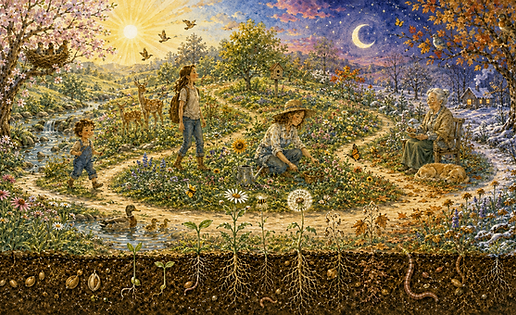
The living world is always moving through cycles of growth, change, renewal, and return. A flower begins as a seed held in soil. With water, light, air, and the right conditions, it roots, rises, opens, shares beauty, feeds pollinators, forms seeds, fades, and returns to the soil. Even after the flower is no longer in bloom, its life continues through seeds, nourishment, memory, habitat, and the living ground it helped support.
Human life follows a similar pattern. We begin small and dependent, shaped by nourishment, protection, connection, environment, and care. Through childhood, adolescence, adulthood, and older age, the body changes again and again. Strength, energy, needs, abilities, roles, and priorities may all change over time. These changes are not separate from life. They are part of life.
Vitality does not belong only to youth. Like a flower, a person’s contribution changes form through the seasons of living. Early life may bring growth and discovery. Adulthood may bring work, relationships, creativity, care, and responsibility. Later life may bring perspective, wisdom, memory, presence, storytelling, guidance, and a deeper understanding of what matters. Even when the body slows, a human life can continue to nourish others through love, knowledge, example, humor, kindness, and connection.
Nature shows us that returning is not failure. Leaves return to soil. Flowers return through seeds. Animals return nutrients to the land. Water returns through earth and sky. Soil is built from what has lived before. Each life leaves something behind that may support what comes next.
Humans are part of this same living pattern. The food we eat begins in soil, sunlight, water, air, plants, animals, fungi, and microorganisms. The air we breathe is shaped by trees, oceans, plants, soil life, and climate patterns. Our bodies respond to light, darkness, temperature, sound, movement, nourishment, rest, relationships, stress, safety, and the environments around us.
This connectedness is not only a warning about what can go wrong. It is also a hopeful reminder of how much support already exists within the living world. Healthy soil can support stronger plants. Plants can support insects, animals, oxygen, shade, food, and beauty. Animals help move seeds, balance ecosystems, enrich soil, and form relationships with people and places. Human care can restore gardens, protect water, reduce harmful exposures, support pollinators, improve homes and communities, and create daily conditions that make life more supportive.
At SoilToSelfLiving, the living world is viewed as a shared system of support. Caring for soil, air, water, plants, animals, homes, communities, and daily habits is not separate from caring for human health. Each part influences the others.
The living world reminds us that life is not measured only by peak strength, full bloom, or visible productivity. Life also includes rooting, growing, changing, resting, sharing, aging, returning, and continuing in new forms. Renewal is not always dramatic. Sometimes it is a seed, a story, a garden, a lesson, a repaired place, a cared-for animal, a healthier home, or a small daily choice that supports the next season of life.

The Living World: Growing, Changing & Returning
Listen to This Page
The written text on this page serves as the full and official version of this content

Natural Rhythms Guide: Change Shapes Development
Listen to This Page
The written text on this page serves as the full and official version of this content
Change does not happen all at once. It follows rhythms. The Earth moves through day and night, warmth and coolness, rain and dryness, growth and rest. Seasons shape when seeds sprout, flowers open, fruit forms, leaves fall, and soil renews.
The human body also lives by rhythm. Sleep and waking, hunger and fullness, movement and rest, growth and repair, hormone patterns, immune activity, and energy levels all follow changing cycles. Childhood, adolescence, adulthood, older age, and the end of life are not separate events. They are part of the body’s natural unfolding over time.
Animals and plants show this same pattern in their own ways. Young animals grow into maturity, develop instincts, form bonds, reproduce or care for others, slow with age, and return nutrients to the living world. Plants root, rise, bloom, produce seed, rest, and return to soil.
Natural rhythms remind us that development is not a straight line. Life expands, pauses, adapts, matures, releases, and begins again in new forms. When daily life works with these rhythms through light, rest, nourishment, movement, seasonal awareness, and care for the living world, it can support health with greater ease.

Healthy Living Within the Living World & Shared Caring
Listen to This Page
The written text on this page serves as the full and official version of this content
Healthy living is not only about the human body. It is also about the conditions that support life around us. Humans, plants, animals, soil, water, air, and sunlight all belong to the same living system. Each part affects the others.
For people, healthy living may include nourishing food, clean water, steady sleep, movement, time outdoors, meaningful connection, and a safer home environment. For plants, it includes healthy soil, water, light, space, pollinators, and seasonal rhythms. For animals, it includes food, shelter, safety, movement, social connection, and a habitat that supports their natural needs. For the Earth, it includes protection of soil, water, air, biodiversity, and the cycles that allow life to continue.
These needs are connected. Healthy soil can grow stronger food. Plants can support oxygen, shade, pollinators, animals, and human nourishment. Animals can enrich ecosystems and deepen human connection. Human choices can reduce harm, restore balance, and create healthier homes, gardens, communities, and landscapes.
From this perspective, healthy living becomes a shared practice of care. Each meal, garden, tree, animal relationship, daily routine, and environmental choice can support both personal well-being and the living world that makes well-being possible.
Cycles Within People, the Earth & the Universe
Listen to This Page
The written text on this page serves as the full and official version of this content
Life is shaped by many repeating cycles. Some happen within the human body. Others happen throughout the Earth. Together, they help guide growth, rest, repair, renewal, and change.
Cycles within people may include:
-
Sleep and waking
-
Breathing
-
Heartbeat and circulation
-
Hunger, digestion, and elimination
-
Energy use and recovery
-
Hormone patterns
-
Immune activity and repair
-
Growth, aging, and life stages
-
Emotional and nervous system rhythms
Cycles within the Earth may include:
-
Day and night
-
Seasons
-
Weather patterns
-
The water cycle
-
Soil renewal
-
Plant growth, flowering, fruiting, and seeding
-
Animal migration, nesting, birth, and aging
-
Nutrient return through decay and regeneration
-
Climate and living ecosystem patterns
Cycles within the Universe may include:
-
Earth’s rotation
-
Earth’s orbit around the Sun
-
The Moon’s phases
-
Tides influenced by the Moon and Sun
-
Seasonal light changes
-
Planetary movement
-
Star formation, aging, and renewal
-
Galactic movement through space
These cycles remind us that life is not still. People, plants, animals, soil, water, air, Earth, and the wider Universe are always moving, responding, changing, resting, renewing, and continuing.

Soil Health
Listen to This Page
The written text on this page serves as the full and official version of this content
Soil health is part of sustainability because soil is a living foundation, not just ground beneath our feet. Healthy soil holds water, supports microorganisms, stores nutrients, protects plant roots, and helps reduce erosion. When soil is cared for, the land is better able to support future growth.
Healthy soil also affects the quality of food. Vegetables, fruits, herbs, grains, and trees depend on soil minerals, organic matter, water movement, fungi, bacteria, and root systems. Stronger soil can support stronger plants, which may provide better nourishment for people and animals.
Soil also supports trees, pollinators, wildlife, grazing animals, gardens, farms, and home landscapes. Caring for soil through compost, plant cover, reduced chemical load, water awareness, and biodiversity helps protect the living systems that feed and support life.

Biodiversity and Air Quality
Listen to This Page
The written text on this page serves as the full and official version of this content
Biodiversity helps keep the air and environment livable. Forests, grasslands, wetlands, oceans, and healthy ecosystems all play a role in filtering pollutants, producing oxygen, storing carbon, cycling nutrients, and maintaining the balance of gases that support life.
Trees, plants, algae, soil organisms, fungi, wetlands, and ocean systems work together in different ways. Some absorb carbon dioxide. Some help break down pollutants. Some hold soil in place, reduce dust, cool the land, protect water, and create habitat for animals, insects, and microorganisms. These living systems also influence moisture, temperature, rainfall patterns, and the quality of the air people and animals breathe.
When biodiversity is reduced, these natural supports can weaken. Air may become dustier or more polluted, soil may erode more easily, water may become less protected, and ecosystems may become less able to recover from heat, drought, flooding, fire, or chemical stress.
Protecting biodiversity is one way of protecting the conditions that support health. Clean air, stable soil, safer water, plant life, animal life, and human well-being are all connected through the living systems around us.

Environmental Stewardship
Listen to This Page
The written text on this page serves as the full and official version of this content
Environmental stewardship means caring for the conditions that support life, both outdoors and indoors. Soil, water, air, plants, animals, forests, oceans, wetlands, grasslands, homes, schools, workplaces, care facilities, and communities all shape the environments people and animals live in each day.
Outdoor stewardship may include protecting soil, conserving water, reducing waste, supporting pollinators, planting trees, respecting wildlife, choosing safer products, and caring for natural ecosystems. These choices help protect air quality, food systems, biodiversity, water safety, climate balance, and the living world that supports health.
Indoor stewardship is also important. Homes and buildings affect breathing, sleep, stress, focus, recovery, movement, safety, and quality of life. Air flow, dust, mold, moisture, cleaning products, building materials, lighting, temperature, clutter, odors, pests, chemical exposures, and noise can all influence daily well-being.
Light is part of environmental health. Natural daylight helps guide the body’s daily rhythms, while darkness supports rest and recovery. At the same time, harsh lighting, glare, flicker, screens at night, poor visibility, and outdoor light pollution can interfere with sleep, comfort, safety, wildlife patterns, and the natural rhythm of day and night.
Noise pollution is also part of environmental health. Traffic, machines, televisions, alarms, barking, construction, loud neighbors, and indoor echo can keep the body and nervous system on alert. Poor ventilation, uncomfortable temperatures, strong odors, and crowded or chaotic spaces can add further strain over time.
At SoilToSelfLiving, stewardship is not about perfection. It is about thoughtful care for the places we live, the products we use, the spaces we create, and the ecosystems we depend on. Caring for outdoor and indoor environments helps support people, animals, plants, soil, water, air, light, sound, and the larger living world.

Environmental Processing
Listen to This Page
The written text on this page serves as the full and official version of this content
Environmental processing is the way living systems receive, respond to, use, transform, filter, store, repair, or release what they encounter. It happens within the Earth, within the human body, and throughout plants, animals, soil, water, air, and ecosystems.
The Earth processes air, water, nutrients, minerals, organic matter, heat, waste, and pollutants through soil, plants, fungi, microorganisms, oceans, wetlands, forests, weather, and natural cycles. These systems help move materials, filter what can be filtered, transform what can be transformed, store what needs time, and return nutrients to support future life.
The human body also processes daily environmental inputs. Air enters the lungs. Food and water enter the digestive system. Light reaches the eyes and skin. Sound reaches the ears and nervous system. Temperature, microbes, chemicals, medications, stress, and daily conditions are also sensed and responded to.
The body does not handle these inputs through one system alone. The lungs, gut, liver, kidneys, skin, immune system, lymphatic system, circulatory system, hormones, and nervous system all work together. Some inputs are used for energy, growth, repair, protection, or communication. Others are filtered, changed, stored temporarily, or removed.
Plants and animals also process their surroundings. Plants take in light, water, carbon dioxide, minerals, and soil conditions. Animals respond to food, water, air, shelter, temperature, sound, safety, and habitat quality. When the environment is supportive, living systems often have more room to function well. When the load is too high, stress can build.
At SoilToSelfLiving, environmental processing is not about fear of everything around us. It is about understanding relationship and capacity. Cleaner air, safer water, healthier soil, better indoor spaces, lower chemical burden, appropriate light, calmer sound, supportive food, rest, movement, and healthy daily routines can reduce unnecessary strain and support the natural systems that help life adapt, recover, and continue.

Composting, Reusing & Returning
Listen to This Page
The written text on this page serves as the full and official version of this content
Composting, recycling, reusing, and repairing are practical ways to work with the natural pattern of return. In nature, leaves, branches, roots, plants, and animal matter slowly break down and become part of the soil again. What once supported life can become nourishment for new life.
Composting follows this same pattern. Food scraps, garden trimmings, leaves, and other natural materials can transform into soil support instead of becoming waste. Finished compost can help feed microorganisms, improve soil structure, hold moisture, support plant roots, and strengthen gardens, trees, and landscapes.
Reusing and repairing also reduce unnecessary strain on the Earth. When items are used longer, shared, repurposed, donated, or repaired, fewer raw materials are needed, less waste is created, and more value is kept in circulation. Recycling can also help when materials cannot be safely reused, though reducing and reusing often come first.
This process is not only about waste. It is about transformation. A kitchen scrap can become soil. A container can become a planter. A worn item can be repaired. A garden can turn fallen leaves into future growth. Human choices can help move materials away from disposal and back toward usefulness.
At SoilToSelfLiving, composting and reuse are part of caring for the living world. They support healthier soil, better food, cleaner communities, lower waste, and a more thoughtful relationship with what we use. Small acts of returning can help create better conditions for people, plants, animals, and the Earth.
Food connects the human body to the living world. What we eat begins with soil, water, sunlight, air, plants, animals, fungi, microorganisms, farmers, gardens, food systems, and daily choices. Nourishment is not only about calories or nutrients. It is also about the quality, safety, source, preparation, and relationship we have with food.
For people, food supports energy, growth, repair, immune function, digestion, mood, movement, and quality of life. Food awareness includes noticing hunger and fullness, choosing foods that support the body, preparing meals with care, reducing waste, and understanding how food is grown, handled, stored, and shared.
Mindful eating is one way to care for both the body and the Earth. Eating with attention can help people slow down, notice what the body needs, appreciate the food in front of them, and reduce overeating, waste, or rushed choices. It can also encourage greater respect for the soil, water, plants, animals, workers, and resources involved in each meal.
Food safety is part of nourishment. Clean water, safe storage, proper cooking, careful handling, and attention to freshness help protect people, animals, and communities from unnecessary illness.
Plants, animals, soil, and the Earth are also part of this picture. Healthy soil can support stronger plants. Healthier plants can support people, animals, pollinators, and ecosystems. Thoughtful food choices can support personal well-being while also respecting the living systems that make food possible.
At SoilToSelfLiving, nourishment is viewed as a relationship between the body and the world that feeds it. Eating with awareness can support human health, reduce waste, respect animals and plants, and help care for the Earth that continues to provide.
Nourishment, Food Awareness & Living Systems

Listen to This Page
The written text on this page serves as the full and official version of this content

Living Ecosystems & Food Systems
Listen to This Page
The written text on this page serves as the full and official version of this content
Living ecosystems and food systems are closely connected. Soil, water, sunlight, air, plants, animals, insects, fungi, microorganisms, weather, farms, gardens, transportation, storage, markets, kitchens, and communities all play a role in how food reaches people.
In healthy ecosystems, many forms of life work together. Soil organisms help build fertility. Plants provide food, oxygen, shade, habitat, and roots that protect the land. Pollinators help many foods develop. Animals move nutrients, spread seeds, and support balance within habitats. Water and weather patterns influence what can grow, where it can grow, and how well living systems recover.
Food systems are the human side of this relationship. They include how food is grown, harvested, processed, packaged, transported, purchased, prepared, shared, and returned or wasted. These steps can support health when they protect soil, water, biodiversity, food safety, animal welfare, worker well-being, and access to nourishing food.
When ecosystems are strained, food systems can also be affected. Poor soil, pollution, drought, flooding, extreme heat, habitat loss, and reduced biodiversity can influence food quality, availability, cost, and resilience. When food systems are thoughtful and sustainable, they can help care for the land while feeding people.
At SoilToSelfLiving, food is viewed as part of a living chain of support. Caring for ecosystems helps protect the food systems people depend on, and thoughtful food choices can help care for the ecosystems that continue to feed life.
Stress, Recovery & Living Systems

Listen to This Page
The written text on this page serves as the full and official version of this content
Stress is not only a human experience. It is part of the living world. Plants, trees, animals, soil, water systems, ecosystems, and people all respond to pressure, change, injury, disruption, and overload.
Plants may experience stress from drought, heat, poor soil, pests, crowding, chemicals, or lack of light. Trees may bend in wind, seal wounds, drop leaves, slow growth, deepen roots, or wait for better conditions. Animals may respond to danger, hunger, noise, habitat loss, illness, weather, or social strain by hiding, moving, resting, protecting young, changing behavior, or seeking safer ground.
Humans also respond to stress through the body. The nervous system, hormones, immune system, muscles, breathing, digestion, sleep, thoughts, emotions, and energy levels can all be affected. Some stress can help the body respond to immediate needs. Too much stress, too often, or without enough recovery can create strain over time.
Nature shows that recovery needs conditions. A plant may need water, shade, stronger soil, or protection from pests. An animal may need safety, food, shelter, rest, and quiet. Soil may need organic matter, moisture, roots, microorganisms, and time. People also need supportive conditions, including rest, nourishment, movement, calm spaces, connection, safety, sunlight, sleep, and reduced unnecessary load.
At SoilToSelfLiving, stress is viewed as part of the relationship between living beings and their environments. Recovery is not just about pushing through. It is about creating conditions that help the body, mind, home, community, and Earth regain steadiness.
The living world reminds us that resilience is supported, not forced. With care, time, protection, and healthier surroundings, plants can grow again, animals can settle, soil can rebuild, ecosystems can recover, and people can find their way back toward balance.
Growth & Development
Growth is not separate from the conditions that surround life. Human babies, young animals, seedlings, and young plants all develop through steady support over time. The body, brain, roots, bones, muscles, immune system, nervous system, and behavior are shaped by nourishment, rest, safety, movement, connection, and daily rhythm.
For humans, early growth includes physical development, emotional security, sensory experience, sleep, feeding, bonding, and the gradual strengthening of body systems. For animals, growth depends on protection, food, warmth, shelter, learning, play, and the safety of the group or environment. For plants, growth begins with seed, root, soil, moisture, light, temperature, and space. Each form of life grows in its own way, but all growth depends on supportive conditions.
Healthy development does not mean perfect conditions. It means enough protection, nourishment, recovery, and stability for life to continue adapting, strengthening, and reaching toward its next stage.

Listen to This Page
The written text on this page serves as the full and official version of this content

Soil, Water & Light
Listen to This Page
The written text on this page serves as the full and official version of this content
Soil, water, and light are basic supports for living systems. Plants need soil or growing material for minerals, structure, microbial life, root support, and moisture balance. They need water to move nutrients, maintain structure, and carry out life processes. They need light to create energy, follow natural rhythms, and guide growth.
Animals and humans also depend on these same supports, though in different forms. Soil helps grow the food that nourishes bodies. Water supports digestion, circulation, temperature balance, cellular activity, and waste removal. Light helps guide sleep, hormones, mood, vitamin D production, daily rhythm, and seasonal awareness.
Young life is especially sensitive to these conditions. A seedling may struggle without enough light, water, or healthy soil. A young animal may struggle without clean water, safe shelter, and access to food. A human baby or child may be affected by nutrition, hydration, daylight, sleep patterns, air quality, emotional safety, and the surrounding environment.
Soil, water, and light remind us that life does not grow alone. Each living being is part of a larger system of support, exchange, and care.

Healthy Daily Living
Listen to This Page
The written text on this page serves as the full and official version of this content
Healthy daily living is built through the conditions that support life each day. For humans, this includes nourishing food, clean water, movement, sleep, rest, natural light, safety, emotional connection, meaningful activity, and time to recover from stress. It also includes joy, belonging, creativity, purpose, and the opportunity to feel useful, loved, engaged, and fulfilled.
These daily inputs help the body regulate energy, digestion, circulation, immune function, mood, thinking, strength, and resilience. Emotional well-being is part of this system. A person’s body may be affected by loneliness, fear, grief, overload, or lack of purpose, just as it may be supported by kindness, connection, calm surroundings, satisfying work, creative expression, companionship, and hope.
Plants, animals, soil, and ecosystems also depend on steady support. Plants need healthy soil, water, light, space, nutrients, protection, and seasonal rhythm. Animals need food, clean water, shelter, movement, rest, social connection, safety, stimulation, and a healthy environment. Soil needs organic matter, moisture, air, microorganisms, and protection from depletion. Each form of life has different needs, but the pattern is similar: living systems function better when their basic conditions are supported.
Healthy daily living is not about perfection. It is about creating enough nourishment, rhythm, care, connection, meaning, and recovery for life to keep adapting and strengthening over time. When people care for their bodies, homes, relationships, food, water, animals, gardens, and surrounding environment, daily life becomes part of a larger living system of health.

Food Systems
Listen to This Page
The written text on this page serves as the full and official version of this content
Food systems begin with living relationships. Sunlight, water, air, soil, plants, animals, people, insects, microorganisms, weather, seasons, and human choices all work together to influence how food is grown, gathered, raised, prepared, shared, and returned to the earth.
Plants are at the center of many food systems. Through photosynthesis, they use sunlight, water, and carbon dioxide to make food for themselves and release oxygen into the air. Plants also feed people, animals, insects, and soil life. Their roots help hold soil in place, their leaves create shade and habitat, and their growth connects sunlight to the bodies of living beings.
Healthy soil supports healthy food. Soil is not just dirt. It is a living system filled with minerals, organic matter, roots, fungi, bacteria, insects, moisture, and air. When soil is cared for, it can grow more nourishing plants, hold water more effectively, support pollinators, and help maintain the balance needed for future growth.
Animals are also part of food systems. Some animals pollinate plants, spread seeds, build soil, control pests, or contribute nutrients back to the land. Others depend on plants, water, shelter, and healthy habitats for survival. Human food choices, farming methods, land use, and waste patterns can affect both domestic animals and wildlife.
For humans, food systems influence health through nourishment, access, culture, daily habits, cost, quality, preparation, and connection. Food is more than calories. It carries nutrients, energy, tradition, comfort, memory, community, and care. The way food is grown, transported, stored, cooked, eaten, and shared can affect the body, the household, the local environment, and the larger living world.
A healthy food system supports both people and the planet. It protects soil, water, air, pollinators, animals, farmers, families, and future generations. It values nourishment over waste, balance over depletion, and care over convenience alone.
Food systems remind us that eating is not separate from the earth. Every meal is connected to sunlight, soil, water, hands, habitats, and living systems that make life possible.
Hormones & Daily Life

Hormones are chemical messengers that help the body communicate and coordinate many important functions. They influence growth, metabolism, blood sugar, appetite, digestion, sleep, energy, temperature balance, reproduction, immune activity, stress response, mood, focus, emotional steadiness, and how the body adapts through different stages of life.
Hormones do not work alone. They respond to daily conditions inside and around the body. Light exposure, sleep patterns, stress, nourishment, hydration, movement, illness, medications, environmental chemicals, social connection, emotional strain, and natural life changes can all affect hormonal balance.
For humans, hormones help connect physical health with mental and emotional experience. Poor sleep, chronic stress, lack of light, unstable eating patterns, or ongoing overload may affect energy, mood, cravings, weight regulation, concentration, inflammation, and recovery. Supportive daily rhythms, nourishing food, movement, rest, daylight, calm surroundings, and meaningful connection can help the body maintain steadier communication.
Hormones remind us that the body is always listening to its environment. Daily life, emotional well-being, and physical health are closely connected through these internal messages.
Listen to This Page
The written text on this page serves as the full and official version of this content
Maintaining Bone Health Throughout Life
Bones are living tissues that are constantly being built, broken down, repaired, and renewed. Their health depends on far more than calcium alone. Nourishment, movement, hormones, sunlight, sleep, circulation, digestion, muscle strength, balance, and the body's ability to absorb and use nutrients all work together to support the skeleton throughout life.
A varied, nourishing diet provides the protein, calcium, vitamin D, magnesium, phosphorus, vitamin K, and other nutrients needed to build and maintain bone. Vitamin D helps the body absorb calcium, while the digestive system, kidneys, hormones, and other body systems help regulate how these nutrients are used and stored.
Movement is equally important. Walking, climbing stairs, gardening, dancing, resistance exercise, lifting, carrying, and other weight-bearing activities place healthy demands on bones and muscles. Strong muscles, good balance, coordination, vision, and a safe environment also help reduce falls and fractures, particularly later in life.
Bone needs change across the lifespan. Childhood and adolescence are important years for building bone. Adulthood brings the ongoing work of maintenance and renewal. With aging, hormonal changes, reduced activity, certain health conditions, some medications, poor nutrition, smoking, or excessive alcohol can increase bone loss.
Maintaining bone health is therefore not one action but a lifelong relationship among food, movement, sunlight, hormones, muscle, balance, recovery, and the conditions in which a person lives. Supporting the whole body helps support the bones that carry us through every stage of life.

Listen to This Page
The written text on this page serves as the full and official version of this content
Listen to This Page
The written text on this page serves as the full and official version of this content
Supportive Home & Yard
Creating a supportive home and yard means shaping the spaces around you to encourage healthy body functions, mental clarity, emotional comfort and healthier environmental conditions. Indoors, improve fresh air, natural light, comfortable temperatures and ease of movement. Create welcoming places for sleep, relaxation, creativity and connection, Remember less is more. Declutter rooms and use the motto of "if it hasn't been used in six months or a year, it isn't needed".
Outdoors, work with your local climate. Choose water-sensitive plants that are easy to maintain, group plants with similar needs, protect the soil with mulch and use drip irrigation. Raised beds, containers, herbs and climate appropriate fruit trees can provide fresh food while matching your available space, physical abilities and time.
Provide shade, comfortable seating for self and entertaining and safe walking areas that invite gentle movement and time outdoors. In the evening, use warm, softly directed lighting along entrances, steps and pathways. A small recirculating fountain can soften traffic or neighborhood noise and create a calming sensory experience while using less water. Windbreaks, screens and thoughtfully placed plants can also provide privacy and reduce wind, dust and noise. The goal is an easy-to-maintain space that supports nourishment, rest, safety and everyday connection with nature.